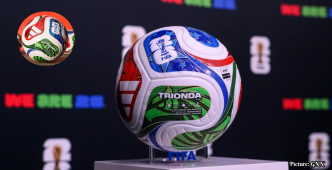
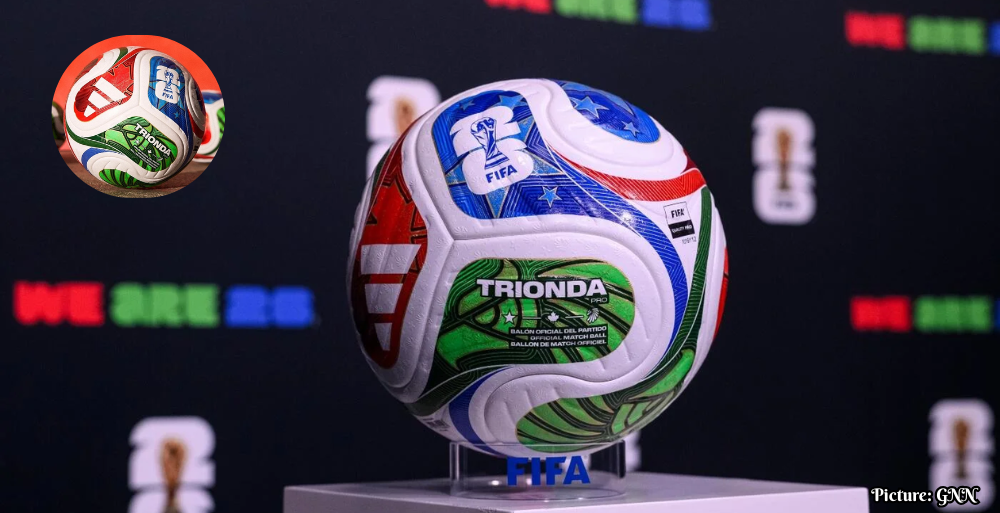
The Trionda ball, set to debut at the 2026 FIFA World Cup, integrates AI and advanced sensor technology to improve decision-making and officiating accuracy, marking a significant advancement in football.
The 2026 FIFA World Cup, which will be jointly hosted by the United States, Canada, and Mexico, is poised to not only celebrate the sport’s global appeal but also showcase significant technological advancements in football. At the forefront of these innovations is the Trionda, the official match ball developed by Adidas. This new ball features cutting-edge artificial intelligence (AI) and sensor technology designed to enhance decision-making during matches, particularly in relation to the controversial virtual assistant referee (VAR) system.
The Trionda ball is revolutionary in its design, distinguishing itself through the incorporation of a sensor that tracks its movements on the pitch. This technology aims to expedite the often protracted decision-making process that has accompanied the introduction of VAR, which has been criticized for its delays and the contentious calls it has produced. According to Hannes Schaefke, Football Innovation Lead for Adidas, “We can track every event, every interaction the player has with the ball. Every location at any given moment is being tracked by a local positioning system.” This capability allows the sensor to transmit data at a rate of 500 times per second, significantly increasing the speed and accuracy of offside decisions.
Historical Context of World Cup Balls
The evolution of the World Cup ball has mirrored advancements in football technology over the decades. The inaugural design, the Telstar, was introduced for the 1970 FIFA World Cup. This iconic ball, made up of 32 black and white panels, was specifically designed for better visibility during early television broadcasts. Since then, each subsequent World Cup ball has reflected both aesthetic preferences and technological innovations, culminating in the Trionda, which not only represents a leap in functionality but also in the integration of technology into the sport.
Technological Features of the Trionda
The Trionda ball is more than just a piece of sporting equipment; it functions almost like an electronic device. Before use, the ball must be charged for 90 minutes to facilitate approximately six hours of play. This feature was first introduced with the Al Rihla ball used in the 2022 World Cup in Qatar. At the heart of the Trionda is an inertial measurement unit (IMU) that measures various aspects of the ball’s dynamics, including force, orientation, and rotational speed. These measurements are crucial for ensuring that the ball’s flight path is predictable, addressing some of the unpredictability issues that plagued past models like the Jabulani, which was notorious for its erratic trajectories during the 2010 World Cup.
AI Integration with VAR
The integration of AI with the Trionda represents a significant effort by FIFA to enhance the VAR system, which has faced scrutiny in past tournaments for its impact on the flow of the game and the accuracy of calls. Alongside the ball’s sensor, pitchside sensors will monitor player movements, and FIFA will utilize 3D digital avatars of each player during VAR checks. This comprehensive approach aims to minimize contentious calls that have historically marred World Cup matches, such as Diego Maradona’s infamous “Hand of God” goal in 1986 and Frank Lampard’s disallowed goal against Germany in 2010. By leveraging AI, FIFA hopes to streamline the decision-making process, ensuring that calls are made quickly and accurately.
Design and Aesthetics of the Trionda
The design of the Trionda is particularly noteworthy, as it marks the first time the World Cup will be hosted by three nations. The ball features a white base adorned with red, blue, and green graphics that symbolize the host countries. Additionally, the design incorporates motifs such as a maple leaf, an eagle, and a star, representing Canada, Mexico, and the United States respectively. This aesthetic choice not only reflects the cultural identities of the host nations but also serves as a visual symbol of unity and collaboration in hosting the tournament.
Performance Considerations and Challenges
Despite the advanced technology incorporated into the Trionda, its performance has drawn attention and scrutiny. Research conducted by a team led by Professor John Eric Goff utilized wind tunnel testing to compare the Trionda with previous World Cup balls, including the Jabulani, Brazuca, Telstar 18, and Al Rihla. Their findings indicated that the Trionda exhibited the smallest measured critical speed among the five balls tested, suggesting that a long ball struck with great force may travel shorter distances than expected. However, the researchers also noted that further studies are necessary to fully understand the ball’s behavior under real match conditions, taking into account variables such as spin, humidity, and temperature.
Conclusion: A New Era for Football
The introduction of the Trionda ball at the 2026 FIFA World Cup signals a pivotal moment in the intersection of technology and sport. By merging traditional football with innovative technology, FIFA and Adidas aim to transform the game, enhancing officiating accuracy and improving the overall experience for players and fans alike. As the tournament approaches, anticipation builds around how these innovations will impact the matches and the future of football.