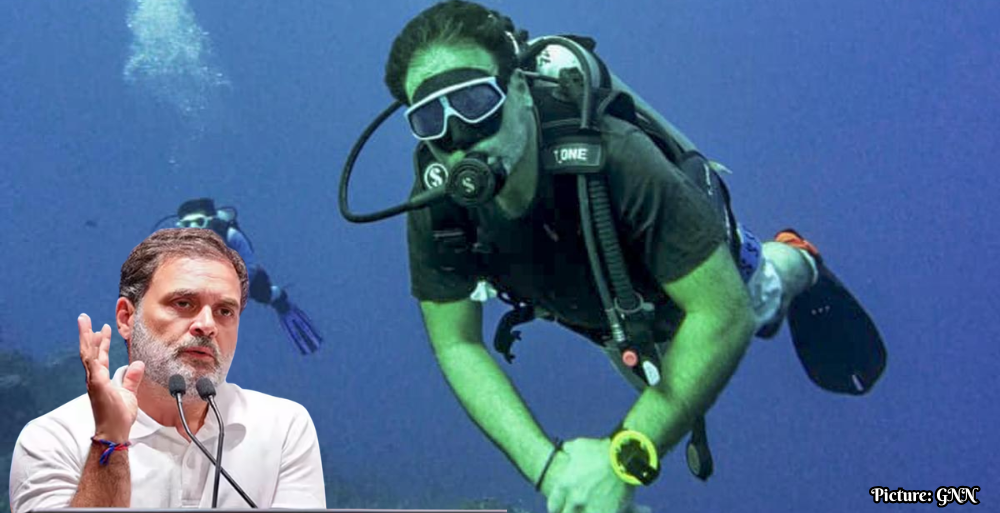
Congress leader Rahul Gandhi has publicly criticized the Great Nicobar Island project, alleging that it prioritizes private commercial interests over ecological preservation and the welfare of local communities, particularly benefiting industrialist Gautam Adani.
In a public address on June 5, 2026, Leader of the Opposition in the Lok Sabha, Rahul Gandhi, delivered a strong critique of the Great Nicobar Island project, asserting that the Bharatiya Janata Party (BJP) is misleading the public by framing the initiative as a strategic national defense effort. Instead, he contends, the project primarily serves the interests of prominent industrialist Gautam Adani. This assertion emerged during an event marking World Environment Day, where Gandhi unveiled an online petition aimed at promoting ecological conservation and sustainable development.
The proposed project encompasses the establishment of a transshipment hub, an airport, and a tourist township on Great Nicobar Island, which the government has justified as critical to bolstering national security. However, Gandhi countered this narrative, characterizing it as a facade for commercial exploitation. ‘The Modi government and the BJP tell you the Great Nicobar project is about defense. It is not,’ he stated in a video entitled ‘This is what Modi doesn’t want you to see,’ which was released alongside his petition. He argued that if the government’s intentions were truly defensive, they would prioritize the expansion of INS Baaz, the Indian Navy’s air station in the Nicobar Islands, a move he stated Congress would support.
Concerns Over Environmental Impact
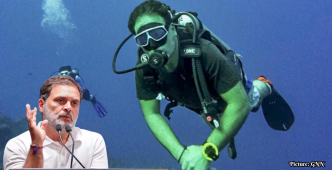
Gandhi’s allegations stem from his visit to the Andaman and Nicobar Islands in April, where he witnessed firsthand the ecological richness of the region and interacted with local settlers and tribal communities. He expressed serious concerns regarding the environmental repercussions of the proposed project, including the potential destruction of ancient rainforests and coral reefs, as well as the displacement of indigenous populations. Highlighting the scale of the development, he noted that the area in question is significantly larger than New Delhi, with over 1.5 crore trees at risk of being felled for the project.
In his video, Gandhi emphasized that if the government was serious about national defense, the logical course of action would be to enhance the capabilities of INS Baaz without compromising the island’s natural resources. ‘If strategic considerations were paramount, the government should expand INS Baaz. There is no need to destroy rainforests for that,’ he stated. He further criticized the government’s intentions, alleging that the project is designed to facilitate extensive commercial development—including hotels and casinos—rather than serving any genuine strategic purpose.
Gandhi also raised serious concerns about the rights of tribal communities, claiming that they are being deprived of their land in violation of the Forest Rights Act, and that settlers have not received fair compensation for their losses. ‘What kind of India do you want to inherit? One where rainforests have been bulldozed for casinos, coral reefs erased from maps, tribal communities pushed off their land, and the air we breathe turned into poison?’ he urged, calling on young people to sign his petition advocating for environmental preservation.
Broader Critique of Environmental Policies
Congress President Mallikarjun Kharge echoed Gandhi’s criticisms, expanding the discussion to encompass the government’s overall environmental record. He accused the Modi administration of systematically weakening India’s environmental governance framework, leading to significant ecological degradation. Citing government data, Kharge noted that approximately 1.92 lakh hectares of forest land have been diverted over the past 11 years, with more than 1.6 crore trees reported to have been cut down since 2014.
The allegations against the Great Nicobar project come amid increasing scrutiny of the government’s environmental policies, particularly concerning major infrastructure initiatives that have raised alarms among environmentalists and local communities alike. The Congress party has positioned itself in favor of what it terms ‘ecologically balanced development,’ suggesting that Great Nicobar could serve as a global model for sustainable tourism and conservation practices if managed responsibly. This stance is part of a broader narrative that seeks to reconcile development with environmental stewardship.
As criticism of the Great Nicobar project intensifies, the political ramifications of these allegations may influence public perception and future decision-making. The ongoing debate over the balance between development and environmental protection remains a contentious issue in Indian politics. Gandhi’s recent statements aim to mobilize support for a more sustainable approach that prioritizes ecological integrity alongside economic growth.
In conclusion, the Great Nicobar Island project has become a focal point in the broader dialogue regarding environmental governance in India. With opposition leaders like Rahul Gandhi actively challenging the government’s narrative, the implications for both policy and public sentiment could be significant as the country navigates the complex intersection of ecological preservation and national development.