In a competitive election, five nations have secured non-permanent seats on the United Nations Security Council, marking significant changes in representation for the 2027-28 term.
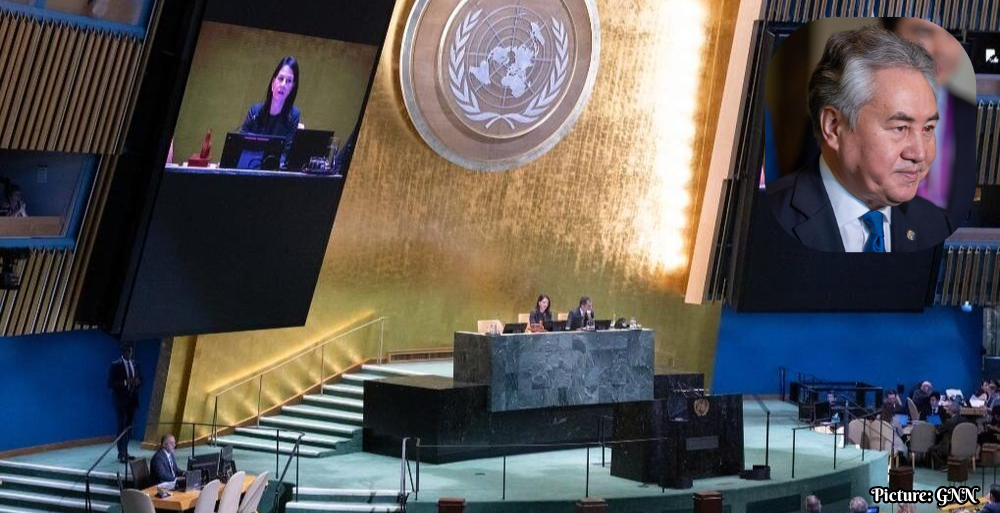
In a pivotal election held on June 3, 2026, the United Nations General Assembly (UNGA) elected Austria, Kyrgyzstan, Portugal, Trinidad and Tobago, and Zimbabwe as non-permanent members of the United Nations Security Council (UNSC) for the 2027-28 term. This election reflects a notable shift in the geopolitical landscape as these nations will replace Denmark, Greece, Pakistan, Panama, and Somalia, whose terms conclude at the end of 2026.
The election, conducted by secret ballot among the 193 UN member states, revealed significant voting dynamics. Portugal emerged successful with 134 votes, followed closely by Austria with 131 votes, securing the two available seats from the Western European and Other States category. Germany, despite being a strong candidate, faced disappointment, receiving only 104 votes, which ultimately disqualified it from the council.
Germany’s Disappointment and Strategic Considerations
German Minister for Foreign Affairs Johann Wadephul expressed his discontent with the election results, calling it a “real disappointment.” He elaborated, stating, “It’s a bitter defeat. This is an intense competition. Germany entered late, meaning we were at a disadvantage from the start, and we see that today clearly, it was not possible to make up for lost ground.”
Wadephul pointed to Germany’s firm stance on several international issues as a potential factor in its failure to secure a seat. He indicated that Germany’s unwavering support for Ukraine, particularly amid the ongoing conflict with Russia, may have alienated some member states. “It is no secret that Russia does not want such a voice at the table in the Security Council, which campaigned against us,” he noted.
Additionally, Wadephul remarked on Germany’s historical responsibility regarding Israel, stating, “We will continue to live up to our historical responsibility even if at the time we criticize specific policies of the current government.” This acknowledgment highlights the complex interplay of historical contexts and present-day politics that can influence international diplomatic relations.
Kyrgyzstan and Zimbabwe’s Historic Wins
In the elections for the African and Asia-Pacific States categories, Zimbabwe triumphed with an impressive 182 votes, while Kyrgyzstan secured its victory with 142 votes, defeating the Philippines, which received only 49 votes after four rounds of voting. This victory marks Kyrgyzstan’s inaugural participation on the UNSC, a significant achievement for the nation, which has previously not held a seat on this influential body.
Trinidad and Tobago also successfully secured a seat in the Latin American and Caribbean States category, receiving 181 votes. The results of this election reflect both the competitive nature of the UNSC selection process and the evolving priorities of member states in the context of global diplomacy.
The Broader Context of the UN Security Council
The UNSC is a critical organ of the United Nations, comprising 15 members: five permanent members with veto power—China, France, Russia, the United Kingdom, and the United States—and ten non-permanent members elected for two-year terms. The council plays a vital role in maintaining international peace and security, addressing issues ranging from armed conflicts to humanitarian crises.
As the newly elected non-permanent members prepare to take their positions on January 1, 2027, they will join existing members, including Bahrain, Colombia, the Democratic Republic of the Congo, Latvia, and Liberia, who will remain on the council through the end of 2027. This transition marks a critical juncture, as new members often bring fresh perspectives and priorities to the discussions and decisions made within the council.
India’s Aspirations and Future Implications
India, which previously served as a non-permanent member of the UNSC from 2021 to 2022, has expressed its intention to run for a seat in the 2028-29 term. India’s Permanent Representative to the UN, Ambassador Harish Parvathaneni, congratulated the newly elected members and emphasized the importance of collaboration, stating, “We look forward to working closely with each of you during your 2027-28 term and wish you all success.” This statement underscores India’s commitment to enhancing its role in global governance and the UN system.
The recent elections not only reflect the competitive nature of UNSC elections but also highlight the strategic considerations that influence member states’ bids for representation. As the newly elected members prepare for their roles, their actions and decisions will be closely monitored by the international community, particularly in light of ongoing geopolitical tensions and humanitarian challenges worldwide.
In conclusion, the election of Austria, Kyrgyzstan, Portugal, Trinidad and Tobago, and Zimbabwe to the UNSC marks a significant development in international diplomacy. Their participation will shape discussions on peace and security and will be critical as the world navigates complex global challenges in the coming years.