The Congressional Budget Office has revealed that the U.S. Treasury is currently paying nearly $3 billion daily to service a national debt reaching $39 trillion, highlighting the growing financial pressures on federal spending and economic policy.
The Congressional Budget Office (CBO) released an alarming report detailing the escalating costs associated with servicing the United States’ national debt, which has now reached approximately $39 trillion. This staggering figure translates to an average of $2.96 billion per day in interest payments. The data, covering the first seven months of the fiscal year 2026, sets the stage for an essential discussion on the implications for federal spending and the broader economic policy landscape as the country seeks to navigate fiscal challenges and recovery efforts.
Federal Spending Breakdown
According to the CBO, net interest payments on public debt have now overtaken crucial social program expenditures. For the period from October 2025 to April 2026, the government has allocated $628 billion for interest payments. In comparison, spending on Social Security benefits totaled $953 billion, while Medicare and Medicaid expenditures reached $588 billion and $409 billion, respectively. The CBO attributes the rising interest payments to a combination of a growing national debt and increasing long-term interest rates, although declines in short-term rates have somewhat mitigated this financial burden.
The overall fiscal picture has shown slight improvement, as government income increased to $3.3 trillion for fiscal year 2026, compared to $3.1 trillion during the same timeframe in the previous fiscal year. However, total outlays have also risen, from $4.2 trillion to $4.3 trillion, leading to a deficit of $955 billion—$94 billion lower than the deficit recorded for the same period in fiscal year 2025. This trend indicates a continued struggle to balance revenue generation with expenditure demands.
Revenue Generation through Tariff Policies
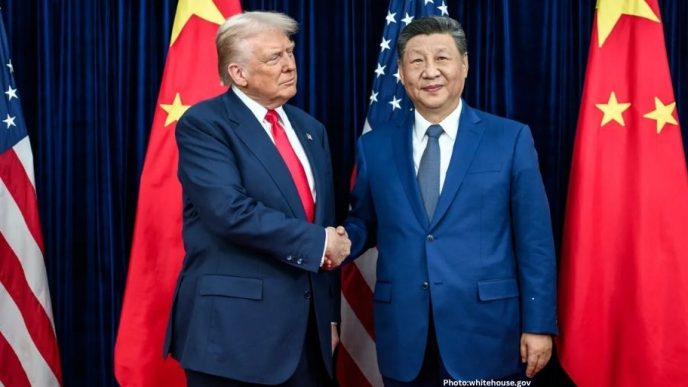
One significant factor contributing to the recent uptick in revenue is the tariff policies enacted during the Trump administration, which were aimed at recalibrating trade relationships with various countries. The revenue generated from these tariffs has surged, reflecting a 220% year-over-year increase in customs duties. In fiscal year 2025, customs duties amounted to $59 billion; this fiscal year, that figure has soared to $190 billion. Economists, including Wharton Professor Joao Gomes, suggest that this substantial revenue stream may lead to a bipartisan acceptance of tariffs as a necessary funding source, regardless of which political party assumes power in future elections. Gomes noted, “Governments need revenues, and once you see the amount of revenue the tariffs bring, I think Democrats will be addicted to them as Republicans—or are as likely to be.”
CBO Projections and Economic Influences
The CBO’s reports provide crucial insights into macroeconomic conditions, taking into account a variety of factors, including productivity, labor supply policies, demographic trends, and the potential impacts of technological advancements. CBO Director Phil Swagel highlighted the importance of productivity in shaping economic forecasts, emphasizing that policies affecting labor force participation—whether through increasing the number of workers or enhancing the skills of the existing workforce—are key determinants in these projections.
In an exclusive interview, Swagel discussed the cautious optimism surrounding the influence of artificial intelligence (AI) on economic productivity. Current CBO forecasts suggest that AI’s impact on productivity is modest, contributing approximately 10 basis points per year, equating to about a 1% increase in GDP over a decade. Swagel expressed the importance of ongoing assessment, as the introduction of new occupations and activities driven by technological advancements remains uncertain and is not yet fully incorporated into their forecasts.
Long-Term Implications for Fiscal Policy
The increasing costs of servicing national debt raise critical concerns regarding the sustainability of fiscal policy in the United States. As interest payments continue to grow, policymakers face significant challenges in balancing the need for investment in essential social programs while maintaining fiscal responsibility. The CBO’s findings underscore the necessity for sustainable fiscal strategies that can effectively address the intertwined issues of national debt, government spending, and economic growth.
As the CBO continues to analyze the evolving economic landscape, the interplay between revenue generation and expenditure patterns will remain a focal point of discussion among lawmakers and economists alike. With the national debt continuing to rise and interest payments consuming an ever-larger portion of the federal budget, the implications for future economic policy and public welfare are profound and warrant careful consideration.