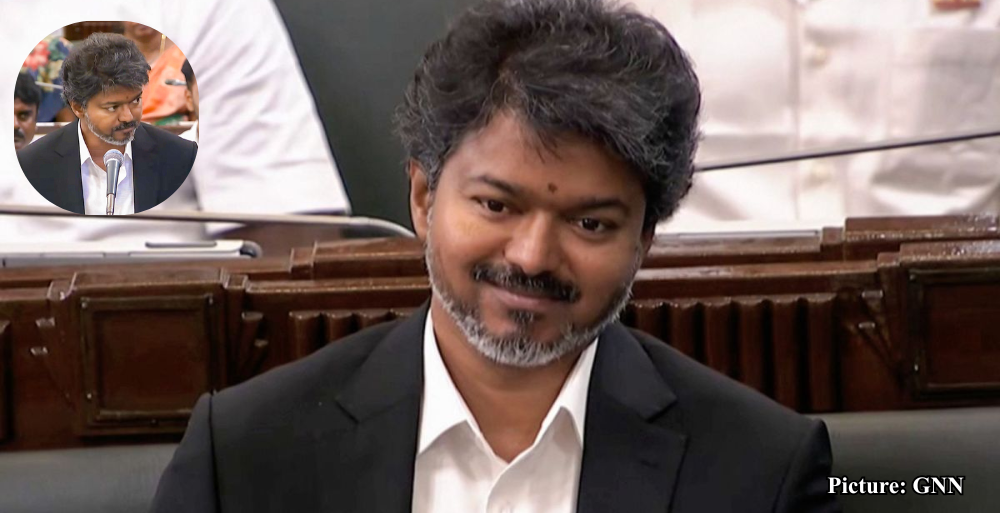
Tamil Nadu Chief Minister C. Joseph Vijay successfully secured a trust vote with 144 votes in favor on May 13, 2026, amidst significant political maneuvering and opposition walkouts, marking a crucial step for his administration.
Tamil Nadu Chief Minister C. Joseph Vijay of the Tamilaga Vettri Kazhagam (TVK) achieved a significant legislative victory on May 13, 2026, winning a trust vote in the Tamil Nadu Assembly with 144 votes in favor, while 22 votes were cast against the motion, and five members abstained. This vote represents a pivotal moment for the newly formed government as it seeks to establish its legitimacy following a contentious election cycle.
Political Context and Legislative Dynamics
The trust vote comes in the wake of a fractured mandate from the recent state elections, where no single party secured an outright majority. The Assembly session saw a total of 171 MLAs participating, with heightened tensions notably stemming from the opposition Dravida Munnetra Kazhagam (DMK). Ahead of the voting, DMK leader Udhayanidhi Stalin led a walkout of his party’s members, voicing concerns about the legitimacy of the TVK government’s formation. Stalin accused the TVK of engaging in “horse-trading” with the AIADMK rebels, raising questions regarding the integrity of the political maneuvering that brought Vijay to power.
Vijay’s coalition garnered support from a range of factions, including 105 of its own MLAs from TVK, alongside 25 votes from the rebel faction of the AIADMK, which significantly bolstered his position. In stark contrast, the official AIADMK faction, led by Edappadi K. Palaniswami, remained united in opposition to the trust vote, reflecting the internal divisions within the party.
Key Events Leading to the Trust Vote
In the lead-up to the vote, Udhayanidhi Stalin criticized Vijay for meeting with AIADMK rebels on May 12, questioning whether the changes represented genuine reform or merely an exchange of political loyalties. His remarks were underscored by a general sentiment of skepticism regarding the new government’s commitment to progressive governance. The Speaker of the Assembly, J.C.D. Prabhakar, allowed Velumani, a leader of the rebel AIADMK faction, to address the Assembly, a decision that ignited further contention among the opposing factions.
During the trust vote, dramatic exchanges unfolded, with Palaniswami alleging that Vijay had secured support through promises of ministerial positions, highlighting the fractious nature of Tamil Nadu’s political landscape. Palaniswami’s assertion reflects a broader concern over loyalty and integrity within the political sphere, characterizing the current situation as unprecedented and indicative of a betrayal of party loyalty.
Reactions from the Political Spectrum
Following the successful completion of the trust vote, Chief Minister Vijay expressed gratitude to the legislators who supported the confidence motion, emphasizing his administration’s commitment to inclusive governance. In a social media statement, he noted, “The people of Tamil Nadu have shown their trust in our leader and they have voted for our leader.” This statement underscores the TVK’s efforts to frame its victory as a mandate from the electorate.
Conversely, DMK representatives were vocal in their critiques, with MLA S.S. Sivasankar accusing the TVK government of compromising its integrity and engaging in underhanded tactics to gain legislative support. Stalin reiterated the discrepancy between the TVK’s pre-election pledges of clean governance and the current political realities, arguing that the government’s actions contradicted its promises.
Additionally, the assembly session included discussions on pressing issues such as the National Eligibility cum Entrance Test (NEET) and the welfare schemes initiated by the previous government. These discussions signal a broader debate over the direction of state policy under the new administration, with opposition members challenging the TVK government to uphold the welfare programs beneficial to the populace.
Implications for Future Governance
The outcome of this trust vote marks a significant moment in Tamil Nadu’s political narrative, illustrating the complexities of coalition politics and the ongoing realignment of party loyalties within the state. With a slim majority secured, Vijay’s administration will face the challenge of maintaining stability amid continued opposition scrutiny and the potential for further intra-party conflict within the AIADMK. The internal strife within the AIADMK is particularly noteworthy, as it highlights the challenges of governance in a political landscape where factions may vie for power and influence.
The political climate in Tamil Nadu remains fluid, and the implications of this trust vote will likely resonate as Vijay seeks to implement his agenda while navigating the demands of his diverse support base. As the assembly adjourned sine die following the vote, the focus will now shift to how the TVK government plans to fulfill its promises to the electorate and address the criticisms laid forth by its opposition. The coming months will be critical for assessing whether the TVK can effectively govern and maintain support amid a backdrop of political rivalry and public expectation.