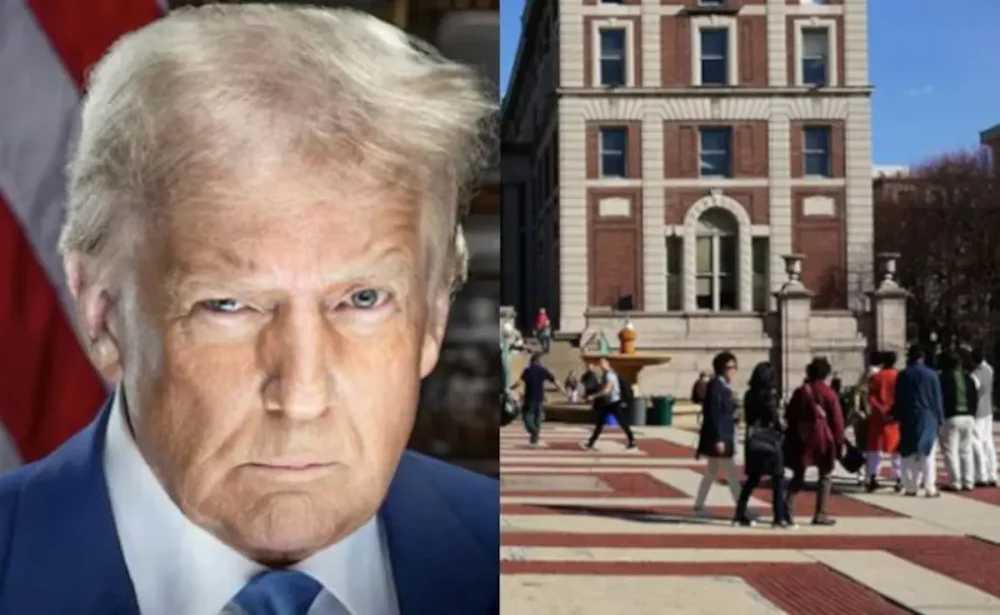
The 2026 midterm elections will mark an important turning point for Indian Americans. The community has long been celebrated for its achievements in medicine, technology, entrepreneurship, hospitality, academia and business. But increasingly, another measure of success matters: civic power.
On November 3, Americans will elect all 435 members of the House of Representatives and 35 senators, along with governors, state legislators and local officials. With control of Congress finely balanced, comparatively small groups of voters concentrated in competitive states and congressional districts can matter enormously.
That’s where the Indian American vote comes into play. Decisive and with ability to swing electoral outcomes in key states and districts.
More than 5.2 million people of Indian origin live in the United States, according to research cited by the Carnegie Endowment for International Peace. Its 2026 Indian American Attitudes Survey was based on a nationally representative sample of 1,000 Indian American adults.
The community’s geographic footprint is politically significant. Census-based 2020–2024 estimates put the Asian Indian population at approximately 551,000 in Texas, 427,000 in New Jersey, 177,000 in Georgia, 160,000 in Pennsylvania, 128,000 in Michigan and 131,000 in North Carolina.
Those numbers alone do not translate into votes. Not every Indian American is a citizen, not every citizen is able to vote, and not every eligible voter turns out at the polls. Yet geography matters. Indian Americans are increasingly concentrated in precisely the suburban communities where close elections can be won or lost.
Consider Georgia, Michigan, Pennsylvania and Texas. Reporting on the midterms has identified these states, together with New Jersey, as places where Indian American voters could become consequential in competitive contests. In Texas, communities such as Sugar Land, Plano and Irving illustrate how Indian American voters have become part of the battle for the suburbs.
This does not mean Indian Americans constitute a predictable political bloc.
Recent data point instead to a community becoming more politically diverse. The 2026 AAPI Voter Survey found that 66 percent of Asian Indian respondents preferred Democratic candidates for the Senate, versus 22 percent preferring Republicans. But the subgroup samples were comparatively small, meaning these numbers should be understood as survey preferences, not election forecasts.
That independence may ultimately increase the community’s political relevance. Neither Republicans nor Democrats should assume they own the Indian American vote.
Issues ranging from inflation, healthcare, education, immigration, public safety and discrimination compete for voters’ attention. In other words, Indian Americans are increasingly voting not simply as members of a diaspora but as Americans making judgments about their families, communities and country.
My own town of Trumbull in Connecticut, offers a compelling lesson in how civic participation can translate into political influence. Census data show that Asians now constitute 9.2 percent of Trumbull’s population, although that figure includes Asian communities beyond Indian Americans.
The significance of such numbers becomes clearer when measured against actual electoral margins. In the Trumbull portion of the 2024 State House District 122 contest, the Democratic and Republican candidates were separated by just 11 votes. In the townwide Registrar of Voters election, only 85 votes separated the two candidates.
These results do not prove that Indian Americans determined either contest. They demonstrate something arguably more important: in local and state races decided by tens or hundreds of votes, an engaged community that registers, votes and participates consistently can possess influence vastly greater than its percentage of the population might suggest.
Trumbull is a microcosm of the larger American story. The question is not whether Indian Americans are numerous enough to dominate an election. They need not be. The real question is whether they are concentrated, registered, informed and motivated enough to matter when the margin is narrow.
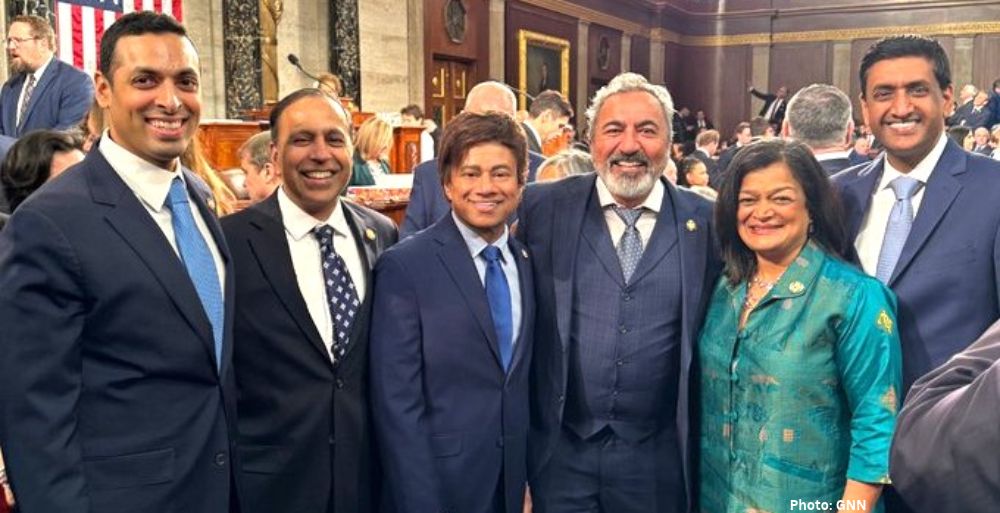
The rise of Indian American candidates reinforces that evolution. Democratic Representatives Ro Khanna, Pramila Jayapal, Ami Bera and Suhas Subramanyam are among those seeking reelection to Congress in 2026. Vivek Ramaswamy is running for governor of Ohio as a Republican. In California, Ro Khanna faces Republican Ritesh Tandon, while in Washington Pramila Jayapal faces Republican Nirav Sheth.
These contests make an important point: Indian American political empowerment no longer belongs to one party or ideology.
Civic responsibility must therefore transcend partisanship.
Neil Makhija, president of Indian American Impact and an election-law expert, once described second-generation Indian Americans as “a bridge” between immigrant communities and American civic life: “We have the experience, we grew up in immigrant families, but we are also very much a part of the American public and civic life, and want to see the two come together.”
That idea deserves attention.
Voting is only the beginning. Civic responsibility means learning about candidates rather than relying on social-media slogans. It means attending school-board and town meetings, supporting qualified candidates, volunteering, contributing to campaigns where appropriate, serving on local commissions and, above all, encouraging the next generation to view public service as seriously as medicine, engineering or entrepreneurship.
Indian American entrepreneur and community voice Nitin Bajaj put the challenge succinctly: “Civic influence develops through participation, relationships, credibility, and sustained engagement.”
For decades, Indian Americans have accumulated educational, professional and economic capital. The next frontier is to translate that achievement into democratic participation.
The community does not need to speak with one political voice. In fact, it should not. Democracy is strengthened when citizens debate, disagree and then vote according to their convictions.
But there is one principle on which Indian Americans can agree: our voice matters only when we use it.
In elections decided by narrow margins, particularly in competitive states and congressional districts, Indian Americans may increasingly constitute part of the difference between victory and defeat. The greater opportunity, however, extends beyond a single election.
It is to move from being spectators of American democracy to becoming indispensable participants in it.
And that is both our power and our civic responsibility.