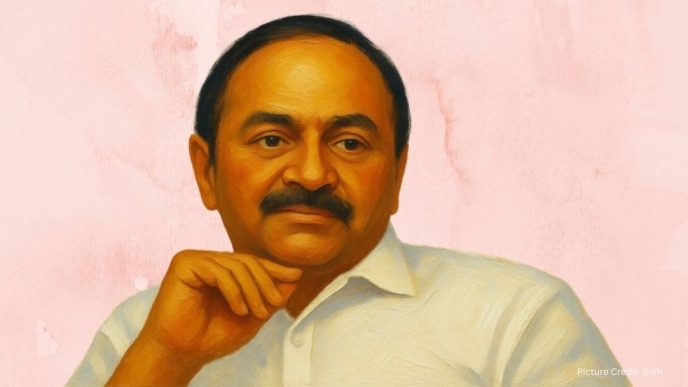

The Congress party has officially nominated V.D. Satheesan as its candidate for the Chief Minister position in Kerala, signaling a strategic shift in its leadership approach ahead of upcoming elections.
In a significant political move, the Indian National Congress has nominated V.D. Satheesan as its candidate for Chief Minister of Kerala, a decision announced during a party meeting held on March 15, 2024, in Thiruvananthapuram. This nomination comes ahead of the upcoming state assembly elections scheduled for May 2024 and marks a pivotal step for the Congress party as it seeks to regain ground against the incumbent Left Democratic Front (LDF) led by Chief Minister Pinarayi Vijayan.
Background on V.D. Satheesan
V.D. Satheesan, a veteran politician with over two decades of experience, has been serving as the Leader of the Opposition in the Kerala Legislative Assembly since 2021. He represents the Malappuram constituency, a position he has held since 2016. Known for his articulate communication and engagement with grassroots issues, Satheesan’s leadership style is anticipated to resonate with a broad spectrum of the electorate.
Satheesan has also been a key figure in the Congress party’s efforts to address pressing local issues, including education, healthcare, and development. His tenure as the Leader of the Opposition has been marked by confrontations with the ruling government on various policy matters, particularly concerning the management of public health and welfare programs.
Party Dynamics and Electoral Strategy
The selection of Satheesan reflects a strategic approach by the Congress party to present a unified front in Kerala, a state where it has faced significant challenges in recent electoral contests. In the 2021 assembly elections, the Congress-led United Democratic Front (UDF) suffered a considerable defeat, securing only 40 out of 140 seats, compared to the LDF’s commanding 99 seats. Analysts attribute this setback to internal divisions and a lack of cohesive leadership within the UDF.
Political observers note that Satheesan’s candidacy represents an attempt to rejuvenate the party’s image and connect with younger voters, a demographic that has shown increasing disillusionment with traditional political narratives. Dr. Anil Kumar, a political analyst, stated, “V.D. Satheesan embodies a new wave of leadership that could bridge the gap between the traditional Congress base and the younger electorate’s aspirations.”
Challenges Ahead
Despite the optimism surrounding Satheesan’s nomination, the Congress party faces numerous hurdles as it gears up for the elections. The LDF government, under Vijayan’s leadership, has implemented several welfare initiatives aimed at enhancing the socio-economic conditions of the state, earning it considerable public support. Initiatives such as the “Kerala Model” of development, which emphasizes inclusive growth and effective management of resources, as well as the state’s response to the COVID-19 pandemic, have bolstered the incumbent’s popularity.
Additionally, the Congress party must address its internal divisions that have historically undermined its effectiveness in Kerala. Factionalism within the party, particularly among leaders with competing interests, could pose significant challenges to maintaining a unified campaign strategy as elections approach.
Public Reception and Political Implications
Public reception to Satheesan’s nomination has been mixed. While many party supporters are enthusiastic about the fresh leadership, others remain skeptical regarding the Congress’s capacity to mount a serious challenge to the LDF. A local Congress supporter in Kochi remarked, “It’s about time the Congress party brought someone new to the forefront, but they need to show a clear vision for the future.”
The implications of this nomination extend beyond the immediate electoral contest in Kerala. A successful campaign led by Satheesan could carry significant ramifications for the Congress party’s national strategy, particularly in states where it seeks to reclaim lost ground. Analysts suggest that a strong performance in Kerala could invigorate party workers and supporters across the country, providing a much-needed morale boost as Congress navigates complex electoral landscapes.
Comparison with Opposition
In analyzing the competitive landscape, the Congress party must also consider the strategies employed by the LDF and other regional parties. The LDF’s governance has often been characterized by a focus on social welfare and economic development, which has resonated with many voters. As the elections draw nearer, the Congress will need to articulate a compelling narrative that highlights its vision for Kerala, while also addressing the perceived shortcomings of the current government.
Conclusion
The upcoming elections in Kerala represent a critical test for the Congress party as it rallies behind V.D. Satheesan. With high stakes involved, both the Congress and the LDF are expected to intensify their efforts to capture the electorate’s attention and support in the months leading up to the polls. The outcome of this electoral contest will not only determine the political landscape in Kerala but could also influence broader dynamics within the Congress party nationally as it confronts challenges in other states.