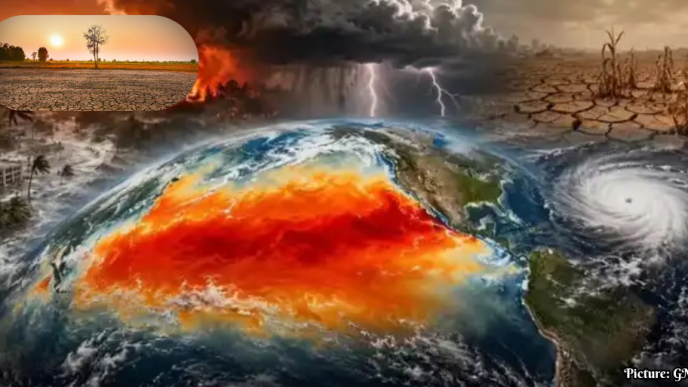
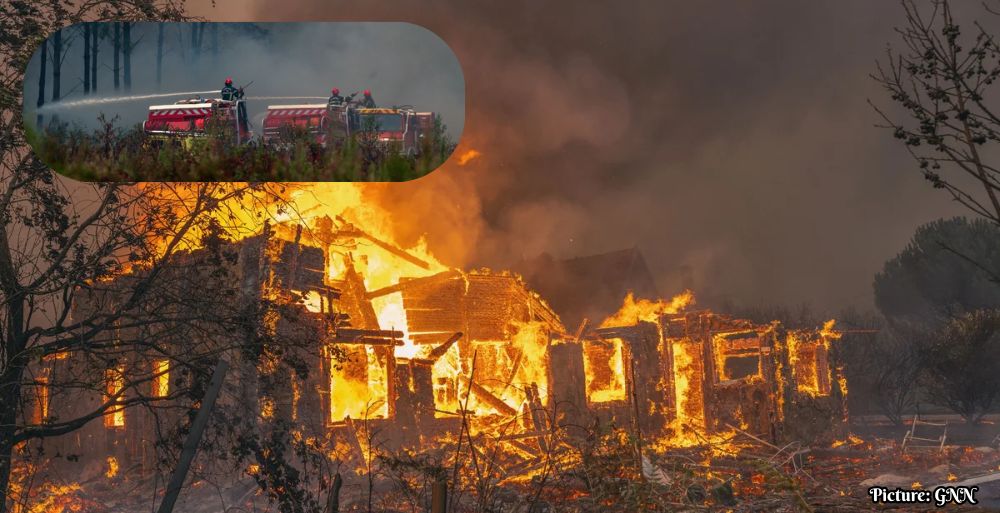
The UN climate chief has described the escalating wildfires in France and Spain as reaching national emergency levels, amid a new heatwave and increasing climate-related disasters worldwide.
As wildfires rage across southern France and Spain, local authorities are grappling with the escalating impact of climate change, which the United Nations has warned is reaching critical levels. On Tuesday, Simon Stiell, the UN’s climate chief, stated that the climate crisis is driving disasters that are forcing mass evacuations and severely impacting regional economies.
Stiell emphasized that “the climate alarm is blaring, from every direction,” highlighting the dire human and economic costs associated with climate-driven disasters. He noted that rising temperatures and extreme weather events are affecting populations globally, with North Africa experiencing temperatures nearing 49°C and devastating storms hitting Chile and Japan.
Stiell’s comments coincide with a renewed heatwave forecasted for Europe, exacerbating the conditions that have already led to record-breaking wildfires. “These spiraling disasters are now the lived reality for billions in a world getting rapidly hotter,” he warned, calling for a swift transition away from fossil fuels to renewable energy sources.
Current Situation in France and Spain
In France, severe wildfires have prompted the evacuation of thousands as firefighters work tirelessly to control the flames. The latest reports indicate that over 4,000 people have been evacuated from campsites near Bordeaux, while emergency shelters are being established to accommodate those displaced by the fires. The situation remains precarious, with authorities in Lège-Cap-Ferret reporting a “significant flare-up” in nearby areas.
Meanwhile, in Spain, authorities have lifted evacuation orders for 13 municipalities affected by wildfires, allowing approximately 34,000 residents to return home. However, around 21,000 individuals remain under evacuation due to ongoing fire threats. The Spanish Prime Minister, Pedro Sánchez, expressed cautious optimism, stating that although authorities “can begin to see the light at the end of the tunnel,” the country still faces “complex days and hours ahead” as emergency operations continue.
Community Response and Personal Accounts
Communities in both countries are coming together to support those affected. In France, an online petition advocating for a hunting ban in wildfire-affected areas has garnered over 210,000 signatures. The petition highlights the plight of surviving wildlife, urging the creation of protection zones to aid recovery efforts.
Personal accounts from those impacted by the fires reflect a deep sense of loss and concern about the future. Antoine Latipau, an organic winemaker in southern France, described losing the majority of his vineyard to the flames and expressed feelings akin to mourning. “It’s a little bit like a mourning of sorts,” he stated, illustrating the emotional toll on local farmers who rely on the land for their livelihoods.
Others, like Lucy, a resident of France, noted a shift in public perception regarding climate change, stating that many are beginning to connect the dots between recent wildfires and climate-related impacts. “More people are starting to think: is this climate change?” she remarked, underscoring a growing awareness of the urgency surrounding climate action.
Scientific Insights on Wildfire Effects
Experts warn that the effects of the wildfires may linger long after the flames have been extinguished. Research has indicated that the health impacts of wildfire smoke extend far beyond the immediate area, potentially affecting populations hundreds of miles away. Kai Chen, an associate professor at Yale, noted that exposure to wildfire smoke can lead to increased hospitalizations for respiratory and cardiovascular issues.
The long-term consequences of wildfires are often underestimated, with studies from previous incidents indicating that health challenges can persist for years. The Maui Wildfire Exposure Study has revealed ongoing health struggles among survivors, highlighting the need for sustained support and intervention following such disasters.
European Union’s Support and Preparedness
The European Union has mobilized resources to assist both France and Spain in their firefighting efforts. Air support, including planes and helicopters from various member states, has been dispatched to help contain the blazes. EU spokesperson Anna-Kaisa Itkonen emphasized the importance of collective resource pooling among member states to effectively tackle natural disasters.
As the wildfires continue to pose a significant threat, Stiell’s call for urgent climate action resonates more than ever. He urged nations to abandon fossil fuels swiftly and invest in renewable energy to mitigate the ongoing crisis. “What needs to be done is equally clear: leave coal, oil and gas behind faster, scale up renewables, and protect people where the impacts are already hitting hardest,” he concluded.