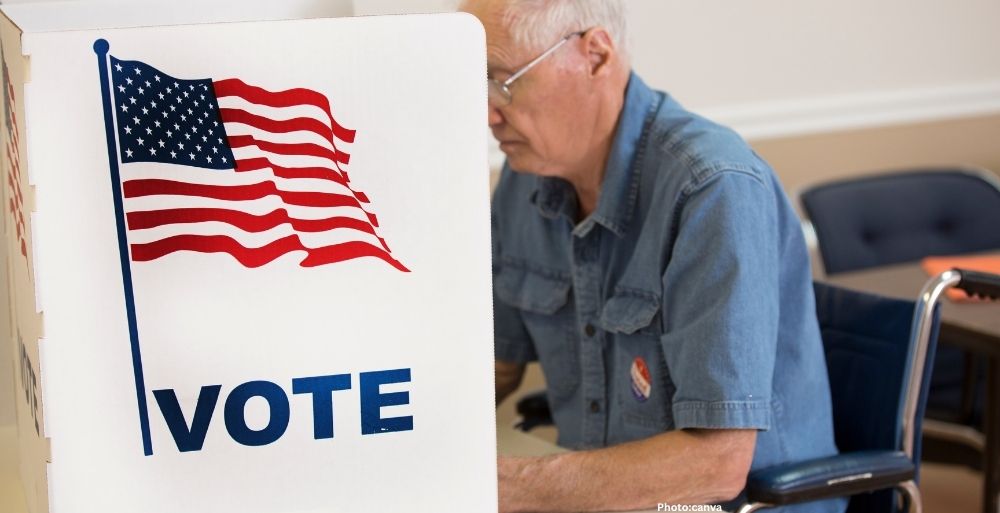
A nationwide survey reveals that the Democratic Party leads the Republican Party in voter support as the November midterm elections approach, with inflation and economic concerns dominating the political landscape.
The Atlas National Poll, released this week, indicates that 54.6 percent of U.S. adults would support a Democratic candidate if the midterm elections were held today. In contrast, 40.1 percent expressed support for a Republican candidate, while 5.3 percent of respondents indicated they were undecided or would not participate in the election.
The poll, which surveyed a total of 2,069 U.S. adults from May 4 to May 7, has a margin of error of approximately 2 percentage points. This data highlights a clear partisan divide among voters, particularly among those who supported former Vice President Kamala Harris during the 2024 presidential election. An overwhelming 98 percent of these voters indicated they would likely support a Democratic candidate in the upcoming midterms. On the Republican side, nearly 90 percent of those who voted for former President Donald Trump expressed their intention to back a Republican candidate in November.
Comparative Polling Insights
While the Atlas National Poll demonstrates a significant lead for the Democrats, other polling data presents a tighter race. A recent CNN poll reported that approximately 45 percent of Americans would back a Democratic candidate, compared to 42 percent who would support a Republican candidate if the elections were held at that moment. This discrepancy underscores the diverse methodologies and timelines of various polls, resulting in differing outcomes and interpretations.
Key Voter Concerns
Economic issues, particularly inflation and the rising cost of living, are at the forefront of voters’ minds as they prepare for the midterms. The Atlas poll found that 49 percent of respondents identified inflation as a significant concern, while 41 percent pointed to the U.S. economy and job growth as major challenges facing the nation. These economic anxieties have been exacerbated by recent global events, notably the ongoing conflict in Iran, which has contributed to surging energy prices.
As of Tuesday, the price of international standard Brent crude oil was trading at around $108 per barrel, a stark increase from approximately $70 prior to the onset of the conflict. U.S. gas prices have also seen a dramatic rise, with the national average reported at $4.50 per gallon according to data from the American Automobile Association (AAA). This marks a continuation of elevated prices, as gas costs have consistently remained above $4 per gallon since late March.
Government Response and Economic Implications
The Biden administration is facing mounting political pressure to address the situation in Iran, with critics highlighting the rising global energy costs as a significant factor affecting American consumers. During a recent press conference, President Biden defended the administration’s stance on rising prices, characterizing these increases as a necessary, albeit temporary, consequence in pursuit of a long-term nuclear agreement with Iran. “As soon as this is over, you’re going to see gasoline and oil drop like a rock,” the president asserted in remarks made in the Oval Office.
Economic analysts suggest that the ongoing conflict and its repercussions on energy prices could significantly influence voter sentiment as the midterms approach. Rising costs may sway undecided voters and impact turnout, particularly among those who are feeling the financial strain of inflation and high gas prices. This situation creates a precarious environment for the Democratic Party, which has historically been associated with addressing economic inequality and consumer concerns.
Potential Electoral Consequences
As the November midterms draw nearer, the dynamics of public support, economic issues, and party loyalty will play a critical role in shaping the electoral landscape. The Democratic Party’s current lead in polling indicates a favorable environment for the party, but the tight margins in other surveys point to the potential for significant changes as voter concerns evolve. Both parties are likely to intensify their outreach efforts, focusing on key issues such as economic stability, job growth, and inflation.
Furthermore, the upcoming midterms will serve as a crucial test for both parties, particularly as they navigate the complexities of public opinion amid economic challenges. The interplay between voter concerns and party messaging will be pivotal in determining the outcomes of various races across the country.
In conclusion, while the current polling data shows the Democratic Party with a notable lead ahead of the midterms, the fluctuating nature of voter sentiment and economic realities suggests that both parties must remain vigilant and responsive to the needs and concerns of the electorate as the elections approach.