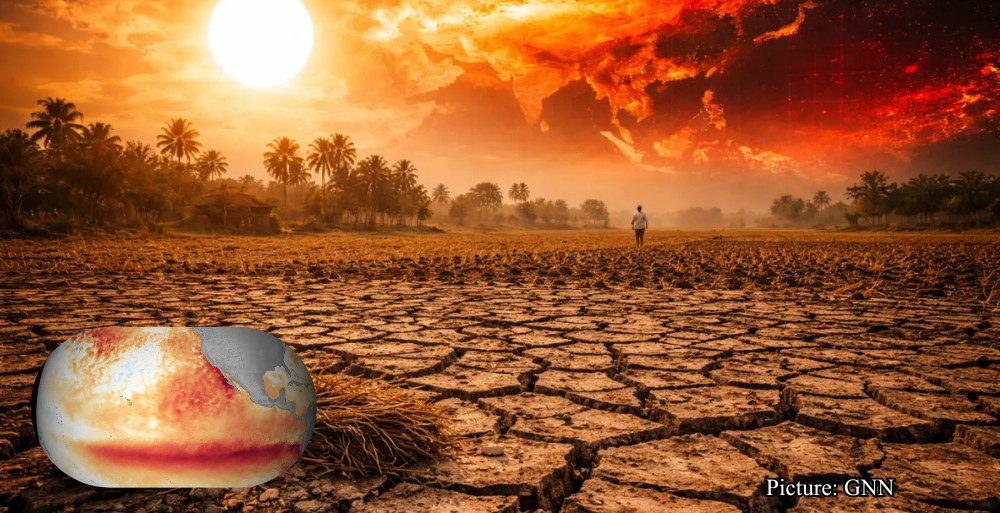
A recent study reveals that rising global temperatures could trigger natural feedback loops that may amplify warming by as much as 30%, heightening the urgency for comprehensive climate action.
A newly published study in the journal Environmental Research Letters underscores the significant role of natural emissions in exacerbating climate change, highlighting that feedback mechanisms in ecosystems may further elevate global temperatures by 20% to 30% by the end of the century. The findings are particularly alarming, as they suggest that existing climate models may significantly underestimate these impacts.
The Mechanisms of Feedback Loops
The research indicates that as global temperatures rise due to the combustion of fossil fuels, various ecosystems—including forests, wetlands, and permafrost areas—are undergoing transformations that lead to the release of greenhouse gases like methane and carbon dioxide. For instance, thawing permafrost in polar regions releases methane, a potent greenhouse gas, while increased incidence of wildfires and warming water bodies contribute additional carbon emissions. These natural feedback loops, which have long been acknowledged by scientists, are often overlooked in climate projections that primarily focus on anthropogenic, or human-caused, emissions.
Lead researcher Sam Abernethy of Spark Climate Solutions emphasized the critical nature of these findings, stating, “This hidden multiplier is missing from the models guiding climate policy, so those models are likely underestimating how much warming is coming – and overestimating how much carbon we can still afford to emit.” This warning highlights the potential for significant underestimations of future climate impacts if these natural emissions are not adequately considered.
Projected Temperature Increases and Implications
The study projects that additional warming from natural emissions could contribute an estimated increase of 0.2°C to 0.4°C to the global average temperature by the close of this century. The extent of this increase is contingent upon the actions taken by nations to combat climate change. In scenarios where emissions are rapidly reduced, the increase might be limited to 0.2°C; however, under a continuing high-emissions trajectory, a rise of 0.4°C appears more probable.
Current global climate policies are insufficient, with projections indicating a potential rise of around 2.6°C above pre-industrial levels, according to Climate Action Tracker. Such an increase would carry severe consequences, including widespread disruptions due to rising sea levels, agricultural losses, and intensified extreme weather events, potentially affecting billions globally.
Urgency of Addressing Feedback Mechanisms
The urgency of addressing these feedback loops has been highlighted by recent statements from the United Nations, which acknowledged that the target of limiting global temperature rise to 1.5°C above pre-industrial levels is likely to be breached within a few years. This acknowledgment aligns with the increasing frequency and intensity of climate-related events, such as the record heatwaves and wildfires experienced during the past summer.
Co-author Rob Jackson, a scientist at Stanford University, described the study’s findings as a “wake-up call,” stressing the necessity of integrating these feedback mechanisms into future climate policies. Jackson remarked, “Failure to do so will make meeting the world’s climate goals less and less likely.” This sentiment reflects a growing consensus among scientists regarding the need for more comprehensive climate strategies that encompass both human and natural sources of emissions.
Concerns Over Potential Tipping Points
Ongoing research has raised alarms about the risk of catastrophic tipping points within the climate system. Previous studies have warned that significant melting of the Greenland and Antarctic ice sheets, extreme thawing of permafrost, and alterations in vital ocean currents could propel the climate into an irreversible state of runaway global warming. Such scenarios underscore the importance of proactive measures to mitigate climate change.
Despite the alarming nature of the findings, the study also indicates that action to reduce fossil fuel emissions can still help mitigate the impact of natural emissions. Bill Ripple, an ecologist at Oregon State University who has previously authored research on runaway heating, commented that while the new study is significant, it does not necessarily imply that a “Hothouse Earth” scenario is inevitable. Ripple stated, “This provides another warning about the possibility of reinforcing feedbacks that can amplify the warming humans initiate.”
Conclusion: The Imperative for Action
The findings of this study illuminate the critical importance of rapid and substantial reductions in fossil fuel emissions to minimize the risk of activating natural processes that contribute to climate change. As the planet continues to warm, the interrelationship between human activities and natural feedback loops will be pivotal in shaping the future climate landscape. The urgency for decisive action is greater than ever, as every fraction of a degree of warming increases the risk of triggering further greenhouse gas emissions, thereby exacerbating the ongoing climate crisis.