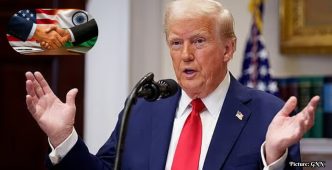
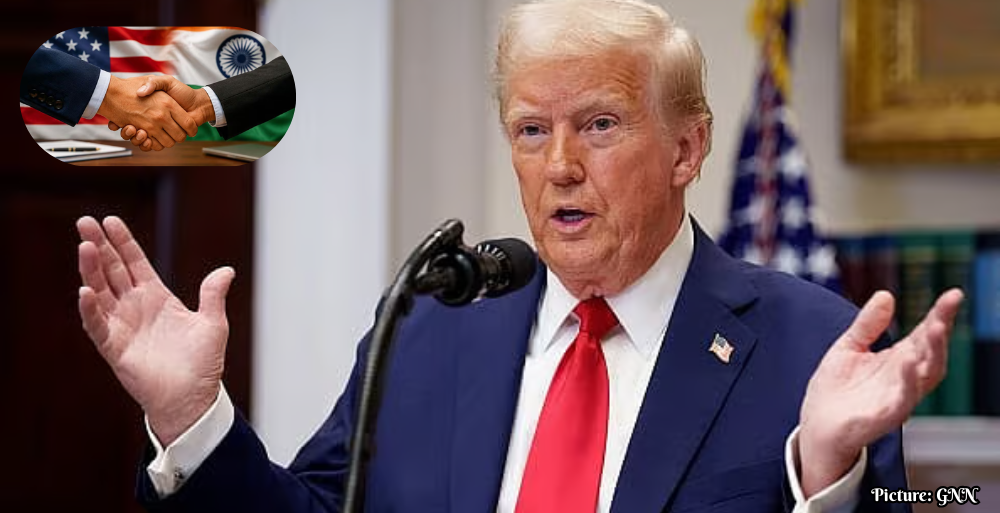
U.S. President Donald Trump expressed optimism regarding the potential for a trade agreement with India, emphasizing his friendship with Prime Minister Narendra Modi and the recent negotiations aimed at strengthening bilateral economic ties.
U.S. President Donald Trump stated on June 4, 2026, that he is confident that the United States and India will reach a trade agreement, highlighting his positive rapport with Indian Prime Minister Narendra Modi. During a press briefing at the Oval Office, Trump remarked, “We will get to a deal because I like your prime minister a lot. He is a good friend of mine. We get along great, and we are gonna make a deal.” Trump’s comments come on the heels of a U.S. delegation’s recent visit to India, where negotiations for an interim bilateral trade agreement were conducted over four days.
Context of U.S.-India Trade Relations
The U.S.-India trade relationship has been characterized by a mixture of cooperation and tension. Over the years, various administrations have raised concerns about India’s trade policies, particularly regarding tariffs that are perceived to disadvantage American businesses. Trump’s assertion that India has “taken advantage” of U.S. trade policies resonates with longstanding grievances from American companies operating in India. He specifically pointed out that Indian tariffs have been significantly higher than those imposed by the U.S., stating, “They charged tremendous amounts of tariffs to our companies, and we didn’t charge them anything.” This sentiment reflects a broader discourse in U.S. trade policy, where many stakeholders advocate for a more balanced trade relationship.
Recent Developments in Negotiations
Following the recent negotiations, India’s Commerce Ministry reported that discussions were marked by a spirit of cooperation and pragmatism. Both sides have expressed a commitment to finding a mutually beneficial agreement that enhances bilateral trade and economic ties. The significance of these negotiations cannot be overstated, particularly in the context of shifting global economic dynamics and the need for both nations to strengthen their partnership against the backdrop of China’s growing influence in the region.
Historically, trade negotiations between the two countries have been challenging, often stalling over issues such as intellectual property rights, agricultural tariffs, and market access for U.S. firms in India. The current talks represent an opportunity for both nations to address these longstanding issues in a manner that could foster deeper economic integration.
Implications of a Potential Trade Agreement
If successful, a trade agreement between the U.S. and India could have far-reaching implications across multiple sectors, including technology, agriculture, and manufacturing. Analysts suggest that a comprehensive trade arrangement could facilitate greater access for U.S. companies to the Indian market, potentially leading to a reduction in tariffs that have historically hindered American exports.
Furthermore, the implications of such an agreement extend beyond bilateral trade. A strengthened economic partnership between the U.S. and India could serve as a counterweight to China’s dominance in the Asia-Pacific region. In recent years, both nations have taken strategic steps to enhance defense and security cooperation, further solidifying their relationship amid global geopolitical shifts.
Domestic and Political Considerations
The Biden administration’s approach to trade with India may also influence the outcome of ongoing negotiations. As the administration seeks to balance international economic priorities with domestic political considerations, the focus will likely be on addressing the needs of various stakeholders. This includes not only businesses looking to access new markets but also labor groups concerned about the implications of increased imports on U.S. jobs.
As negotiations progress, the political ramifications in both countries are significant. In the U.S., trade agreements often become flashpoints in election cycles, influencing voter sentiments and party platforms. Similarly, in India, Modi’s government must navigate domestic pressures to ensure that trade agreements are perceived as beneficial to Indian interests.
Conclusion
While President Trump’s optimistic remarks reflect a solid personal connection with Prime Minister Modi, the path to a successful trade agreement will require both nations to address complex economic interests and rectify longstanding trade imbalances. The outcome of current negotiations will be closely monitored, not only for its immediate economic implications but also for its potential to shape the future trajectory of U.S.-India relations and broader international trade policies.
In conclusion, the U.S. and India find themselves at a pivotal moment in their economic relationship. As both countries continue to engage in negotiations, the stakes are high, and the potential for a transformative trade agreement remains a topic of keen interest among policymakers and analysts alike.