A proposed green card policy change by the Trump administration triggered concern among businesses and immigration advocates, leading to private lobbying efforts that prompted officials to clarify that many applicants may not be required to leave the United States while pursuing permanent residency.
A recently announced Trump administration policy affecting green card applicants has sparked concern among business leaders across the United States, prompting a series of private discussions with White House officials and federal agencies over its potential impact on the workforce.
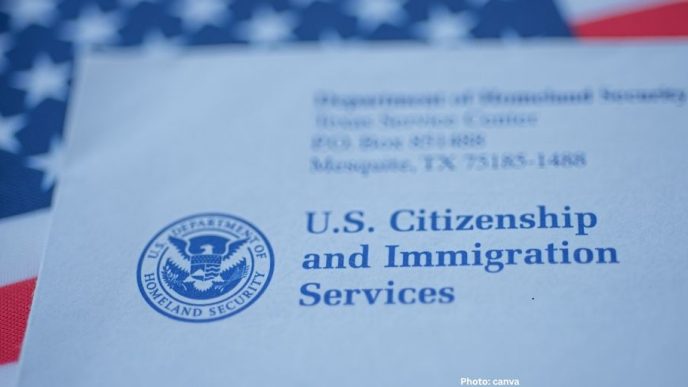
The controversy began after the U.S. Citizenship and Immigration Services (USCIS) guidelines announcement on May 22 stating that most foreign nationals seeking permanent residency should apply from their country of origin rather than from within the United States, except under “extraordinary circumstances.” The announcement raised questions among employers and immigration advocates because it offered limited details on how the policy would be implemented and who would be affected.
In the days that followed, business groups, technology companies, and industry leaders reportedly engaged with officials from the White House and the Departments of Homeland Security, Labor, and State, expressing concerns that the policy could disrupt workforces and create uncertainty for employers relying on international talent.
Among those seeking clarification was the U.S. Chamber of Commerce, which warned administration officials about the potential consequences for businesses.
Following the discussions, administration officials appeared to soften their messaging. According to reports, USCIS officials privately reassured business leaders that most work visa holders would not be affected by the policy. The agency also indicated to reporters that many immigrants seeking permanent residency would not be required to leave the United States while their applications were processed, although no formal public guidance has yet been issued.
Jennie Murray, president of the National Immigration Forum, an advocacy organization that works with Fortune 500 companies, said businesses directly communicated their concerns about the green card policy to administration officials.
“We are glad to know that the administration is listening to those concerns and willing to work with the American business community,” said Murray.
The softened stance on green cards highlights an ongoing tension that President Trump has amplified between businesses that rely on immigrant labor and immigration hawks within his political base.
Similar conflicts have surfaced before. Last summer, the administration announced a pause on immigration raids in the hospitality and agriculture sectors after employers complained about losing workers to enforcement actions. The administration also clarified that a new $100,000 fee on H-1B visas would apply only to new visas following backlash from the business community. Later in the year, Trump said he was “very much opposed” to a large-scale raid on a Hyundai facility in Georgia after business groups and investors voiced strong objections.
Business leaders have reportedly continued to engage administration officials through both formal and informal channels, including conversations with Commerce Secretary Howard Lutnick, members of the Kushner family, and other figures viewed as supportive of business interests, while also maintaining communication with the White House Domestic Policy Council regarding immigration policies that affect workforce availability.
Immigration attorneys say uncertainty remains despite recent reassurances. Some applicants who were initially concerned about the policy have reportedly been informed that implementation has been paused while officials determine how the guidance should be applied.
Neil Bradley, chief policy officer at the U.S. Chamber of Commerce, said that the organization had heard that some recent green card applicants are not required to return to their home country.
“This is welcome news, and we encourage the administration to provide greater clarity,” Bradley said.
A White House official has maintained that the policy memo restates long-standing law and is not expected to significantly affect skilled professionals or qualified applicants who comply with immigration law. Officials have indicated that decisions will continue to be made on a case-by-case basis, with some applicants allowed to remain in the United States while others may be required to complete the process abroad.
The issue also drew the attention of lawmakers in Congress. Louisiana Senator Bill Cassidy, a Republican with close ties to the business community, filed an amendment that would effectively reverse the green card policy for legal immigrants as part of a budget bill Republicans were debating Thursday night to fund federal immigration enforcement agencies. It remains unclear whether the amendment will receive a vote.
Despite signs of a softer approach, many employers and immigration lawyers remain cautious, noting that the administration has yet to issue detailed guidance outlining exactly who will be affected.
Jeremy Beck, co-president of NumbersUSA, an organization that advocates for lower levels of immigration, said he was not surprised by the reaction from businesses. Beck argued that employer-sponsored green card programs can leave workers dependent on a single employer for extended periods.
“The guidance does threaten to disrupt the captive labor benefit that employers enjoy in programs like the H-1B visa program,” Beck said. “I think what this guidance is doing… is merely exposing some of these long-standing problems with the nonimmigrant system.”
Others criticized what they described as an unofficial retreat from the policy without clear public guidance on how it would be enforced. Doug Rand, who served as a senior USCIS official during the Biden administration, argued that the ambiguity allows the administration to send different messages to different audiences.
“They get to have it both ways. They can tell their base, ‘we haven’t ruled out anything’ and tell the business community, ‘Don’t worry, you’ll be fine,’” Rand said.
For now, businesses, immigration attorneys and applicants continue to await clearer direction as questions remain over how the policy will ultimately be enforced.