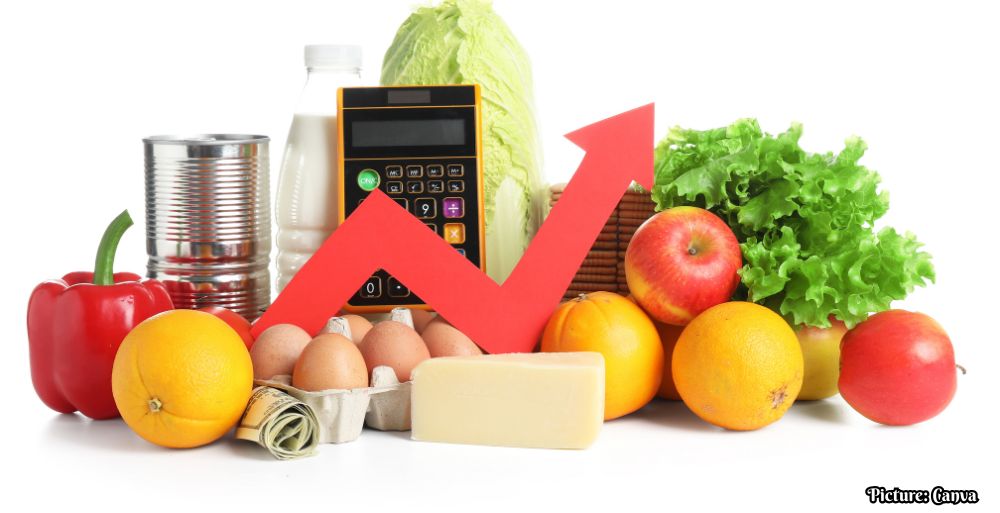
As grocery prices continue to soar, American families are increasingly adjusting their shopping habits, seeking discounts and altering their diets in response to the highest food price inflation in decades.
In Lexington, Massachusetts, Apral Jack’s grocery shopping strategy has evolved into a careful hunt for bargains as rising prices reshape family meals. Jack, 50, now consults a mobile app to identify deals at her local supermarket, Stop & Shop, and meticulously scrutinizes weekly circulars for coupons. “The apples went up here, the ones I eat, so now I’m not going to get them here. I’ll go to Market Basket, where I can get them cheaper,” she remarked while navigating the aisles.
This experience is not unique to Jack; it reflects a nationwide trend as Americans grapple with the largest spike in grocery prices in 50 years. Since 2019, food prices have surged by 33% across U.S. cities, a stark contrast to the 6.4% increase observed over the previous seven and a half years. Data from the U.S. Bureau of Labor Statistics highlights the significant impact of various factors, including supply chain disruptions caused by the COVID-19 pandemic, natural disasters affecting agricultural output, tariffs on imported goods, and geopolitical tensions, such as Russia’s invasion of Ukraine.
Economic Context and Consumer Sentiment
With the cost of food skyrocketing, the issue of affordability has become increasingly prominent in discussions leading up to the fall midterm elections. While some economic indicators suggest that Americans may have a marginally better capacity to cope with these price increases, the reality is more complex. Average weekly earnings for full-time workers have slightly outpaced grocery costs since 2019, but many consumers feel the strain of rising expenses across multiple sectors, including housing and utilities.
Jared Bernstein, a senior policy fellow at the Stanford Institute for Economic Policy, pointed out that while wages have grown, consumers retain a keen awareness of how far their dollars stretch in the grocery aisle. “You need groceries to live,” he stated, underscoring the fundamental role of food in household budgets. He noted that, prior to the pandemic, wage growth had consistently outpaced grocery price increases, contributing to a sense of financial security that many now feel is eroding.
Regional Price Variances and Consumer Strategies
Regional disparities in food prices further complicate the situation. For instance, food prices for home consumption in St. Louis increased by 2% year-over-year as of June, while San Francisco experienced a rise of 6%. As inflation affects different locales unevenly, consumers are adapting their shopping habits accordingly. Residents of urban areas where food price inflation has exceeded national averages reported adopting strategies such as discount hunting, brand switching, and increased reliance on food banks.
In Texas, where beef prices exemplify the challenges of rising grocery costs, Ada Torres, a 60-year-old resident of Cleveland, noted that a pound of ground beef reached $6.82 in June, a staggering 79% increase since early 2019. This price surge can be attributed to a decreasing U.S. cattle herd, drought conditions, and the rising costs of feed and fuel. Torres, who manages a household of five, remarked, “Prices are sky-high. One hundred dollars’ worth of groceries these days is nothing. Maybe you can bring home seven family-size items, if you manage to find a good deal.” As a result, her family has shifted their diets, relying more on chicken and deli meats, which she worries may not be healthy for her grandchildren.
Adaptations in Urban Centers
In urban environments like San Francisco, families are adopting similar measures. Jack Chang, a self-employed barber, has adjusted his family’s food purchasing habits due to increased living costs and reduced income from clients laid off in the tech sector. Chang shared, “Since I have five mouths I have to feed, basically — and then sometimes my mom, too — it’s a lot on me financially.” The family frequently opts for generic brands and takes advantage of food assistance programs like SNAP to help alleviate their financial burden.
Meanwhile, in Hawaii, where food prices have always been high due to the reliance on imported goods, the situation has become even more challenging. Pastry chef Amanda Tabadero from Kāneʻohe expressed her frustration with local prices, stating that the cost of Maui-grown strawberries has risen significantly. “It makes me sad. I want to use local stuff,” she lamented, as the price of essential baking ingredients, such as milk, has also soared. Her experiences reflect a broader trend of consumers seeking affordable alternatives, often turning to big-box retailers for better pricing.
Conclusion
The ongoing rise in grocery prices is transforming shopping habits across the United States, prompting many families to adopt strategic approaches to food purchasing. As inflation persists, the implications for household budgets and consumer behavior are likely to resonate well beyond the grocery aisle, potentially shaping economic and political discussions in the months ahead. The evolving landscape of food pricing underscores the critical connection between economic conditions and the day-to-day experiences of American families.