As a wave of youth protests against rising unemployment sweeps across India, journalists covering these events face accusations of bias and complicity, raising questions about media integrity and government accountability.
NEW DELHI — A surge of protests by young people across India, ignited by rising unemployment and dissatisfaction with government policies, has thrust journalists into the spotlight, where they encounter significant backlash regarding their reporting. These protests began in late September 2023, drawing thousands to the streets to voice their frustrations over joblessness and inadequate opportunities in a nation where the youth demographic constitutes a significant portion of the population.
According to the Centre for Monitoring Indian Economy (CMIE), approximately 40% of India’s population is aged 25 or younger, a group that has been disproportionately affected by economic challenges exacerbated by the COVID-19 pandemic. The unemployment rate in urban areas has surged to around 8%, with many young citizens expressing disillusionment over the government’s failure to create sufficient job opportunities. The ongoing protests highlight the growing discontent among a demographic that is increasingly vocal about their grievances.
Media’s Role in Shaping Narrative
In this context, certain segments of the Indian media have come under fire, being labeled as ‘lapdogs’ of the government by critics. Accusations have emerged suggesting that some media outlets are downplaying the severity of the protests, framing the demonstrations as minor disturbances rather than significant expressions of public dissent. This characterization has raised concerns about journalistic integrity and bias, as many believe that media coverage should reflect the voices of the protestors rather than align with a governmental narrative.
Journalists attempting to cover these events are facing dual threats: harassment from protesters who accuse them of misrepresentation, and pressure from government entities that view their reporting as potentially inciting unrest. This precarious situation raises pressing questions about press freedom and the safety of journalists in India, where the environment for reporting on political issues has become increasingly fraught.
Government Response
In light of the escalating protests and burgeoning media scrutiny, government officials have reiterated their commitment to addressing the issue of youth unemployment. Anurag Thakur, the Union Minister for Youth Affairs and Sports, emphasized the government’s dedication to creating job opportunities through various initiatives, including skill development programs and infrastructure investments. Thakur stated, “We are committed to ensuring that our youth have the means to succeed and thrive in a competitive job market.” Nevertheless, many young protestors argue that these measures have yet to translate into tangible employment opportunities.
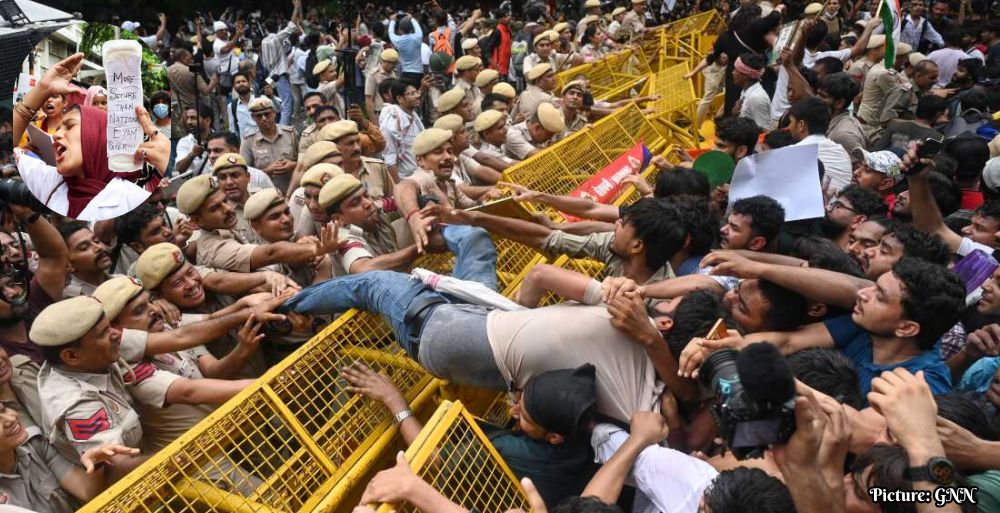
The government’s handling of the protests has also garnered criticism, particularly regarding allegations of excessive force by law enforcement against demonstrators. Reports have emerged of violent clashes between police and protestors, raising concerns about civil liberties and the right to peaceful assembly in India. Such incidents have sparked public outcry and intensified scrutiny of the government’s methods in dealing with dissent.
Public Opinion and Future Implications
Public sentiment regarding the protests and the media’s role in covering them appears to be mixed. A recent survey conducted by the India Today Group revealed that while 62% of respondents expressed sympathy for the protestors’ grievances, 55% voiced distrust toward media coverage, feeling it failed to adequately represent the complexities of the situation. This disconnect between public perception and media representation may have long-term implications for both journalistic credibility and governmental accountability.
As the protests develop, the relationship between the media and the government is likely to face heightened scrutiny. Journalists confront the dual challenge of accurately reporting on unfolding events while navigating potential backlash from both governmental authorities and the public. The outcome of these protests and the nature of subsequent media coverage will play a pivotal role in shaping India’s political landscape, especially with crucial elections looming in 2024.
The ongoing youth protests in India underscore the critical intersection of journalism, government policy, and public sentiment. As both the protests and media portrayals continue to evolve, the necessity for fair and transparent reporting becomes increasingly vital in understanding the broader implications for Indian democracy and civil society. The unfolding events serve as a reminder of the importance of an independent press in holding power accountable and giving voice to the concerns of the populace.
Ultimately, the trajectory of these protests could redefine the engagement between India’s youth and the government, while also influencing the media’s role as a watchdog in a democracy that is grappling with significant social and economic challenges. How this situation develops will not only affect the immediate political landscape but also set precedents for future interactions between the state and civil society.