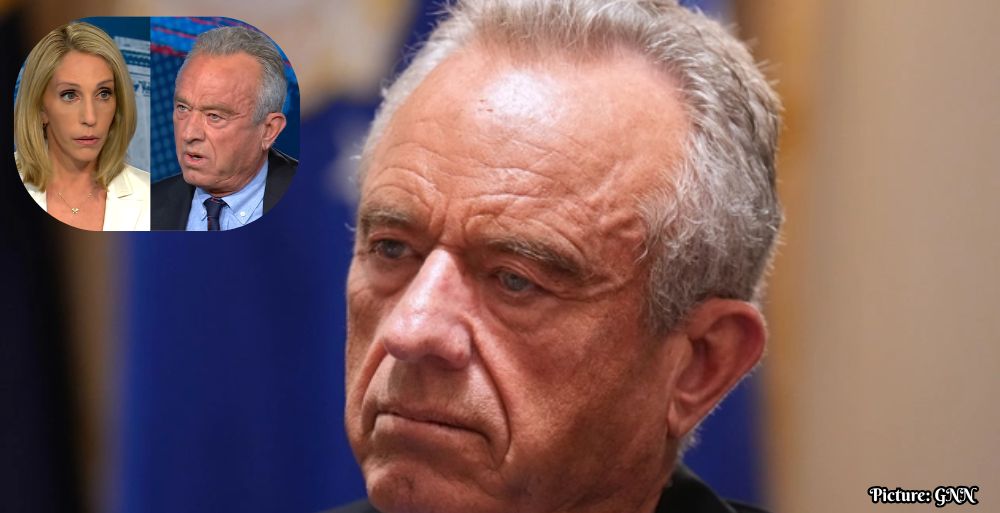
A live interview between U.S. Secretary of Health and Human Services Robert F. Kennedy Jr. and CNN presenter Dana Bash escalated into a contentious debate regarding the handling of the COVID-19 pandemic and the implications for constitutional rights.
In a recent segment aired on CNN, U.S. Secretary of Health and Human Services Robert F. Kennedy Jr. engaged in a heated exchange with presenter Dana Bash. The discussion took place as part of a broader dialogue on public health and the lessons learned from the COVID-19 pandemic. Bash questioned Kennedy on the strategies the country should adopt to better prepare for potential future health crises, emphasizing the need for a proactive approach.
During the interview, Bash, 55, challenged Kennedy, 72, to focus on actionable solutions rather than devolve into a debate about constitutional rights. Kennedy, however, diverted the conversation to argue that the pandemic had led to significant infringements on Americans’ constitutional rights. He stated, “We need to protect our constitutional rights. That is a primary obligation for our country.” This assertion set the tone for a back-and-forth exchange that highlighted the differing priorities of the two individuals.
Contentious Discussion on Constitutional Rights
Bash pressed Kennedy for clarification on how he envisioned addressing future pandemics, asking, “What do you propose to do?” Rather than provide specific solutions, Kennedy reiterated his concerns about the perceived erosion of constitutional rights during the pandemic. He stated, “Well, during COVID we completely dismantled our constitutional rights. We began censoring people in violation of the First Amendment.” This comment drew immediate pushback from Bash, who emphasized the need for clarity in discussing health policy.
As the interview progressed, Kennedy accused Bash of contributing to what he termed “press malpractice.” He asserted that journalists should foster skepticism toward authority, implying that Bash was not fulfilling that role. Bash countered his claims by stating, “I don’t want to use this interview to allow you to say things that aren’t entirely true,” highlighting the importance of factual accuracy in discussions about public health.
Debate on Vaccine Efficacy
In the midst of the heated debate, Bash defended the COVID-19 vaccine’s effectiveness, stating, “It is actually factually true that the COVID vaccine worked. The COVID vaccine prevented deaths. There is data upon data upon data.” She referenced a study published in the National Library of Medicine, which estimated that vaccinations had prevented approximately 14.4 million deaths globally, with figures rising to 19.8 million when considering excess mortality rates. This data underscores the scientific consensus regarding the vaccine’s role in mitigating the severity of the pandemic.
Kennedy’s remarks about the treatment of dissenting opinions during the pandemic further fueled the contentious atmosphere. He claimed that doctors who raised concerns about public health policies were marginalized and vilified, although he did not provide specific examples or evidence to support this assertion. The exchange highlighted a broader tension between differing narratives surrounding pandemic response and the role of media in shaping public perception.
Implications for Public Discourse
The interview exemplified the challenges faced by public figures and media outlets in navigating complex health-related discussions, particularly in the aftermath of a global health crisis. As debates surrounding vaccination, public health mandates, and constitutional rights continue to evolve, the dialogue between policymakers and journalists remains crucial for informing the public. Kennedy’s insistence on the importance of constitutional rights resonates with a segment of the population that has expressed skepticism towards government interventions during the pandemic.
Looking ahead, the insights gleaned from such exchanges may play a significant role in shaping future health policies and public trust in governmental institutions. As the nation prepares for potential future health challenges, the need for clear communication and fact-based discourse will be paramount in addressing public concerns and fostering a collaborative approach to health crises.
Moreover, this incident reflects a larger trend in the media landscape where contentious discussions around health policy are often characterized by polarized narratives. The challenge for journalists like Bash is to balance the presentation of diverse viewpoints while ensuring that factual accuracy remains the cornerstone of public discourse. This balance becomes increasingly essential as misinformation can have dire consequences in public health crises, impacting everything from vaccination rates to compliance with health guidelines.
The Role of Media in Health Policy
The media’s role in health policy is not merely to report but to educate and inform the public about the complexities of issues like pandemics. This responsibility is particularly critical given the rise of misinformation in the digital age, where social media can amplify unverified claims and create echo chambers. Bash’s commitment to fact-checking during her interview with Kennedy represents an essential aspect of journalistic integrity, where the objective is not only to present differing opinions but to ground the conversation in established facts.
The implications of this interview extend beyond the immediate conflict between Kennedy and Bash, as they reflect the broader societal challenges in navigating health crises. As public health officials and media figures continue to engage in discussions about pandemic preparedness, the importance of fostering an informed citizenry cannot be overstated. Ultimately, the effectiveness of future public health responses will depend on the ability of both policymakers and journalists to communicate clearly, transparently, and factually—fostering trust and cooperation in times of uncertainty.