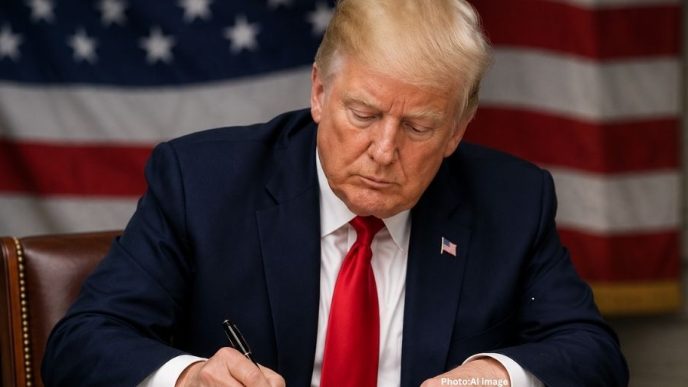
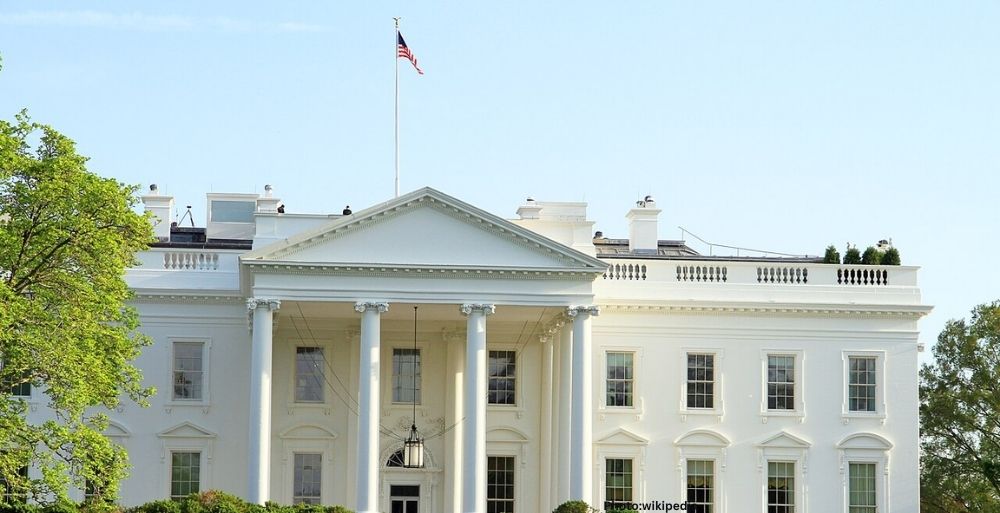
The White House has approved a new rule set to impose fixed time limits on the status of foreign students in the United States, drawing opposition from various educational and medical organizations.
The White House announced on [date of announcement], following a review, that it has completed the finalization of a rule that will alter the status of foreign students holding F, J, and I visas. The proposed regulation, which was released by the Department of Homeland Security (DHS) in 2025, aims to replace the current duration of status (D/S) policy with a fixed four-year period of admission. This change is expected to require foreign students to renew their status with the DHS after this initial window expires.
The Office of Management and Budget (OMB) cleared the final rule, designated as RIN: 1653-AA95, this week, marking a significant step towards its public release. The rule’s title, “Establishing a Fixed Time Period of Admission and an Extension of Stay Procedure for Nonimmigrant Academic Students, Exchange Visitors, and Representatives of Foreign Information Media,” indicates a broad scope that affects various categories of nonimmigrant students.
Background and Implications of the Rule
This regulation seeks to eliminate the open-ended nature of the D/S policy, which currently allows foreign students and exchange visitors to remain in the U.S. as long as they comply with the terms of their visa. The DHS’s proposed rule comes as a response to ongoing concerns about overstay rates, which can pose risks related to immigration enforcement and national security. The abstract of the rule indicates that it aims to clarify the length of stay for foreign students and improve the department’s ability to manage immigration compliance.
Historically, the D/S policy has been criticized for creating ambiguity regarding the duration of students’ authorized stays in the U.S. The proposed changes mirror efforts from the previous Trump administration, which faced significant pushback from medical organizations and higher education groups. Critics argue that the new regulations could disrupt students’ educational pathways by imposing unnecessary administrative hurdles.
Details of the New Rule
The new DHS rule proposes several key changes to the current immigration framework for nonimmigrant academic students and exchange visitors. Among these changes, the rule will:
- Establish a fixed time period of authorized stay for F, J, and I nonimmigrants, transitioning away from the D/S policy.
- Set the authorized admission and extension periods for F and J nonimmigrants to the duration of their programs, capped at four years.
- Prohibit F-1 nonimmigrants enrolled in graduate programs from changing their programs mid-study.
- Outline specific procedures for F-1 nonimmigrants wishing to change educational objectives, allowing them only to pursue programs at higher educational levels.
- Reduce the allowable period for F-1 nonimmigrants to prepare for departure from 60 days to 30 days after completing their studies or authorized practical training.
- Mandate the collection of biometric information for Extension of Stay (EOS) applications.
- Limit language-training students to a maximum aggregate stay of 24 months.
- Replace the D/S framework for I nonimmigrants with a fixed stay period not exceeding 240 days, with the option for EOS.
- Codify the definition of a foreign media organization for I nonimmigrant status.
Reactions from Stakeholders
Organizations such as the American Association of Colleges and Universities (AACU) and the Association of American Medical Colleges (AAMC) have voiced their opposition, arguing that the changes may create unnecessary barriers that could discourage international students from pursuing education in the U.S. These groups emphasize the importance of international students in enriching the academic environment and contributing to the U.S. economy.
In response to these concerns, the DHS has stated that the rule is aimed at enhancing the integrity of the immigration system, improving compliance, and ensuring that foreign nationals in educational programs can be tracked more effectively. Nevertheless, the backlash from educational and medical organizations indicates a significant divide over how to balance national security with the needs of foreign students.
As the rule moves closer to implementation, the implications for foreign students and academic institutions across the United States remain to be seen. The public release of the rule is anticipated, and further discussions will likely continue as stakeholders seek to adapt to this new regulatory landscape.