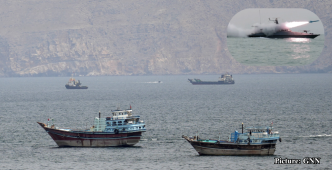

The Iranian military has announced its intention to prevent U.S. warships from entering the strategically significant Strait of Hormuz, a key maritime passage for global oil shipments, according to U.S. Navy officials.
On October 17, 2023, the U.S. Navy reported that Iranian forces have taken steps to restrict American naval vessels from accessing the Strait of Hormuz, a vital area through which approximately 20% of the world’s oil passes. This development underscores a marked escalation in tensions between Iran and the United States, particularly amid a backdrop of complex geopolitical dynamics in the region.
Strategic Importance of the Strait of Hormuz
The Strait of Hormuz is a narrow waterway connecting the Persian Gulf to the Gulf of Oman, making it a critical chokepoint for international shipping, especially oil transport. Historically, the strait has been a focal point for military and economic interests, not only for Iran and the U.S. but also for other nations reliant on oil shipments from the Middle East. The U.S. Navy has maintained a continuous presence in these waters for decades, engaging in freedom of navigation operations to assert its right to operate in international waters.
Recent Incidents and Iranian Actions
Reports from U.S. Navy officials indicate that Iranian vessels have been actively conducting maneuvers aimed at intimidating U.S. naval forces. These actions include close encounters that raise safety concerns among naval crews. Iranian military officials have justified these maneuvers as necessary for national security, asserting their right to protect what they deem territorial waters.
A senior U.S. Navy official emphasized the commitment of American forces to operate freely in international waters, stating, “Our forces are prepared to operate in international waters and will continue to do so in accordance with international law. Any attempt to block our ships will be met with a measured response.” This statement reflects the U.S. Navy’s ongoing strategy to maintain maritime security and uphold international norms in the face of increasing Iranian provocations.
Historical Context of Iran-U.S. Relations
The current tensions are deeply rooted in a history of adversarial relations between Iran and the United States, which dates back to the 1979 Iranian Revolution that resulted in the severance of diplomatic ties. The Strait of Hormuz has long been a flashpoint for military confrontations, particularly during the Iran-Iraq War in the 1980s, when both countries vied for control over the vital passage. In the years since, the U.S. has responded to various incidents in the strait, including attacks on oil tankers attributed to Iranian forces.
In 2019, the U.S. increased its military presence in the region following a series of assaults on oil tankers, which U.S. officials linked to Iranian operatives. In response to these perceived threats, Iran has frequently threatened to block the strait, leveraging its strategic position to exert pressure on the U.S. and its allies.
Potential Impact on Global Oil Markets
The Strait of Hormuz’s significance extends beyond military considerations, influencing global oil markets significantly. Any sustained tensions or interruptions in this maritime corridor could lead to substantial fluctuations in oil prices. Analysts warn that increased military activity in the strait may disrupt oil supply chains at a time when global markets are still recovering from the economic impacts of the COVID-19 pandemic and the ongoing conflict in Ukraine.
The potential for heightened military engagement in this region has led to increased scrutiny from international markets, which are sensitive to changes in oil supply and demand dynamics. Historical precedents suggest that even temporary disruptions in the Strait of Hormuz can lead to price spikes and increased volatility in global oil markets.
International Community’s Response
The rising tensions in the Strait of Hormuz have drawn attention from the international community, particularly countries that depend on energy shipments from the region. European nations, in particular, have called for de-escalation and dialogue between the United States and Iran to prevent further conflict. The United Nations has echoed these calls, urging both parties to exercise restraint and prioritize diplomatic solutions over military confrontations.
Conclusion: A Critical Juncture
The Iranian military’s declaration to restrict U.S. naval access to the Strait of Hormuz marks a significant escalation in an already volatile geopolitical landscape. As both nations navigate their complex relationship, the implications of these developments extend beyond mere military engagements, potentially impacting global oil markets and the broader international diplomatic framework.
The situation remains fluid, and the international community is closely monitoring developments in the Strait of Hormuz. The stakes are high, not only for the involved parties but also for global economies reliant on stable oil supplies. Moving forward, the focus on diplomatic engagement will be paramount to preventing further escalation and ensuring maritime security in this critical region.