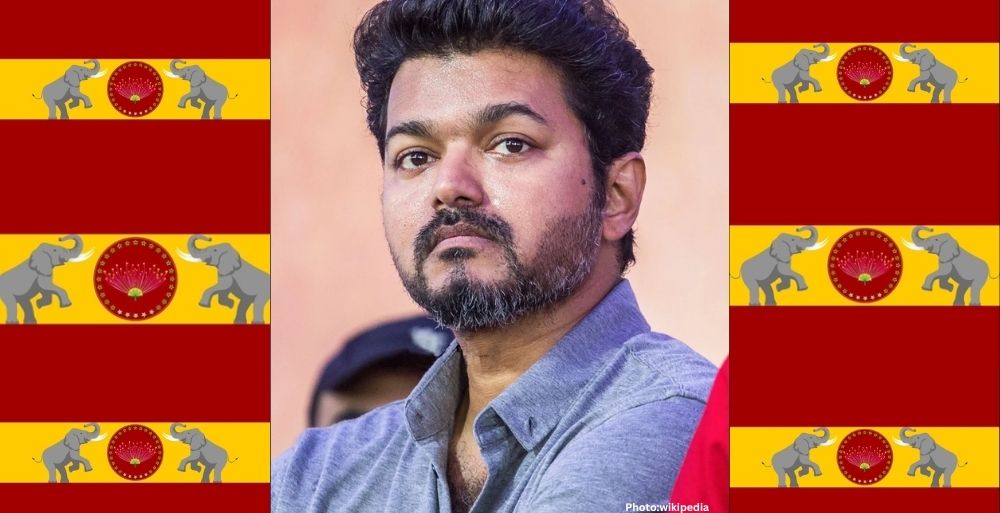
Following the fractured mandate of the 2026 Tamil Nadu Assembly elections, the Communist Party of India (CPI) and the Communist Party of India (Marxist) CPI(M) have pledged their unconditional support to actor C. Joseph Vijay’s Tamilaga Vettri Kazhagam (TVK) as it seeks to form the next government in the state.
The political landscape in Tamil Nadu has shifted dramatically following the results of the 2026 Assembly elections, where no single party or coalition achieved a clear majority. As of May 8, 2026, the Tamilaga Vettri Kazhagam (TVK) holds 108 seats in the 234-member Assembly, having also secured support from the Congress party, which has five seats, effectively bringing TVK’s total to 113.
As TVK inches closer to forming a government, the CPI and CPI(M) have formally announced their decisions to extend support, which will be a crucial element in the political negotiations. CPI General Secretary D. Raja confirmed the party’s commitment, stating, “We have made it very clear. The Left parties, CPI, CPI(M), and also the VCK in Tamil Nadu, have all maintained that the larger mandate is for TVK.” This statement underscores the strategic alliance among leftist parties aimed at consolidating their influence in the state.
The Viduthalai Chiruthaigal Katchi (VCK), which has also won two seats, is expected to announce its support for TVK soon, further solidifying the coalition’s position. The VCK has indicated that it would align with the decisions made by the Left parties, reflecting a broader trend of collaboration among smaller parties in Tamil Nadu.
Current Political Climate
As of the latest updates, the Indian Union Muslim League (IUML) is deliberating its position in ongoing meetings, with leaders indicating they will announce their stance after further discussion. This uncertainty adds another layer of complexity to the coalition-building process, as IUML’s support could significantly influence the balance of power.
In contrast, the Amma Makkal Munnetra Kazhagam (AMMK), led by T.T.V. Dhinakaran, has reiterated its commitment to the National Democratic Alliance (NDA), quelling rumors of a potential shift towards supporting TVK. Dhinakaran has confirmed that his party’s lone legislator will remain with the NDA, indicating the complexities of party loyalties in this transitional phase.
Fractured Mandate and Historical Context
The 2026 elections marked a historic shift in Tamil Nadu’s political dynamics, delivering a fractured mandate for the first time since the establishment of the state’s legislative assembly in 1952. The emergence of TVK as a significant player has prompted discussions about the future of the traditional Dravidian political parties, namely the DMK and AIADMK.
Historically, Tamil Nadu’s political arena has been dominated by the DMK and AIADMK, both of which have struggled to maintain their voter bases in light of TVK’s rise. Analysis of voting patterns reveals that TVK has made significant inroads into the AIADMK’s core support, leading to concerns about the longevity of AIADMK’s influence in the state.
Former Union Law Minister Ashwani Kumar has weighed in on the situation, asserting that the Governor should invite TVK to form the government and allow it to prove its majority in the Assembly. This aligns with legal precedents that dictate the Governor’s role in facilitating government formation and highlights the constitutional expectations surrounding such transitions.
Public Sentiment and Protests
Moreover, the DMK and Congress have experienced clashes between their respective cadres, indicative of the fractious atmosphere resulting from the recent electoral outcomes and shifting alliances. Such incidents highlight the deep-seated rivalries that continue to shape Tamil Nadu’s political narrative.
As the political landscape continues to evolve, the role of smaller parties like the CPI, CPI(M), and VCK will be crucial in determining the outcome of the government formation process. Their decisions could have lasting implications for the stability of governance in Tamil Nadu and the broader political dynamics in the region.
Looking Ahead
The coming days will be critical as parties finalize their positions and negotiate the terms of potential coalitions. The TVK’s ability to secure additional support will be vital in its efforts to establish a functional government capable of addressing the needs and expectations of the Tamil Nadu electorate.
In conclusion, the unfolding political scenario in Tamil Nadu represents a significant moment in the state’s history, with the possibility of new alliances reshaping the traditional power dynamics. The outcome of these negotiations will not only determine the immediate governance of Tamil Nadu but may also set the stage for future electoral contests in a state known for its vibrant and often tumultuous political landscape.