Pope Leo XIV reflects on his inaugural year as the first American pope amid significant tensions with the U.S. government, emphasizing his commitment to social justice and peace.
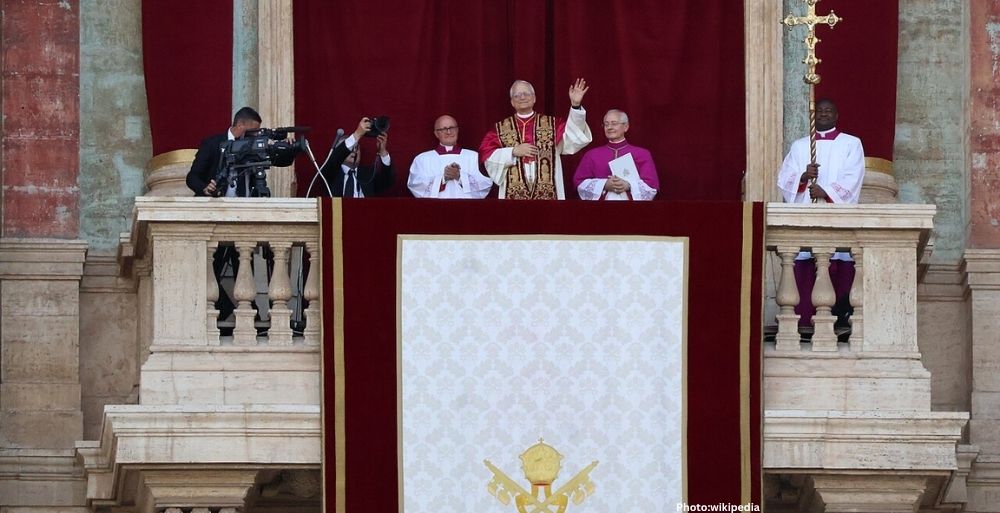
Pope Leo XIV is commemorating the first anniversary of his historic election, which not only marked the ascension of an American pontiff but also ushered in a distinct period of tension between the White House and the Vatican. Elected in late 2022, Leo took over the papacy just months after President Donald Trump’s controversial re-election, setting the stage for a unique dynamic between two prominent figures on the global stage.
Those close to the pope assert that despite the monumental responsibilities of his role, he has remained true to his character. Rev. Joseph Farrell, prior general of the Augustinian Order and a personal friend of Leo, shared insights with CNN, stating, “We don’t see great differences… it makes so much sense. As one of our friars said to me: ‘it looks like he went to pope school.’” This sentiment underscores the continuity in Leo’s personality, even as he navigates the complexities of the papacy.
Leadership Style and Approach
Pope Leo XIV is characterized by a measured and deliberate leadership style, influenced by his background in mathematics. His approach to problem-solving is process-oriented, distinguishing him from his predecessor, Pope Francis, who was known for his more informal and disruptive style. Despite this, Leo has embraced key social issues championed by Francis, including immigration, environmental concerns, poverty alleviation, and the abolition of capital punishment.
Having served in Peru among some of the country’s poorest communities, Leo has developed a keen sense of social justice. He has publicly condemned the treatment of immigrants in the United States as “inhuman” and has called for the abolition of the death penalty. Paola Ugaz, an investigative journalist from Peru, remarked, “Pope Leo XIV has managed to ensure that his voice and actions are heard and seen with particular force by not backing down on his call for world peace, his support for migrants, and his appeal against the use of nuclear weapons.”
Stance on Global Conflicts
The ongoing conflict in Iran has been a focal point for the pope, who has taken the rare step of directly addressing President Trump in his speeches, rejecting any religious justification for warfare. During a recent trip to Africa, Leo expressed concern about global instability, stating that the world is being “ravaged by a handful of tyrants” and criticized systemic corruption. Rev. Farrell noted the emotional weight of global conflicts on the pope, emphasizing his belief that “the way towards resolution… is not with arms, it’s not with weapons, it’s to be disarmed, and disarming, and to dialog.”
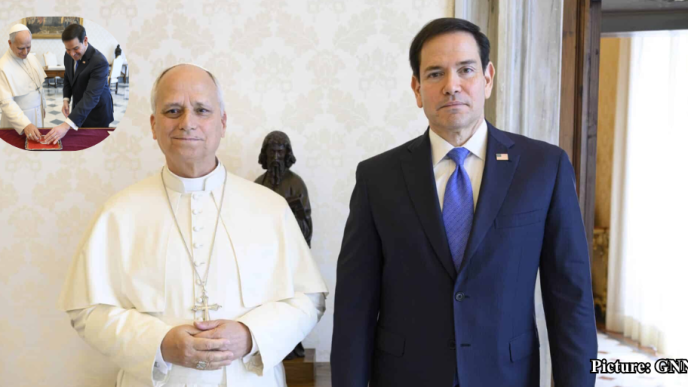
These forthright positions have sparked an unprecedented clash between the U.S.-born pope and the American president, yet Leo appears largely unfazed by critiques. Cardinal Blase Cupich of Chicago commented on the pope’s outlook, suggesting that Leo “doesn’t see himself as a rival to any head of state” and instead focuses on bringing “a unique perspective, beyond any given nation.” Cupich further noted that Leo’s mission is to “do what’s right” without being swayed by political pressures.
American Influence in the Vatican
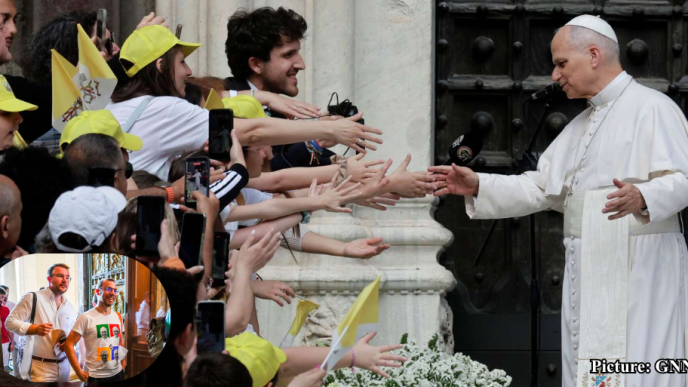
Over the past year, Pope Leo XIV has infused a distinctly American essence into the Vatican. His casual interactions, such as donning a White Sox baseball cap and enjoying pumpkin pie mid-flight during his first foreign visit over Thanksgiving, reflect a new cultural approach. In public appearances, he has engaged with the crowd by discussing baseball outcomes and accepting local delicacies like deep-dish pizza and his favorite candy, Peeps.
Moreover, Leo’s fluency in English, spoken in a Midwestern accent, marks a significant departure from his predecessors, allowing for more direct communication with English-speaking audiences. Cupich highlighted that the pope is continuing the reformative vision of Francis while also adhering to the principles established during the Second Vatican Council, which sought to promote inclusivity within the Church.
Addressing Broader Issues
While Leo has not indicated plans for sweeping changes, he is methodically appointing women to senior positions within the Vatican and addressing issues of clerical sexual abuse with a firm stance of zero tolerance. He has met regularly with survivors, reinforcing his commitment to accountability within the Church.
In terms of engagement with modern technology, Leo has embraced digital communication, being the first pope to utilize a smartphone and wear an Apple Watch. His brother, John Prevost, recounted how Leo recently assisted him with a computer issue, showcasing the pope’s hands-on approach to technology.
Influence Through Bishop Appointments
One of the most impactful ways for a pope to shape the Church’s political engagement is through the appointment of bishops. In his first year, Leo has made pivotal choices for the U.S. church, including Archbishop Ronald Hicks in New York and Evelio Menjivar-Ayala in West Virginia, both of whom have deep connections to immigrant communities. Menjivar-Ayala, an advocate for immigration reform, has openly criticized the Trump administration’s immigration policies, further solidifying Leo’s position on welcoming new arrivals as a means of enriching society.
Significantly, three of Leo’s first four U.S. bishop appointments were individuals born outside the United States, including Bishop Michael Pham, a Vietnamese refugee. These selections highlight a paradigm shift toward a more inclusive Church that recognizes the contributions of diverse communities.
Engagement with Younger Generations
Pope Leo XIV’s inaugural year coincides with a resurgence of interest in churches across the U.S. and Europe, particularly among younger generations. His Augustinian religious order has reported increased interest from young men seeking to join, a phenomenon some are referring to as the “Leo effect.” At 70, Leo’s relatively young age compared to his predecessors allows him to engage with a new generation eager to explore questions of faith, especially in the wake of the Covid-19 pandemic that restricted communal worship.
In summary, Pope Leo XIV’s first year as pontiff has been marked by a blend of American cultural influences and a steadfast commitment to social justice and peace. His approach reflects a careful navigation of complex issues, balancing tradition with modernity as he seeks to connect with both the Church and the broader world.