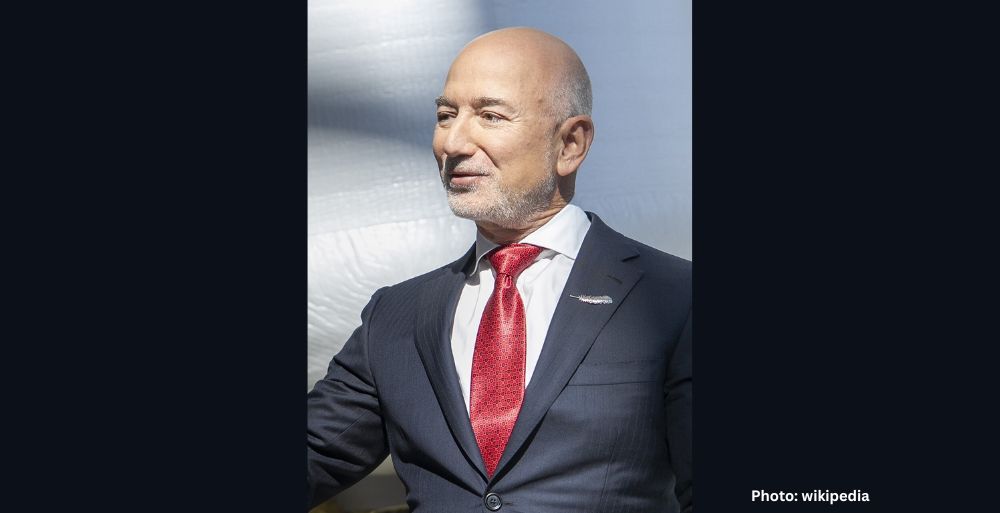
Amazon founder Jeff Bezos envisions a future shaped by artificial intelligence (AI) where fewer working hours may become the norm, potentially leading to labor shortages and a shift towards single-income households.
In a recent interview with Fox News, Jeff Bezos, the founder and former CEO of Amazon, shared his vision for the future of work in an era increasingly dominated by artificial intelligence (AI). As the technology continues to advance, Bezos predicts that productivity will rise to the extent that fewer employees will be necessary to maintain economic stability, leading to significant changes in traditional work structures.
Bezos noted that AI could allow individuals to support their families while working just three days a week. He stated, “Some people will decide, ‘I can support my family working three days a week.’ That’s what productivity in the economy means.” This perspective contrasts sharply with some of his contemporaries in the tech industry, such as Dario Amodei of Anthropic and Sam Altman of OpenAI, who have expressed concerns about AI’s potential risks and implications for the workforce.
Predictions of Labor Shortages
According to Bezos, the economic changes brought about by AI could lead to a labor shortage as households shift towards single-income models. “You’re not going to need to have a two-earner household,” he explained, suggesting that many families may choose to have one person opt out of the workforce entirely if they feel financially secure. This shift would imply that fewer individuals will be compelled to take on multiple jobs, fundamentally altering the labor market landscape.
Despite his optimistic outlook on the potential benefits of AI, Bezos acknowledged the challenges investors face in navigating this rapidly evolving landscape. When asked if he believes the current AI boom could be a bubble, he remarked, “It’s hard to know.” He emphasized that while the technology itself is promising, the rush of investment into various AI ventures might make it difficult to distinguish between sound and unsound business models. “Every experiment gets funded—the good ideas and the bad ideas,” he stated, indicating the inherent risk in the current investment climate.
Amazon’s AI Investments
Amazon, the company Bezos founded in 1995, has been aggressively investing in AI technologies, allocating over $200 billion for capital expenditures in 2023, primarily for data centers. However, this expansion comes amid significant workforce reductions, with the company cutting approximately 30,000 corporate jobs since late 2022. This juxtaposition highlights the tension between the promise of enhanced productivity through AI and the uncertainty faced by workers in a changing market.
In addition to his role at Amazon, Bezos also benefits from the growth of Blue Origin, his space exploration company. Blue Origin’s latest funding round reportedly raised $10 billion, valuing the company at $140 billion, further contributing to Bezos’s estimated net worth of $365 billion. The firm aims to innovate in various sectors, including potentially establishing data centers in space, which could play a pivotal role in the future of AI and data management.
Varied Perspectives on AI and Work
While Bezos’s predictions align with a growing belief among certain business leaders that AI could lead to shorter workweeks, opinions vary widely regarding the extent of these changes. Nvidia CEO Jensen Huang has suggested that AI could result in a typical workweek being reduced to four days, while Jamie Dimon, CEO of JPMorgan Chase, anticipates a shift to 3.5 days. Bill Gates has even proposed the possibility of a mere two-day workweek.
Elon Musk, CEO of SpaceX and Tesla, has gone further in his projections, asserting that AI and robotics might create a future of “universal high income,” potentially making the need for work less relevant. Musk has suggested that advancements in these technologies could occur within the next 10 to 20 years, fundamentally reshaping societal norms around employment.
This ongoing dialogue reflects a broader trend among industry leaders to reassess the implications of AI on work and economic structures. As technology continues to evolve, the intersection of AI and the labor market will likely remain a focal point for discussion among economists, technologists, and policymakers.
The future of work, shaped by advancements in AI, poses both opportunities and challenges, prompting a re-evaluation of traditional employment models and the societal implications of reduced working hours. As predictions from influential figures like Bezos, Musk, and others continue to emerge, the implications of these shifts will undoubtedly be felt across various sectors.