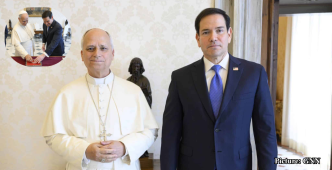
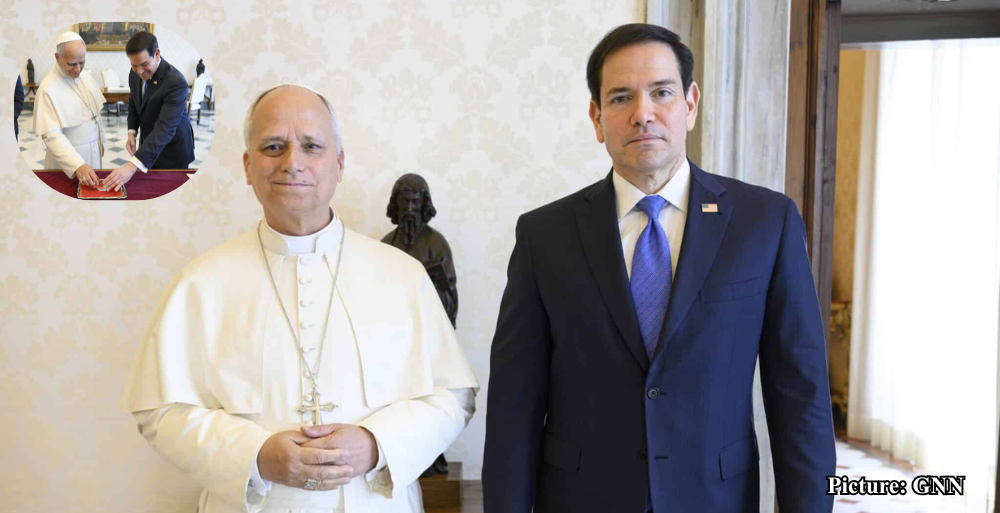
A meeting between U States Secretary of State Marco Rubio and Pope Leo at the Vatican focused on the ongoing tensions surrounding Iran’s nuclear capabilities, reaffirming the partnership between the United States and the Holy See.
VATICAN CITY — On Thursday, U.S. Secretary of State Marco Rubio met with Pope Leo at the Vatican to engage in discussions regarding the escalating tensions between the United States and Iran, particularly concerning nuclear proliferation. This meeting marked the first engagement between the Trump administration and the pontiff in almost a year, following a period of strained relations.
The private meeting, described as “friendly and constructive” by a State Department official, sought to reaffirm the longstanding partnership between the Vatican and the United States. Rubio, who identifies as Catholic, was sent on behalf of President Donald Trump to deliver a clear message: Iran must not be allowed to obtain nuclear weapons.
Context of the Meeting
The backdrop of this meeting is a complex geopolitical landscape where Iran’s nuclear ambitions have prompted international concern. The Trump administration has consistently taken a hard stance against Iran, emphasizing that a nuclear-capable Iran would represent a significant threat not just to the Middle East, but to global stability. The administration’s policy has been characterized by the withdrawal from the Iran nuclear deal in 2018, which aimed to curtail Iran’s nuclear program in exchange for sanctions relief.
According to a State Department readout, during their discussions, Rubio and Pope Leo addressed not only the Iranian situation but also “topics of mutual interest in the Western Hemisphere.” This broadening of dialogue underscores the Vatican’s interest in various global issues beyond immediate regional conflicts.
Statements from Officials
Tommy Pigott, a spokesperson for the State Department, emphasized the significance of the meeting, stating, “The meeting underscored the strong relationship between the United States and the Holy See and their shared commitment to promoting peace and human dignity.” Following the discussions, the Vatican also issued a statement, characterizing the talks as “cordial” and reiterating a mutual commitment to strengthening bilateral relations.
The Vatican highlighted the need for ongoing dialogue concerning countries affected by war and political instability, emphasizing humanitarian concerns and the necessity for peace. The official statement noted, “There was then an exchange of views on the regional and international situation, with particular attention to countries marked by war, political tensions and difficult humanitarian situations.” This reflects the Vatican’s broader mission to engage in diplomacy that prioritizes human rights and welfare.
Pope Leo’s Concerns
Throughout his tenure, Pope Leo has been vocal about the moral implications of military conflict, particularly concerning Iran. Previously, he criticized the rhetoric emerging from U.S. leadership, suggesting that characterizations of the Iranian people as adversaries could foster dangerous outcomes. In an April address, he stated, “There has also been this threat against the entire people of Iran, and this is truly unacceptable. There are certainly issues of international law here, but even more so a moral issue for the good of the whole entire population.” His comments have drawn attention to the potential humanitarian impact of aggressive foreign policy.
This criticism appears to directly respond to comments made by President Trump, who has publicly declared that a “whole civilization will die” if aggressive actions are taken against Iran. Trump’s rhetoric, often perceived as inflammatory, raises questions about the ethical ramifications of U.S. foreign policy. Critics argue that such statements can exacerbate tensions and undermine diplomatic efforts, while supporters maintain that they reflect a necessary firmness against perceived threats.
Follow-Up Discussions
In addition to his meeting with Pope Leo, Rubio also met with Cardinal Pietro Parolin, the Secretary of State of the Holy See. This follow-up discussion centered around shared priorities concerning the Iranian conflict, humanitarian efforts in the Western Hemisphere, and the ongoing quest for peace in the Middle East. Pigott noted that these discussions reflect the enduring partnership between the United States and the Holy See in advancing religious freedom. The emphasis on collaboration underscores the Vatican’s active role in international diplomacy, particularly in areas marked by conflict.
Future Engagements
Rubio’s visit to Italy and the Vatican follows reports of a planned meeting with Italian Prime Minister Giorgia Meloni scheduled for Friday. This engagement further illustrates the U.S.’s intention to strengthen diplomatic ties with key allies in Europe while addressing critical global challenges. Meloni’s government has shown interest in enhancing Italy’s role in international security discussions, particularly in the context of NATO and Mediterranean stability.
Implications for U.S. Foreign Policy
As the political landscape evolves, the implications of Rubio’s discussions with Pope Leo may extend beyond immediate diplomatic relations, potentially influencing U.S. foreign policy as it pertains to Iran and broader Middle Eastern dynamics. The emphasis on humanitarian issues and the moral dimensions of conflict reflects a growing recognition of the need for nuanced approaches to international relations. The Pope’s advocacy for peace and dialogue may serve as a counterbalance to more aggressive strategies espoused by some U.S. leaders.
The meeting highlights the delicate balance that the Trump administration must maintain between a hardline stance on Iran and the moral considerations raised by religious leaders. As the situation remains fluid, the United States faces the challenge of crafting policies that address security concerns while also considering the humanitarian implications of their actions.
In conclusion, the meeting between Secretary of State Marco Rubio and Pope Leo represents a significant moment in U.S.-Vatican relations, with potential ramifications for both international diplomacy and the ethical foundations of foreign policy. The ongoing dialogue between these influential leaders underscores the importance of collaboration in addressing global challenges.