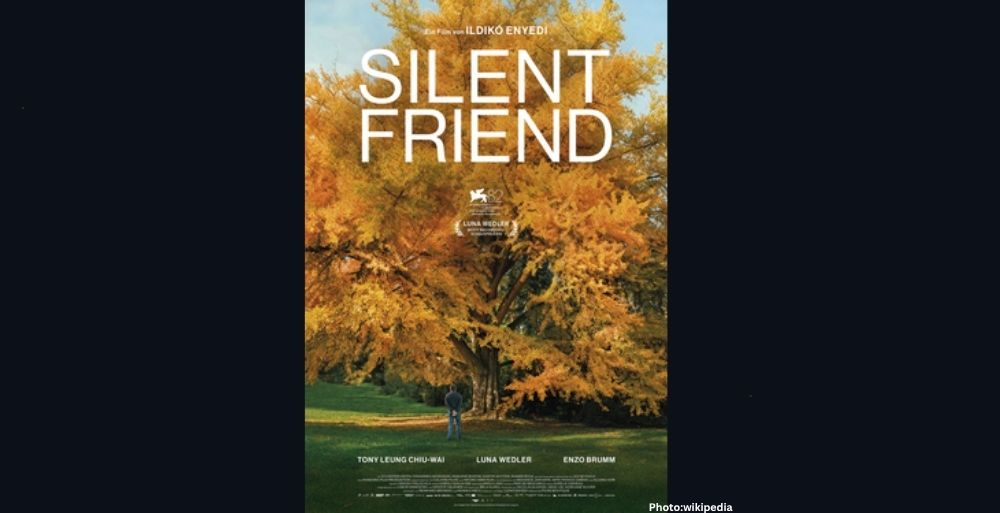
‘Silent Friend,’ directed by Ildikó Enyedi, intertwines three narratives across a century, urging audiences to reconsider their relationships with plants and the natural world.
‘Silent Friend,’ the latest film from acclaimed Hungarian director Ildikó Enyedi, presents a nuanced exploration of the relationship between humans and nature through three interconnected narratives set in the same location over a span of more than a century. The film, which premiered recently, invites audiences to reconsider their perceptions of plants and the intricate connections they share with the natural world.
Artistic Framework and Themes
The film centers around a neuroscientist named Tony, played by the distinguished Hong Kong actor Tony Leung Chiu-wai. His storyline unfolds in 2020 at the University of Marburg in Germany, where he finds himself stranded during the COVID-19 pandemic. This contemporary narrative serves as a poignant backdrop contrasting with the film’s historical segments set in 1908 and 1972. Enyedi’s choice of a university as the focal point highlights a microcosm for human progress, encapsulating the intersection of scientific inquiry, societal challenges, and the natural world.
In the midst of pandemic isolation, Tony stumbles upon online lectures by a French botanist named Alice, portrayed by Léa Seydoux. Captivated by her theory positing that plants exhibit a highly developed consciousness, he embarks on an experiment involving a nearly 200-year-old ginkgo biloba tree. This tree serves as a silent protagonist throughout the film, symbolizing resilience and continuity amidst societal changes.
Historical Context and Character Development
Set against the university backdrop, ‘Silent Friend’ delves into the challenges faced by its characters in their respective eras. The first narrative features Grete, played by Luna Wedler, who becomes the first female student admitted to the university in 1908. Her journey reflects the broader struggles for gender equality in academic settings during that era, as she navigates the male-dominated environment with determination and passion for botany and photography. Grete’s story not only highlights her personal triumphs but also serves as a commentary on the systemic barriers faced by women in academia.
The second narrative, set in 1972, follows Hannes, portrayed by Enzo Brumm, who is tasked with caring for a geranium belonging to his roommate. Hannes’s experience mirrors the burgeoning countercultural movements of his time, as he grapples with societal expectations and the limitations imposed by his environment. His attempts to decode the plant’s responses echo Tony’s scientific inquiry, linking the narratives through a shared exploration of communication and understanding between humans and plants.
Visual and Stylistic Choices
Enyedi employs distinct visual styles to differentiate between the three time periods: black-and-white cinematography for Grete’s story, warm and grainy colors for Hannes’s era, and sleek digital imagery for Tony’s contemporary setting. This artistic choice not only enhances the storytelling but also underscores the technological advancements and societal changes across the decades. The film’s visual language complements its thematic depth, creating a rich tapestry that invites viewers to immerse themselves in the characters’ experiences.
Throughout ‘Silent Friend,’ Enyedi’s storytelling is infused with a sense of magic and possibility, a hallmark of her previous work. Her 2017 film, ‘On Body and Soul,’ received an Academy Award nomination, showcasing her ability to blend realism with enchanting narratives. In ‘Silent Friend,’ she continues to explore themes of isolation and connection, urging viewers to contemplate the perspectives of plants and the interconnectedness of all living beings.
Implications for Environmental Awareness
The film’s call for a deeper connection with nature resonates in today’s context, where environmental issues are increasingly pressing. By highlighting the consciousness of plants and the fragility of ecosystems, ‘Silent Friend’ serves as a poignant reminder of the importance of empathy towards the natural world. Enyedi encourages audiences to reflect on their relationships with the environment, fostering a greater appreciation for the beauty and vulnerability inherent in all forms of life.
Conclusion: A Journey of Discovery
‘Silent Friend’ is more than just a cinematic experience; it is a contemplative journey that challenges audiences to rethink their understanding of life and consciousness. Through its rich narratives and visual storytelling, the film aspires to cultivate a renewed sense of connection to the natural world, inviting viewers to see beyond the surface and appreciate the intricate lives of the flora that surround them. As the film suggests, the relationship between humans and plants is far from one-sided; it is a dialogue that requires patience, empathy, and an open heart.