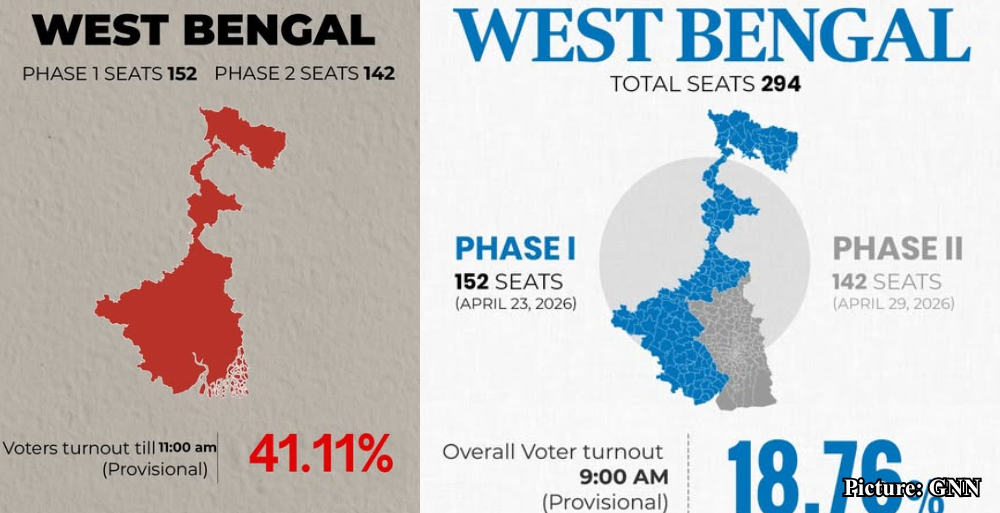
West Bengal recorded approximately 89.99% voter turnout in the second phase of the Assembly elections on April 29, 2026, amidst serious allegations of electoral violence and irregularities.
The second phase of the West Bengal Assembly elections took place on April 29, 2026, witnessing significant voter engagement with an estimated 89.99% turnout reported by the Election Commission of India (ECI) by 5 p.m. This phase included 142 constituencies across several key districts, notably Kolkata, North and South 24 Parganas, Nadia, Hooghly, and Purba Bardhaman, with around 3.21 crore eligible voters participating in the electoral process.
According to the ECI, the highest voter turnout was recorded in Purba Bardhaman at 92.46%, followed closely by Hooghly at 90.34% and Howrah at 89.44%. These figures indicate strong civic engagement; however, they were overshadowed by reports of violence and allegations of misconduct throughout the day.
Context and Significance of the Elections
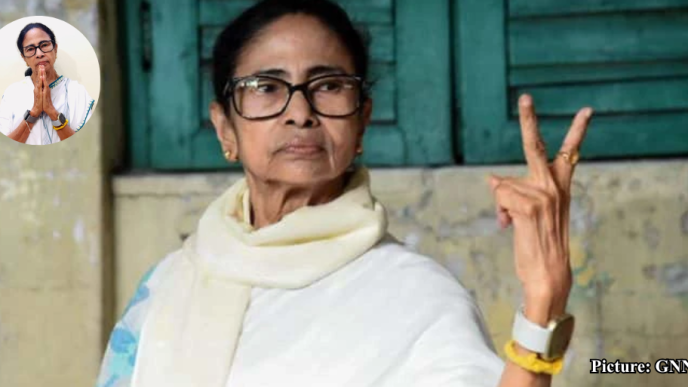
This election phase is particularly crucial for the ruling Trinamool Congress (TMC), as it encompasses traditional strongholds in South Bengal. The stakes are notably high, with Chief Minister Mamata Banerjee contesting from the Bhabanipur constituency against Bharatiya Janata Party (BJP) leader Suvendu Adhikari. In the previous election cycle, the TMC had a dominant performance, winning 123 of the 142 seats being contested in this phase.
Allegations of Violence and Intimidation
Throughout the polling process, there were multiple reports of violence and intimidation. Senior TMC leader Abhishek Banerjee alleged that an elderly voter died following an assault by central forces in Howrah district, claiming that these forces acted as a “private army” for the BJP, terrorizing voters. Banerjee described the incident as tragic, noting that the man had collapsed while trying to cast his vote.
The BJP responded by denying these allegations, asserting that the claims were unfounded and politically motivated. Tensions escalated further with reports of clashes between TMC and BJP workers in sensitive areas, particularly in Bhangar, prompting the need for a heavy security presence.
In Chapra, a BJP polling agent was reportedly assaulted by individuals linked to the TMC, leading to calls for investigations by the ECI into these incidents. The ECI confirmed that it is monitoring the situation and has sought reports regarding any electoral irregularities.
Security Measures and Central Forces Deployment
In response to the alleged violence, approximately 700 companies of Central Armed Police Forces (CAPF) were deployed to maintain security during the elections. An ECI official stated that these forces would remain in West Bengal post-elections to ensure law and order. This deployment reflects the ECI’s strategy to prevent any disruption and support the electoral process in a state historically affected by electoral violence.
Furthermore, West Bengal Chief Electoral Officer Manoj Agarwal indicated that repolling might be required in booths where Electronic Voting Machines (EVMs) were found tampered with. This comment followed allegations from the BJP that their party symbols were obstructed on EVMs during the voting process, a claim that could potentially invalidate results in specific constituencies.
Political Responses and Statements
As the day unfolded, various political leaders made statements regarding the election process. Prime Minister Narendra Modi expressed appreciation for the high voter turnout, urging citizens to continue participating in what he termed a “festival of democracy.” In contrast, Mamata Banerjee criticized the central forces for their alleged misconduct, claiming they were obstructing the democratic process and intimidating voters.
Banerjee’s sentiments were echoed by other TMC leaders, who raised significant concerns about the integrity of the electoral process. In a provocative challenge, TMC MP Derek O’Brien dared PM Modi to resign if the TMC emerged victorious, framing the elections as a referendum on the BJP’s governance.
Historical Context of Electoral Violence in West Bengal
West Bengal has a complex history of electoral violence, often characterized by clashes between political parties, particularly between the TMC and BJP. The state has seen numerous instances of violence during elections, which have historically been a part of the political landscape. The ECI has implemented various measures to curb such incidents, including deploying significant security forces and monitoring polling booths closely.
This election cycle is no exception, as the heightened security measures reflect both the challenges of conducting free and fair elections in a politically charged atmosphere and the ECI’s commitment to ensuring voter safety. The presence of central forces is intended to reassure voters and maintain order, but it also raises questions about the balance between security and the freedom of expression at polling stations.
Implications for Future Elections
The outcome of the second phase of the West Bengal Assembly elections could have far-reaching implications, not only for the TMC and BJP but also for the political dynamics in India. A strong performance by the TMC could reinforce its dominance in West Bengal, while a significant showing by the BJP might embolden its position as a formidable challenger in future elections.
As the results are anticipated on May 4, the political landscape in West Bengal remains intensely competitive, with implications that could resonate beyond state borders. The stakes are high, and the developments in this phase are likely to influence subsequent electoral strategies for both parties.
Conclusion
The second phase of the West Bengal Assembly elections concluded amidst serious allegations of violence and electoral misconduct, juxtaposed against a notably high voter turnout. As the results are awaited, it is crucial for the ECI and political stakeholders to address the concerns raised regarding the electoral process to uphold the integrity of democracy in the state. The unfolding events in West Bengal serve as a critical reminder of the challenges faced in ensuring free and fair elections in a politically polarized environment.