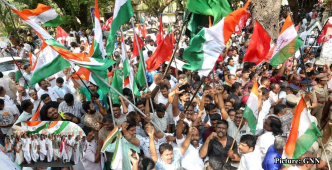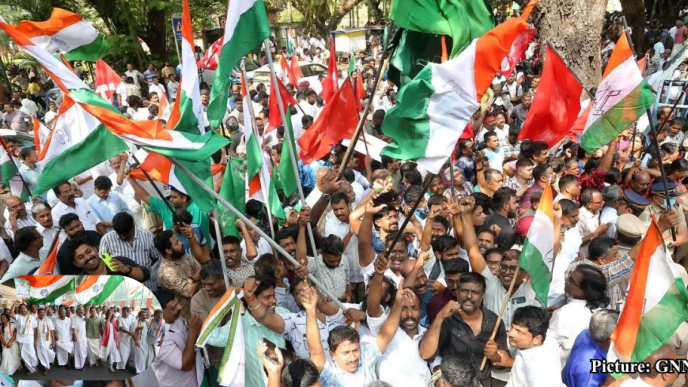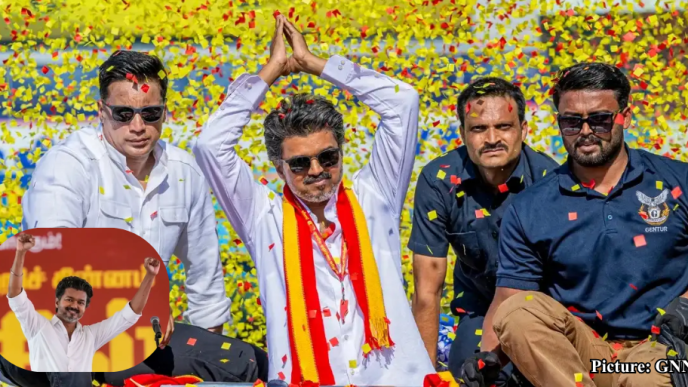
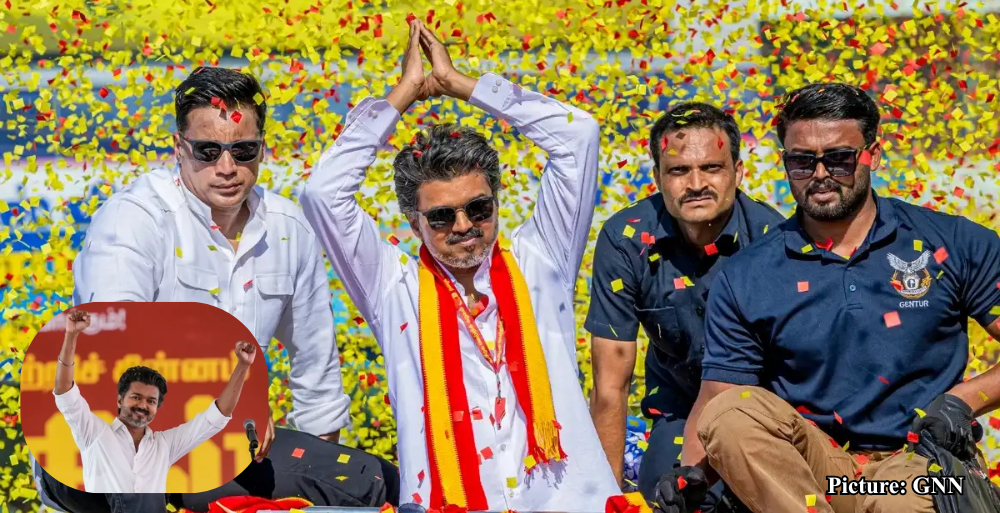
The outcomes of these assembly elections underscore a broader desire for political change across India. While the BJP achieved historic gains in West Bengal and Assam, and the Congress-led UDF won back Kerala, the most remarkable shift occurred in Tamil Nadu. In a stellar political debut, actor-turned-politician Joseph Vijay and his newly formed party, the Tamil Nadu Vetrikaali Katchi (TVK), completely disrupted the long-standing dominance of the traditional Dravidian parties (DMK and AIADMK). Vijay’s ascent marks a historic milestone in Indian politics, as TVK became the first regional party in the country to achieve power within two years of its formation. By capitalizing on widespread voter discontent and securing major victories—including the defeat of the sitting Chief Minister in his own constituency—Vijay has firmly established himself as a powerful new force in the evolving political landscape.
The Bharatiya Janata Party (BJP) has achieved a historic victory in the West Bengal assembly elections, effectively ending Mamata Banerjee’s 15-year tenure as Chief Minister. This electoral success comes alongside the BJP’s third consecutive win in Assam, marking a significant consolidation of power in the northeastern region. In a parallel development, actor-turned-politician Joseph Vijay’s party, the Tamil Nadu Vetrikaali Katchi (TVK), has disrupted the long-standing dominance of the Dravidian parties, namely the DMK and AIADMK, in Tamil Nadu.
BJP’s Dominance in West Bengal
In a major political shift, the BJP’s triumph in West Bengal signifies a watershed moment in the state’s electoral landscape, where the party has overturned the Trinamool Congress (TMC) stronghold. With this victory, the BJP has gained a foothold in key regions such as Kolkata and the surrounding districts, which were traditionally loyal to the TMC. Prime Minister Narendra Modi hailed the victory as “historic,” asserting that it represents the beginning of a new era free from the fear that characterized previous regimes. He emphasized the need for a shift in the political culture of the state, advocating for discussions centered on the future rather than past grievances.
The BJP’s electoral strategy in West Bengal has been notably successful, demonstrated by the significant number of TMC ministers trailing in their constituencies, with many still counting votes as evening approached. This victory grants the BJP a strong political presence in eastern India, effectively consolidating its influence across the region.
The BJP’s sweep in West Bengal is particularly remarkable considering the state’s historical context. The TMC, under Banerjee, had managed to break the Left Front’s 34-year rule in 2011, establishing a firm grip on the state’s politics. However, the recent election results indicate a dramatic shift in voter sentiment, with the BJP capitalizing on issues such as governance, development, and an anti-incumbency wave. The party’s ability to secure victories in both North and South Bengal further underscores its growing political influence.
Political Implications in Tamil Nadu
In Tamil Nadu, the emergence of TVK represents a remarkable shift in the state’s political dynamics, where the DMK and AIADMK have alternated power since 1967. The party’s ascent marks a historic moment as it is the first regional party in India to achieve power within two years of its formation. Chief Minister M K Stalin’s defeat in his Kolathur constituency by 8,795 votes illustrates the widespread discontent among voters, culminating in a robust anti-DMK sentiment. However, TVK’s failure to secure an outright majority necessitates coalition-building, as the party currently leads or has won 108 seats, falling short of the 117 required for a simple majority in the 234-member assembly.
The potential for a hung assembly introduces uncertainty regarding the future governance structure in Tamil Nadu, as TVK engages in discussions with smaller parties, including Congress, to consolidate power. This shift may herald a new political era in Tamil Nadu, challenging the traditional dominance of the Dravidian parties. The TVK’s strategy appears to resonate with voters seeking alternatives to the established parties, and the party’s future alliances will be closely watched as they navigate this complex political landscape.
Shifts in Kerala and Assam
Meanwhile, Kerala’s political landscape experienced its own upheaval as the Congress-led United Democratic Front (UDF) regained power, ending the Left Democratic Front (LDF) administration led by Pinarayi Vijayan. The UDF’s victory, with a lead in 102 out of 140 seats, represents a significant turnaround for the Congress party, which has struggled in state elections since 2014. The defeat of several cabinet members in the LDF signals a decisive rejection of the incumbent government by the electorate.
In Assam, the BJP’s continued dominance was reaffirmed as it secured 82 seats, an increase from its previous tally of 60. This victory not only consolidates the party’s power in the region but also reflects a broader trend of increasing BJP influence across multiple states. The Congress party, facing losses, has seen its representation in Assam decline significantly, further complicating the opposition landscape. The BJP’s success in Assam is attributed to its strong organizational structure and effective outreach programs, which have resonated with voters across various demographics.
Conclusion: A Yearning for Change
The outcomes of these assembly elections underscore a broader desire for political change among the electorate across India. The BJP’s substantial gains, particularly in West Bengal and Assam, coupled with the emergence of new political forces like TVK in Tamil Nadu, signify a potential reshaping of the political landscape. Political analysts suggest that these results reflect a growing discontent with established parties and a desire for governance that addresses local issues more effectively.
As parties recalibrate their strategies in response to these electoral results, the implications for governance, policy direction, and party dynamics will be closely observed in the coming months. The evolving political narrative suggests a significant shift in voter sentiments, with a clear demand for change resonating across various states. The BJP’s victories, along with the rise of regional parties like TVK, may mark the beginning of a new political era in India, characterized by increased competition and a diversification of the political landscape.