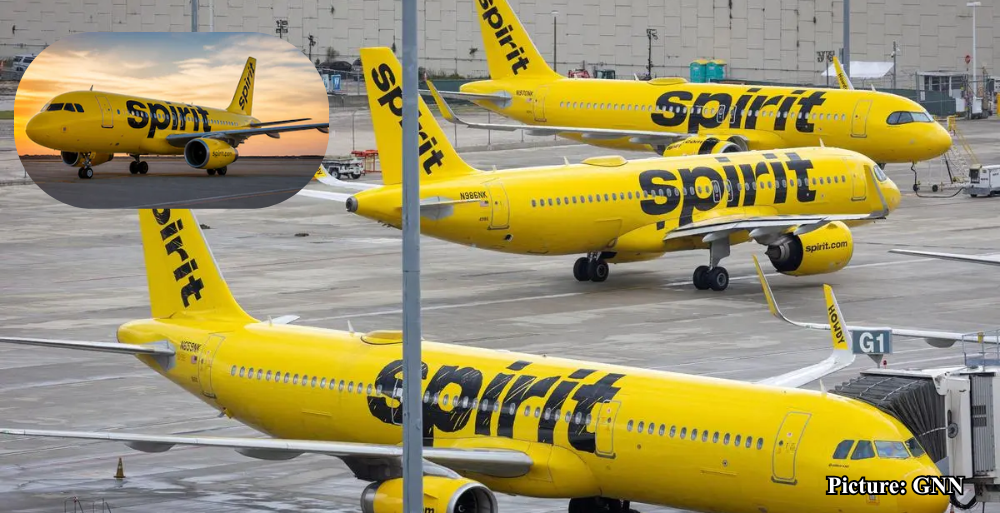
The abrupt shutdown of Spirit Airlines follows unsuccessful attempts to secure a government bailout, highlighting the airline’s long-standing financial difficulties and the recent surge in fuel prices.
Spirit Airlines announced on Saturday, October 21, 2026, that it will immediately cease all operations, marking a significant blow to the airline industry amid ongoing financial turmoil. The decision comes after the airline’s parent company, Spirit Aviation Holdings, failed to reach an agreement on a government bailout and cited soaring fuel prices as a critical factor exacerbating its financial woes.
In a statement, the airline indicated that it has initiated an “orderly wind-down of operations,” which includes the cancellation of all flights. Customers who purchased tickets are advised not to go to the airport, as the airline will automatically process refunds for those who paid via credit or debit card. However, Spirit Airlines confirmed that it would not assist customers in securing alternative travel arrangements through other airlines.
Financial Struggles and the Impact of Rising Fuel Prices
Spirit Airlines has been grappling with severe financial difficulties, having reported losses exceeding $25 billion since the onset of the COVID-19 pandemic. The airline’s financial instability has been compounded by a dramatic increase in fuel prices, which have surged due to geopolitical tensions, particularly the ongoing conflict involving the U.S. and Israel and its repercussions on oil exports from the Middle East. Spirit’s President and CEO, Dave Davis, remarked on the company’s challenges, stating, “Sustaining the business required hundreds of millions of additional dollars of liquidity that Spirit simply does not have and could not procure.”
Davis expressed his disappointment in the closure, declaring, “This is tremendously disappointing and not the outcome any of us wanted.” Although the airline had previously reached a restructuring agreement, the recent spike in fuel costs rendered those plans unfeasible.
Government Response and Support for Affected Passengers
In light of Spirit’s abrupt cessation of operations, Transportation Secretary Sean Duffy announced initiatives aimed at supporting affected passengers. Airlines have agreed to cap ticket prices for Spirit customers seeking to rebook their cancelled flights, ensuring that they have access to alternatives during this challenging time. Additionally, travel benefits will be extended to Spirit employees returning home, as part of a broader effort to mitigate the impact of the airline’s closure on both customers and its workforce.
Political Context and Potential Bailout Discussions
The Trump administration had previously indicated that it was exploring the possibility of a government bailout for Spirit Airlines. President Trump, speaking to reporters outside the White House, stated that any assistance would be contingent on securing a favorable deal, mentioning the potential for a bailout amounting to approximately $500 million. He emphasized the importance of preserving the approximately 14,000 jobs at stake, saying, “We will do it or we won’t. We’ll have something for you today or tomorrow.”
However, the notion of a government bailout has faced criticism from conservative lawmakers. Senator Tom Cotton (R-Ark.) referred to the potential assistance as “not the best use of taxpayer dollars,” while Senator Mike Lee (R-Utah) argued that government intervention would negatively affect competition within the airline industry. Senator Lee, responding to concerns raised by his colleague Ted Cruz (R-Texas) regarding the bailout’s implications, stated that such actions could set a concerning precedent.
Union Response and Advocacy for Workers
The International Association of Machinists and Aerospace Workers (IAM), which represents Spirit employees, expressed deep concern over the airline’s closure. The union emphasized that any federal relief efforts must prioritize worker protections, including safeguards against layoffs and furloughs. In a statement, IAM declared, “Today’s news is devastating for the thousands of airline workers who showed up every day and gave everything to keep Spirit Airlines in the air.” The union attributed the airline’s failure to “corporate mismanagement and poor financial stewardship,” and vowed to hold accountable those responsible for the situation.
Union representatives indicated that they would provide assistance to affected employees and emphasized the importance of support as workers navigate the fallout from Spirit’s abrupt shutdown. The IAM highlighted that workers should not be the last in line when a company fails, stressing the need for accountability and fair treatment of employees in distressing situations.
The Broader Implications for the Airline Industry
The implications of Spirit Airlines’ closure extend beyond the immediate economic impact on employees and travelers. As the airline industry continues to grapple with recovery in the post-pandemic landscape, questions arise regarding the sustainability of low-cost carriers and the broader economic environment influencing airline operations. The shutdown of Spirit Airlines may also raise concerns about the competitive dynamics within the industry, as other airlines evaluate their strategies in light of recent events.
The airline industry has been under significant pressure since the pandemic, with fluctuating demand, increasing operational costs, and shifting consumer behaviors. Spirit’s closure serves as a stark reminder of the fragility of airline operations, particularly for low-cost carriers that often operate on thin profit margins.
In conclusion, Spirit Airlines’ decision to halt operations underscores the challenges facing the airline industry, particularly amid rising operational costs and evolving market conditions. The future of Spirit Airlines remains uncertain as stakeholders assess the consequences of its abrupt exit from the market and the potential for government intervention to reshape the landscape of U.S. air travel.