
The United Kingdom is significantly enhancing its military presence in the Strait of Hormuz, launching a multinational maritime security initiative aimed at safeguarding commercial shipping through this critical waterway.
The United Kingdom is set to expand its military commitment to securing the Strait of Hormuz, a vital artery for global trade, with a new multinational maritime security mission announced on Tuesday. The initiative was revealed during a virtual summit involving defense ministers from over 40 nations, marking a significant step in international efforts to ensure safe passage for commercial shipping in one of the world’s most strategically important maritime routes.
The UK government describes the mission as “strictly defensive,” emphasizing its goal of restoring confidence among commercial shipping operators amid ongoing geopolitical tensions in the region. The deployment includes advanced technology such as autonomous mine-hunting systems, counter-drone equipment, Royal Air Force Typhoon fighter jets, and the Royal Navy destroyer HMS Dragon.
Deployment Details and Financial Commitment
The UK Ministry of Defence announced that the deployment package will be supported by a funding allocation of £115 million. This investment is specifically aimed at enhancing the UK’s maritime capabilities in response to persistent threats, including naval mines and drone attacks. The new funding will facilitate the development and deployment of autonomous mine-hunting drones and advanced counter-drone systems.
John Healey, a senior UK defense official, underscored the importance of the mission, stating, “The UK is playing a leading role to secure the Strait of Hormuz, and we are demonstrating that today with new cutting-edge kit to protect our interests and secure the Strait. With our allies, this multinational mission will be defensive, independent, and credible.” His remarks highlight the UK’s commitment to collaborative defense efforts in a region fraught with security challenges.
Technological Innovations and Strategic Assets
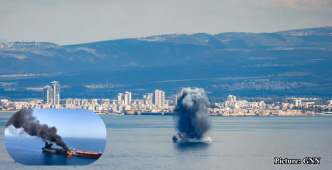
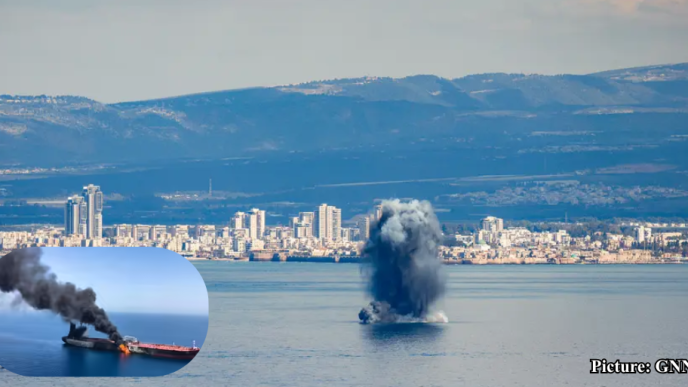
The deployment includes cutting-edge autonomous mine-hunting systems capable of detecting and neutralizing naval mines, along with the Royal Navy’s modular “Beehive” autonomous launch system. This system can deploy high-speed Kraken drone boats for surveillance, threat identification, and defensive operations.
Additionally, the Royal Air Force’s Typhoon fighter jets are prepared to conduct air patrols over the Strait of Hormuz. British mine-clearance specialists have also been training in the UK for potential operations in the region, further enhancing the UK’s operational readiness.
Central to this deployment is HMS Dragon, a Type 45 destroyer currently en route to the Middle East. The vessel has recently undergone extensive weapons and sensor calibration exercises to prepare for high-threat operations. British officials have highlighted HMS Dragon’s advanced Sea Viper air-defense system and its robust counter-drone capabilities, which are crucial for the mission’s success.
Learning from Recent Conflicts
This initiative reflects lessons learned from recent conflicts, particularly in the Red Sea, where the emergence of drone and missile attacks has significantly altered naval operations and reshaped risk assessments for commercial shipping. The proposed Hormuz mission bears similarities to Europe’s evolving approach in the Red Sea through the EUNAVFOR ASPIDES operation, launched in 2024 to protect merchant shipping from Houthi attacks.
Similar to ASPIDES, the Hormuz coalition is framed as a long-duration defensive maritime security effort. Its objectives include providing escorts, mine-clearance support, aerial protection, and restoring confidence in commercial shipping rather than engaging in offensive military operations. The focus is on maintaining stability and security in a region that has seen heightened tensions and conflict.
Geopolitical Context and Strategic Importance
The Strait of Hormuz remains a critical chokepoint for global oil flows, with approximately one-fifth of the world’s oil transiting through this narrow waterway. It is also a key route for major liquefied natural gas (LNG) exports from Qatar. Given its significance to global energy markets and supply chains, any disruption to shipping through the Strait can have far-reaching economic implications. The UK’s mission aims not only to secure maritime routes but also to stabilize the regional economic impact of ongoing conflicts.
Despite ongoing diplomatic efforts to address tensions related to the U.S. and Israeli conflict with Iran, the Strait continues to face constraints that impede normal commercial shipping operations. The persistent threat posed by regional adversaries, including Iran, underscores the necessity for a robust international military presence in the area.
The UK’s multinational mission is designed to bolster confidence among commercial shipping operators and mitigate the economic repercussions of the regional conflicts on global trade and energy markets. As geopolitical tensions persist, the mission’s effectiveness in enhancing maritime security will be closely monitored by international observers.
Conclusion
With the deployment of advanced military assets and a clear commitment to collaborative defense efforts, the UK is positioning itself as a central player in securing the Strait of Hormuz. As this multinational mission unfolds, its success will depend on the ability of participating nations to work cohesively to address the complex and evolving threats in the region.