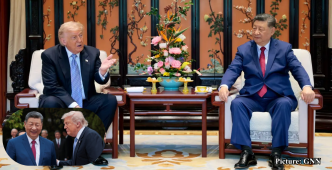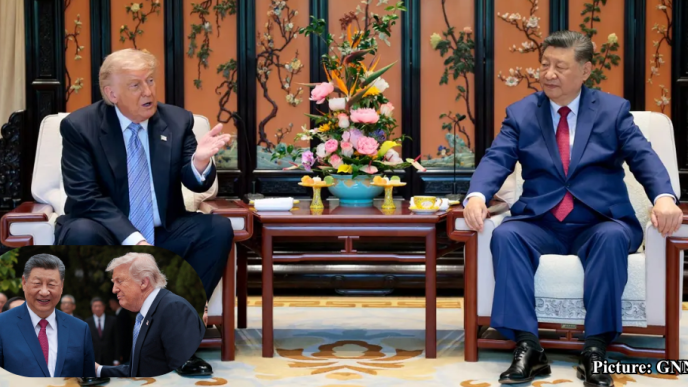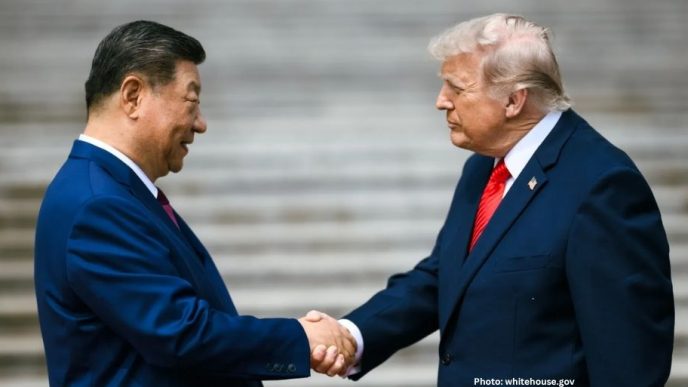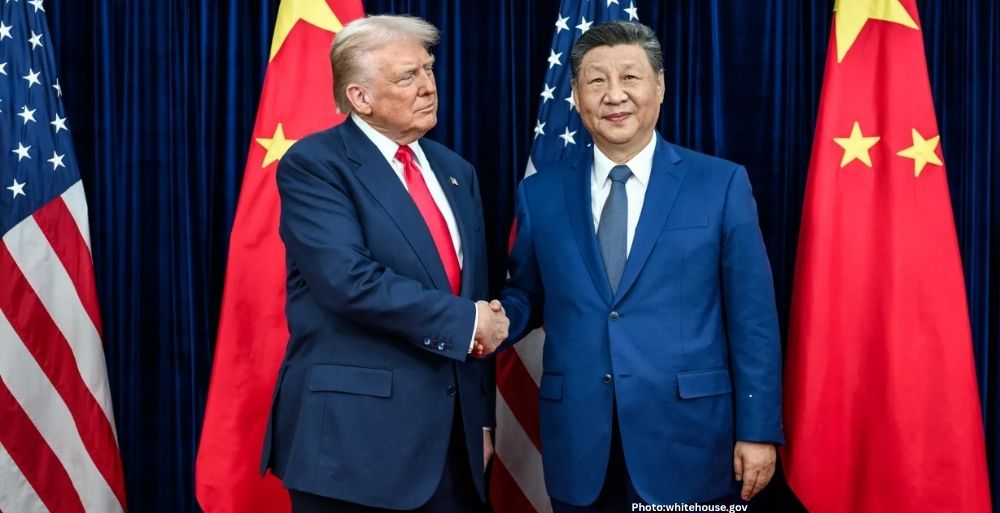
US President Donald Trump has arrived in Beijing for a pivotal two-day summit with Chinese President Xi Jinping, where they are expected to address critical issues including trade, technology, and geopolitical tensions.
BEIJING — US President Donald Trump touched down in Beijing on Wednesday evening, greeted with ceremonial honors as he embarks on a high-stakes summit with his Chinese counterpart, President Xi Jinping. This visit comes at a time when US-China relations are particularly strained, and it marks a significant moment for both leaders as they seek to address a range of pressing issues.
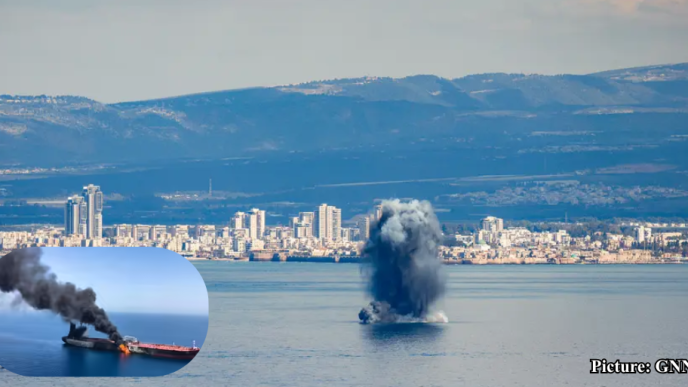
This meeting had initially been scheduled for March but was postponed due to the ongoing conflict in Iran involving US and Israeli forces, a situation that continues to have reverberating effects on global economic stability. Trump’s visit is especially notable as it occurs against the backdrop of a more assertive China than the one he encountered during his last visit in 2017.
Upon arrival, Trump was welcomed on the red carpet by Chinese Vice-President Han Zheng, signaling a higher level of diplomatic courtesy compared to his previous trip, where he was met by a lower-ranking official. The welcoming ceremony featured a brass band and flag wavers chanting, “welcome welcome, a warm welcome,” as Trump acknowledged the crowd with his signature fist pump.
Traveling with Trump are several high-profile executives from the US tech sector, including Tesla CEO Elon Musk and Nvidia CEO Jensen Huang, alongside other influential business leaders such as Tim Cook of Apple, Larry Fink of BlackRock, and Kelly Ortberg of Boeing. Their presence underscores the significant economic interests at stake during this summit.
In a social media post prior to his arrival, Trump expressed his intent to urge Xi to “open up” China, allowing for greater collaboration between American and Chinese businesses. He stated that this would be his “very first request” during the summit, highlighting the emphasis on creating a more favorable business climate for US companies in China. This dialogue comes at a crucial juncture, as trade between the two nations has experienced a notable decline in recent years, with bilateral trade falling to $414.7 billion in 2022, a significant decrease from $690.4 billion in 2021. This decline largely stems from an escalating tariff war and other trade restrictions that have characterized their relationship.
Trump’s administration has also been focused on reducing the trade deficit, which saw the US importing over $200 billion more from China than it exported last year. This persistent trade imbalance has fueled ongoing discussions about recalibrating trade policies to ensure more equitable outcomes for American industries.
In addition to trade discussions, technology remains a critical focal point of the bilateral relationship. China has increasingly positioned itself as a formidable competitor in the global artificial intelligence market, leading to heightened demands for US-made semiconductor chips. This competitive dynamic is pivotal in shaping the future of technology and innovation in both nations.
As the summit unfolds, Trump has indicated that the ongoing conflict in Iran will also be a significant topic of discussion. He stated that he and Xi will have a “long talk” about the situation, but he emphasized that the US does not require assistance from China in addressing the conflict. This statement could reflect a broader strategy of maintaining US autonomy in foreign policy, even as the ramifications of the conflict continue to impact global oil prices and economic conditions.
Another contentious issue that is expected to be addressed during the summit is Taiwan. The Trump administration has taken a mixed approach regarding US support for Taiwan, approving a substantial arms deal while simultaneously downplaying direct military commitments to defend the island from potential Chinese aggression. This dual strategy has drawn both domestic and international scrutiny.
Just days before Trump’s arrival, a bipartisan group of US senators sent a letter urging the President to reaffirm American support for Taiwan. The letter emphasized the importance of communicating to Beijing that US backing for Taiwan is non-negotiable, particularly in light of the $14 billion arms sale approved by Congress to bolster Taiwan’s defense capabilities against potential threats from China.
The summit is set to include a series of high-profile events, including a welcome ceremony at the Great Hall of the People, a state banquet, and multiple bilateral meetings. The culmination of the visit will feature a “friendship photo” in Beijing’s Zhongnanhai Garden, which is traditionally used for such diplomatic moments. Trump is expected to depart China on Friday following a working lunch with Xi, bringing to a close a significant diplomatic engagement that could have lasting implications for the trajectory of US-China relations.
This summit represents not only a crucial opportunity for dialogue between two of the world’s largest economies but also a potential turning point in addressing long-standing grievances and exploring mutual interests. As the global landscape continues to evolve, the outcomes of this meeting will be closely monitored by international observers and policymakers alike, given the profound implications for trade, technology, and geopolitical stability.