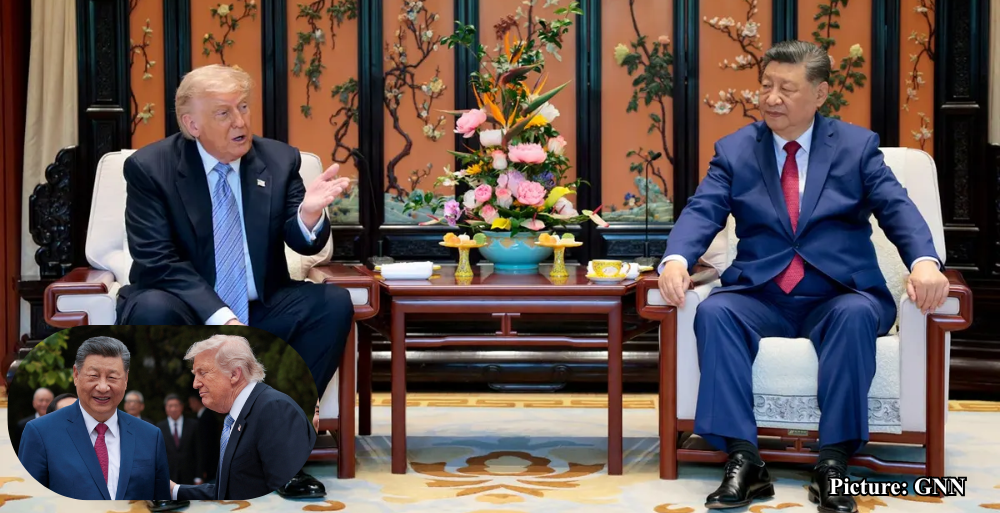
During a high-profile summit in Beijing, President Donald Trump concluded his visit to China with claims of successful trade agreements, yet left unresolved critical issues regarding Iran, Taiwan, and artificial intelligence.
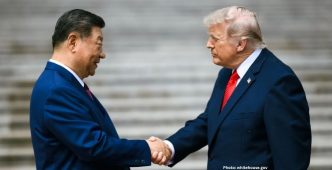
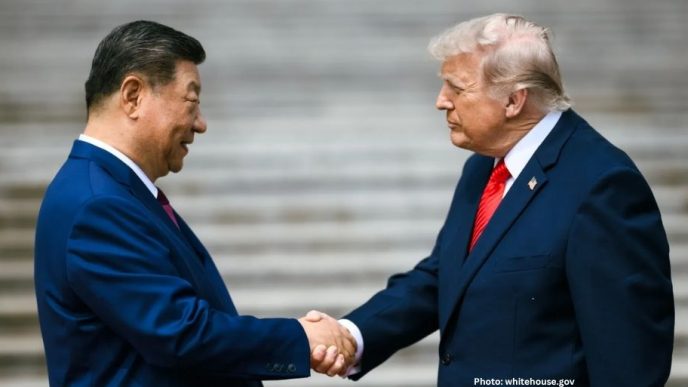
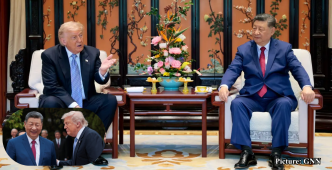
BEIJING – President Donald Trump concluded a two-day summit with Chinese President Xi Jinping on Friday, returning to Washington amid mixed assessments of the outcomes related to significant geopolitical challenges, including Iran, Taiwan, and the competitive landscape of artificial intelligence.
The summit, which marked the first visit by a sitting U.S. president to China in nearly a decade, was characterized by a series of ceremonial engagements and discussions that many observers suggest produced more pageantry than substantive agreements. Trump’s departure from Beijing came as he faced mounting political pressures domestically, particularly stemming from ongoing conflicts in the Middle East.
Trade Promises Amidst Uncertainty
In Trump’s closing remarks to the press, he asserted that the U.S. and China had reached “fantastic trade deals,” although specifics remained vague. The White House’s readout of the discussions indicated a mutual desire to maintain open trade, yet no concrete agreements were finalized during the summit. Critics have expressed skepticism regarding the authenticity of these claims, suggesting that the event served more as a diplomatic performance than a negotiation yielding tangible results.
Notably, Trump’s assertion about trade deals coincided with his social media post referencing his long-held ambition to establish a $400 million ballroom at the White House, which appeared to shift focus from the summit’s serious topics. The absence of significant breakthroughs on pressing issues such as Iran and Taiwan drew criticism from various analysts and political commentators.
Iran: Stalemate on Regional Stability
Central to the discussions was the ongoing conflict in Iran, where tensions have escalated amid U.S. sanctions and military engagements. Trump noted that he and Xi shared a mutual interest in preventing Iran from acquiring nuclear weapons and emphasized the importance of keeping the Strait of Hormuz open for trade, vital for global energy supplies. Half of China’s crude oil imports traverse this strategic waterway, underscoring its significance to both nations.
However, the response from Beijing indicated a reluctance to assume responsibility for the crisis, with Zhou Bo, a retired senior army colonel, remarking that the burden should not fall on China. “In China, we have a saying: it is like, ‘Why should I clean your shit?’” Zhou stated, reflecting a sentiment among Chinese officials that the U.S. should manage its own foreign policy challenges.
Trump’s comments on the potential lifting of sanctions against Chinese companies that purchase Iranian oil further complicated the narrative. While he claimed that Xi assured him of non-military support for Iran, the complexities of the geopolitical landscape remain unresolved.
Concerns Over Taiwan
As discussions progressed, Taiwan emerged as a critical focal point. Xi Jinping underscored the island’s importance, warning Trump of potential clashes if Taiwan is not managed correctly. Trump maintained that U.S. policy toward Taiwan remained unchanged, although he acknowledged the possibility of foregoing a significant arms sale to the island.
The Taiwan Relations Act, which outlines U.S. commitments to assist Taiwan in maintaining its defense capabilities, was notably absent from detailed discussions during the summit. Xi’s administration has long viewed Taiwan as a core national interest, with Xi not ruling out the use of force to achieve unification.
With previous arms packages for Taiwan sparking outrage in Beijing, the implications of Trump’s potential decisions in this area could further strain U.S.-China relations. Analysts suggest the ongoing arms sales could be leveraged as a bargaining chip in future negotiations.
AI and Global Competition
The summit also touched on the burgeoning competition in artificial intelligence and technology. Trump’s remarks during the meetings were vague, and no specific agreements were reached. The competition between the two nations in this domain is increasingly seen as a defining factor in future global economic and military dynamics.
As Trump departed Beijing, he characterized the visit as a success, stating, “We’ve really done some wonderful things, I believe.” However, as the political landscape evolves, the lack of concrete agreements raises questions about the efficacy of the summit in addressing the fundamental issues that challenge both nations.
Public Perception and Future Implications
While Trump enjoyed a ceremonious welcome, public sentiment in China appeared mixed. Observers noted a palpable sense of unpredictability surrounding the U.S. president, with many Beijingers expressing uncertainty about his intentions. “What he says isn’t necessarily what it means,” remarked a local resident, highlighting the complexities of interpreting Trump’s diplomatic engagements.
As Trump returns to Washington, the implications of the summit will likely reverberate throughout the political landscape, both domestically and internationally. The unresolved issues of Iran, Taiwan, and technological competition continue to loom large, suggesting that while the summit may have concluded, the critical dialogues between the U.S. and China are far from over.