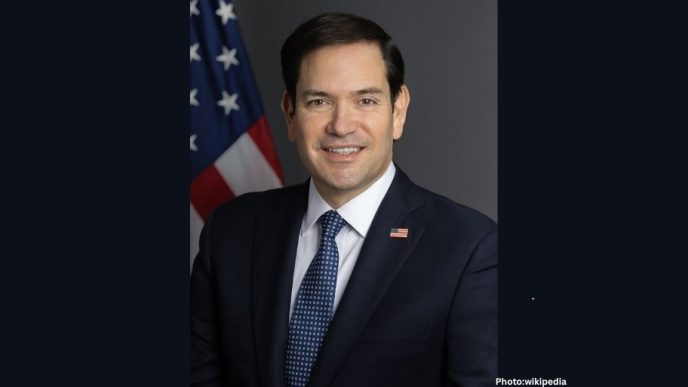
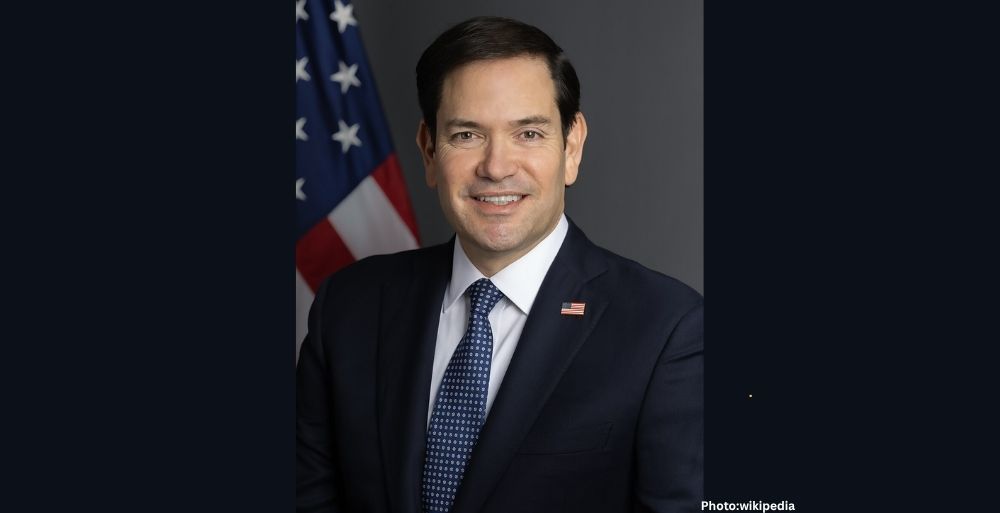
WASHINGTON — U.S. Secretary of State Marco Rubio will arrive in India this weekend for a high-stakes, four-day diplomatic tour targeting energy security, defense integration, and regional coordination within the Quadrilateral Security Dialogue. Amid heightened volatility in West Asia and shipping vulnerabilities along the Strait of Hormuz, the maiden trip aims to strengthen the Comprehensive Global Strategic Partnership under the administrations of President Donald Trump and Prime Minister Narendra Modi. Rubio’s visit will span multiple major cultural and political hubs—including Kolkata, Agra, Jaipur, and New Delhi—culminating in a ministerial summit designed to counter shifting geopolitical dynamics across the Indo-Pacific corridor.
WASHINGTON — U.S. Secretary of State Marco Rubio has announced an extensive four-day diplomatic mission to India scheduled from May 23 to May 26. The visit, marking his first trip to the nation since assuming office as America’s top diplomat, underscores a period of intense bilateral engagement intended to solidify trade, energy corridors, and military inter-operability between Washington and New Delhi.
Speaking to reporters at Homestead Air Reserve Base in Miami prior to his departure for Europe and Asia, Rubio emphasized the symbolic and material weight of the modern U.S.-India relationship. In a pre-trip video address amplification via the U.S. Embassy in New Delhi, the Secretary explicitly linked the upcoming bilateral talks to the historical identity of both nations.
“As America gets ready to celebrate our 250th birthday, we look forward to doing it with our partners in India,” Rubio stated, referring to the upcoming semiquincentennial of the signing of the Declaration of Independence on July 4. “India is the world’s largest democracy and we are the world’s oldest. So, we look forward to celebrating it together.”
Before touching down on Indian soil, Rubio is attending a Ministerial Meeting of the North Atlantic Council in Helsingborg, Sweden, on May 21 and 22. Chaired by NATO Secretary General Mark Rutte, the European sessions are focused on drafting strategic parameters for the upcoming NATO Summit in Ankara. From Sweden, Rubio will pivot directly toward Asia, where the focus will shift from transatlantic security to the maritime and economic friction points of the Indo-Pacific.
Navigating Global Chokepoints and Energy Realities
A primary catalyst for the timing of Rubio’s trip is the compounding instability in West Asia, which has directly threatened global energy shipping lanes. Trade flows through the Strait of Hormuz—the critical maritime chokepoint between Iran and Oman responsible for the passage of roughly 20 percent of the world’s petroleum supply—have faced sustained disruptions due to ongoing regional conflicts.
The economic fallout of these disruptions has hit India particularly hard, given its status as the world’s third-largest importer of crude oil, relying on foreign sources for over 80 percent of its domestic consumption needs. On April 14, Prime Minister Narendra Modi and President Donald Trump held a detailed telephonic conference to evaluate bilateral safeguards against these vulnerabilities. During that call, both leaders reaffirmed an explicit commitment to collaborative operations ensuring the Strait of Hormuz remains open and secure.
Rubio confirmed that addressing India’s resulting energy vulnerabilities will be a centerpiece of his agenda in New Delhi. He pointed to record-breaking domestic energy output in the United States as a viable structural solution for Indian markets looking to diversify away from unstable Middle Eastern suppliers.
“Well, we want to sell them as much energy as they’ll buy,” Rubio said on May 21. “And obviously, you’ve seen I think we’re at historic levels of U.S. production, and U.S. export. We want to be able to do more. We were already in talks with them to do more. We want them to be a bigger part of their portfolio.”
In a notable development, Rubio also indicated that Washington is exploring complex multilateral arrangements to ease global supply pressures, specifically citing potential opportunities involving Venezuelan oil infrastructure under the current interim political transition in Caracas. Rubio remarked that Delcy Rodríguez, representing Venezuelan leadership, is also slated to travel to India next week, creating a rare convergence of energy stakeholders in the Indian capital.
Expanding Defense Frameworks and Technology Controls
Beyond commercial energy agreements, Rubio’s itinerary includes deep-level consultations regarding defensive integration. The institutional bedrock of this relationship was reinforced late last year with the formal renewal of the U.S.-India Bilateral Defense Framework for an additional ten years.
Operational alignment between the two militaries has accelerated significantly over the first half of this year. In February, the Indian Ministry of Defense finalized an agreement to purchase six additional P-8I Neptune anti-submarine warfare aircraft from American defense contractors, adding to the 12 vessels already actively deployed by the Indian Navy to monitor maritime corridors in the Indian Ocean.
In New Delhi, Rubio will hold closed-door bilateral sessions with Indian External Affairs Minister S. Jaishankar and National Security Advisor Ajit Doval. These meetings are expected to review ongoing joint defense production initiatives and progress under the Initiative on Critical and Emerging Technology (iCET).
The U.S. State Department confirmed that the conversations will also navigate delicate trade policies. Observers note that while working-level defense ties remain exceptionally stable, negotiators are still ironing out wrinkles from a 10 percent global tariff implementation under Section 122 of the U.S. Trade Act, which complicated an earlier framework for an interim trade agreement that had proposed a reciprocal tariff rate of 18 percent.
The Quad Ministerial and Regional Counterweights
The diplomatic mission will conclude on May 26 with the formal Quad Foreign Ministers’ Meeting in New Delhi, hosted by Jaishankar. Rubio will join Australian Foreign Minister Penny Wong and Japanese Foreign Minister Motegi Toshimitsu to align multilateral strategies.
The four-nation consultative platform has increasingly transitioned from a maritime security dialogue into a broader economic and technology-security coalition. Following the launch of the Quad Critical Minerals Initiative during their last gathering, the ministers in New Delhi will review supply-chain security architectures for rare earth elements, lithium, and cobalt—minerals vital to both consumer electronics and high-end military hardware.
“They are a great ally, a great partner,” Rubio emphasized when reflecting on the broader coalition. “We do a lot of good work with them. And so it is an important trip… I think my first meeting as Secretary of State was with the Quad. I’m glad we can do it now in India and we’re going to do one later in the year as well.”
The strategic synchronization achieved during Rubio’s multi-city tour is expected to lay the groundwork for high-level meetings later this year, including Prime Minister Modi’s projected visit to the United States for the G20 Summit.