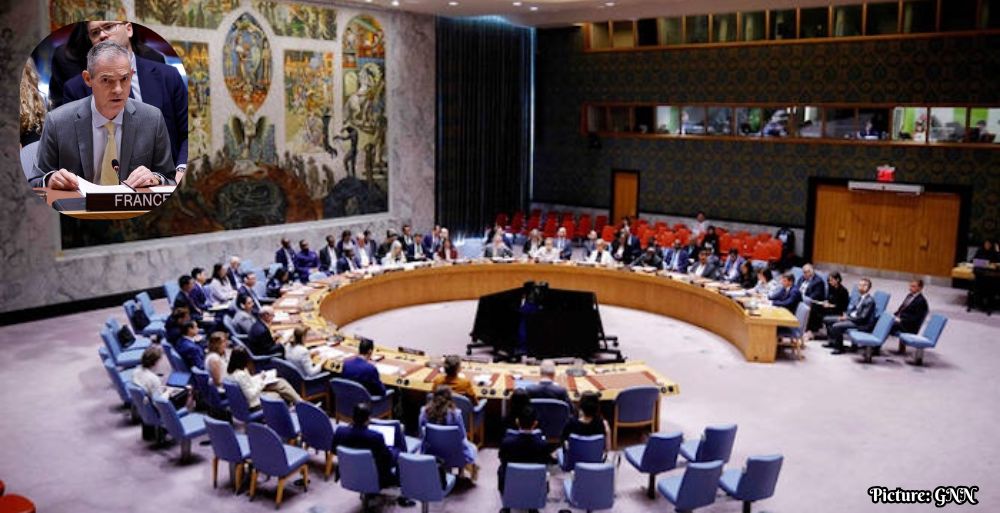
The U.S. delegation exited a U.N. Security Council meeting on Monday in protest of comments made by France’s ambassador, signaling growing tensions over human rights and U.S.-France diplomatic relations.
The United States delegation to the United Nations walked out of an emergency Security Council meeting on Monday, prompted by remarks made by French Ambassador Jérôme Bonnafont that criticized U.S. voting behavior on human rights issues. This incident highlights the escalating diplomatic tensions between the U.S. and France, particularly in the context of the ongoing Ukraine-Russia conflict and broader human rights discussions within the United Nations.
Context of the Diplomatic Tensions
The discord began to intensify following a vote last Friday in which the U.S. joined a coalition of nations—including North Korea and Russia—in opposing the extension of Volker Turk’s term as the U.N. High Commissioner for Human Rights. The vote, which passed with overwhelming support—144 states in favor, 10 against, and 13 abstentions—has been viewed as symptomatic of the growing rift between Washington and the U.N. system, especially regarding the U.S.’s retreat from its traditional role as a global leader in human rights advocacy.
In the aftermath of the voting outcome, France’s U.N. mission issued a pointed criticism of the U.S. position. In a post on social media platform X (formerly Twitter), the French mission stated, “The U.S. used to be a beacon of human rights. Not anymore,” directly equating the U.S. vote with behavior characteristic of authoritarian regimes, thereby raising concerns about the U.S.’s commitment to human rights.
U.S. Response and Walkout
In response to the French comments, U.S. Ambassador Mike Waltz accused France of supporting a human rights chief who has been “lecturing” democratic countries while maintaining ties with oppressive regimes. Waltz’s remarks were vague, lacking specific examples or elaboration on his criticisms, which left room for interpretation about the U.S. rationale behind its vote.
The U.S. delegation’s walkout occurred while Ambassador Bonnafont was delivering his remarks during the Security Council meeting, a move that U.S. Ambassador Dan Negrea characterized as a necessary protest. He stated that the U.S. would persist in voicing its dissent until France “renounces their condescending and disrespectful rhetoric.” This declaration indicates a readiness from the U.S. to escalate diplomatic protests in light of perceived affronts.
Wider Implications of the Dispute
The friction between the U.S. and France reflects broader issues regarding the U.S.’s relationship with the United Nations, especially as the U.S. grapples with its role in international diplomacy. The Trump administration had previously diminished U.S. involvement in U.N. agencies, withdrawing from multiple entities and reducing funding for various programs. While the current administration has not fully reverted this trend, it appears to maintain a critical stance towards the U.N. processes and personnel.
On Friday, U.S. Ambassador Jeff Bartos expressed strong discontent over Turk’s reappointment, suggesting that there could be “consequences” for U.N. member states that are perceived as tolerating procedural overreach and “backroom deals.” Bartos stated, “The United States will immediately reassess our engagement, participation, and funding,” which indicates that U.S. contributions to U.N. operations may be influenced by how member states align with U.S. perspectives on human rights.
French Perspective on Turk’s Reappointment
In stark contrast, Ambassador Bonnafont defended Turk, emphasizing his role as a “voice of conscience” and asserting that he has demonstrated “rigor and impartiality” throughout his tenure. This endorsement suggests that France considers the role of the High Commissioner for Human Rights vital, particularly amidst ongoing global crises, including the war in Ukraine and the humanitarian situation in Gaza.
Adding to the discussion, Deputy U.N. spokesperson Farhan Haq refrained from commenting specifically on the U.S. walkout but emphasized that the U.N. expects all member states to respect the decisions made within the assembly. This position suggests that the U.N. aims to remain neutral even as diplomatic tensions escalate between its member states.
Historical Context of U.S.-France Relations
The relationship between the United States and France has historically been characterized by both cooperation and contention. While the two nations have often joined forces on various international issues, recent years have seen increased friction, particularly over differing approaches to human rights and international governance. The U.S.’s assertive stance in international forums, combined with France’s advocacy for a strong multilateral approach, has occasionally resulted in clashes like the current incident.
The unfolding situation in the Security Council serves as a reminder of the complexities involved in international diplomacy, particularly concerning human rights issues. As the U.S. navigates its relationships with both allies and adversaries on the global stage, the implications of its actions in forums like the U.N. will likely resonate far beyond individual meetings. The U.S. approach to future U.N. engagements and its willingness to confront allies on human rights issues could redefine its global standing and influence.