
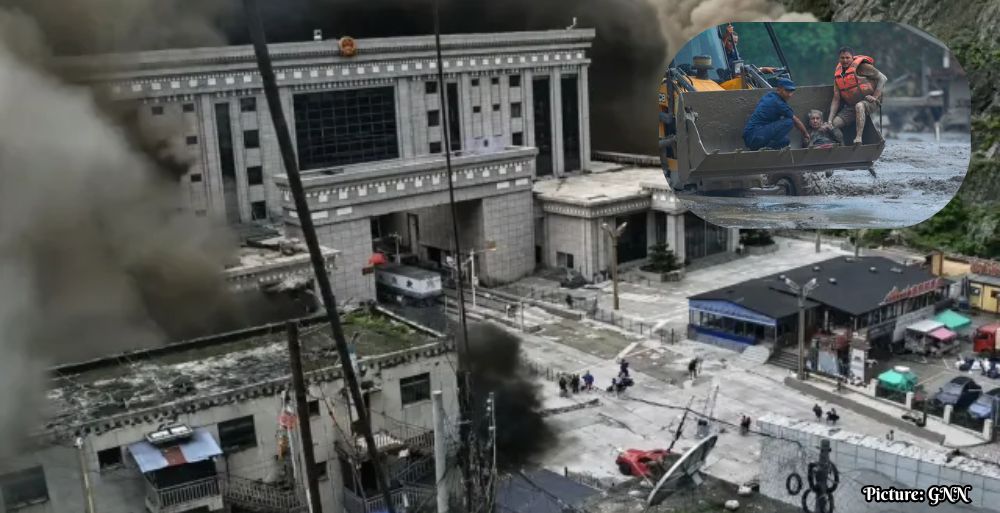
In response to devastating flash floods in Nepal, Indian spiritual leader Sadhguru has proposed forming a five-nation Himalayan Board to enhance cooperative disaster management among India, China, Pakistan, Nepal, and Bhutan.
In the aftermath of severe flash floods and mudslides that struck Nepal, Indian spiritual leader Sadhguru Jagadish Vasudev has called for the formation of a five-nation Himalayan Board. This proposed board would include India, China, Pakistan, Nepal, and Bhutan, aimed at fostering cooperation in disaster management and response in the fragile Himalayan region. Sadhguru made these remarks on August 30, 2026, during an event titled “In Solidarity With Nepal” held in Kathmandu.
At this event, Sadhguru also announced a personal pledge of ₹1 crore (approximately $120,000) to Nepal’s Prime Minister Disaster Relief Fund. This contribution comes as Nepal grapples with the devastating consequences of the floods that have claimed the lives of at least 903 individuals, according to the National Disaster Risk Reduction and Management Authority (NDRRMA).
Humanitarian Crisis and Missing Persons
The catastrophic floods were triggered by heavy rainfall near the China-Nepal border, leading to a humanitarian crisis that has left hundreds dead and thousands missing. Among those unaccounted for is a group of 77 pilgrims from the Isha Foundation, which Sadhguru founded. This group has not been in contact since the floods struck, raising serious concerns for their safety. Additionally, three Isha volunteers stationed on the Nepal side are also reported missing, highlighting the profound impact of the disaster on both local and international communities.
Sadhguru highlighted the necessity for a cooperative approach to disaster management that transcends national boundaries. He emphasized, “The mountains don’t know your political affiliation. The mountains don’t know what nonsense or language you speak,” advocating for a unified response to the challenges posed by natural disasters in the region. His comments reflect a deep understanding of the interconnectedness of the Himalayan ecosystem and the implications of political divisions in addressing shared challenges.
Urgent Need for Collaborative Governance
During his address, Sadhguru urged for the immediate establishment of the Himalayan Board, asserting that the scale of the disaster is beyond the capacity of any single nation, particularly a smaller country like Nepal. “Nobody expected something like this to happen… But now that it’s happened, we must look at this because this is not something a small nation like Nepal can solve by themselves,” he stated. This call for action underscores the urgent need for collaborative governance in environmental management and disaster response across the region.
The “In Solidarity With Nepal” event aimed to mobilize support and raise awareness for those affected by the floods. Attendees included representatives from various sectors, united in their commitment to assist Nepal in recovering from this humanitarian crisis. Sadhguru’s remarks extended beyond immediate relief efforts, calling for a deeper collective responsibility towards the Himalayas, emphasizing that the future of the mountains concerns all nations that depend on them for water, climate, and biodiversity.
Regional Implications of the Proposed Himalayan Board
The establishment of a Himalayan Board could serve as a significant step towards enhancing regional stability and cooperation in disaster response. The Himalayas, spanning five nations, have been increasingly impacted by climate change, resulting in more frequent and severe natural disasters. A formal mechanism for collaboration could not only improve disaster preparedness but also foster dialogue and trust among neighboring countries, which has historically been challenged by political tensions.
As Nepal continues to contend with the ramifications of this disaster, the international community is closely monitoring the situation. The scale of human suffering and the urgent need for assistance underscore the importance of global solidarity in times of crisis. The establishment of the Himalayan Board could represent a model for future cooperation in regions facing similar environmental challenges.
Historical Context and Future Prospects
The Himalayan region, often referred to as the “Water Tower of Asia,” is critical for sustaining the water supply for billions of people across the continent. However, increasing climate impacts have resulted in glacial melt, erratic weather patterns, and heightened risks of natural disasters. The frequency of such events has sparked discussions about the need for transnational cooperation to manage shared resources and mitigate potential disasters.
In recent years, there have been various initiatives aimed at enhancing regional cooperation on environmental issues, but these have often been hampered by political disputes. Sadhguru’s proposed Himalayan Board could provide a framework for addressing these challenges through collaborative efforts that prioritize environmental sustainability and disaster management.
In conclusion, Sadhguru’s call for a five-nation Himalayan Board highlights the pressing need for collaborative disaster management in a region that is highly susceptible to natural disasters. As recovery efforts continue and the humanitarian situation unfolds, the focus remains on supporting those affected and ensuring that nations work together to protect the fragile ecosystems of the Himalayas. The establishment of such a board could not only address immediate disaster response but also pave the way for long-term cooperation and resilience in the face of future challenges.