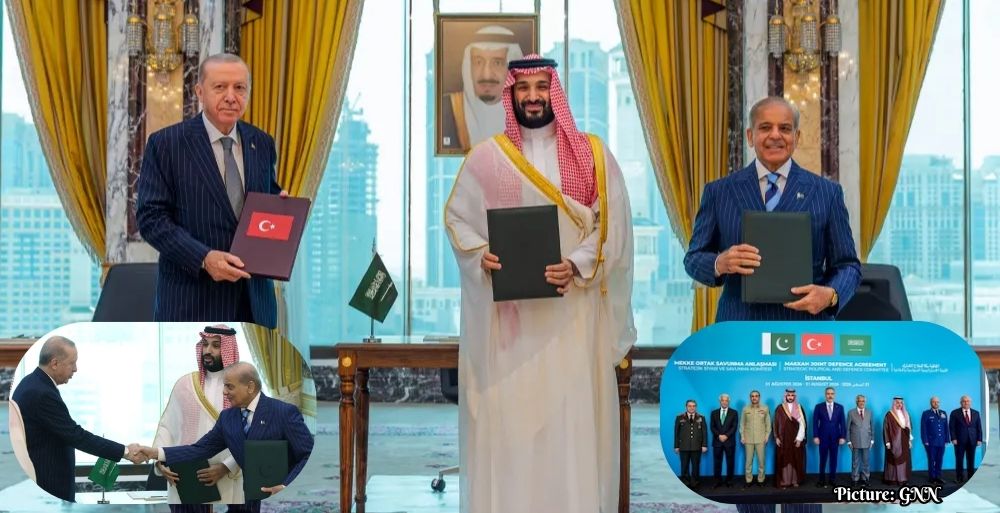
The Mecca Joint Defence Agreement, signed by Pakistan, Turkey, and Saudi Arabia, aims to enhance defense cooperation among the three nations, with Pakistan heading the secretariat for the initial three years.
ISTANBUL, Turkey — On Monday, high-ranking officials from Turkey, Saudi Arabia, and Pakistan convened in Istanbul for the inaugural committee meeting of the Mecca Joint Defence Agreement. This strategic pact, signed on August 7, 2023, seeks to strengthen defense collaboration among these three Sunni-majority nations, positioning them as key players in the evolving geopolitical landscape of the Middle East.
According to a statement from Saudi Arabia’s foreign ministry, Pakistan will spearhead the newly established secretariat in Saudi Arabia for the first three years of the agreement. This structure is intended to enhance communication and coordination among the member states, thereby improving their collective military and defense capabilities.
Objectives of the Mecca Joint Defence Agreement
The Mecca Joint Defence Agreement is framed as a mechanism for reinforcing collective deterrence in the face of potential regional threats. While the pact does not delineate specific military commitments, it firmly asserts that an armed attack against any of the three countries will be regarded as an attack on all, a principle reminiscent of NATO’s Article 5 provisions.
Turkey’s Foreign Minister Hakan Fidan emphasized that while the agreement bears similarities to NATO’s collective defense clause, it is not explicitly directed against Iran or any other specific state. This statement underscores the intention of the three nations to concentrate on cooperative defense without provoking tensions with neighboring countries.
Historical Context and Regional Implications
The establishment of the Mecca Joint Defence Agreement marks a significant development in Middle Eastern geopolitics, particularly among Sunni-majority countries. The collaboration comes at a time when these nations face various regional challenges, including security threats from non-state actors, such as ISIS and al-Qaeda, as well as the geopolitical influence of Iran, which has been seen as a destabilizing force in the region.
With over 500,000 troops, Turkey possesses the second-largest military in NATO and has expressed its commitment to the agreement while maintaining that it does not aim to supplant existing alliances. In addition to the current signatories, Egypt has been identified as a potential candidate for future inclusion in the pact. This reflects a broader desire for unity among Sunni-majority nations in the region, which have historically experienced divisions along various lines, including political ideologies and sectarian affiliations.
Potential for Expansion and Future Meetings
As the first committee meeting unfolded in Istanbul, discussions likely centered on operationalizing the agreement and addressing the logistics of the secretariat’s functions. The leaders of the three nations have indicated an openness to expanding the alliance, potentially reshaping the security landscape in the Middle East.
While the details of operational commitments remain vague, the establishment of a joint defense framework represents a notable shift in how these nations may respond to regional instability. The agreement could serve to deter aggression and enhance military readiness among its members, particularly in light of ongoing challenges posed by extremist groups and geopolitical tensions.
The meeting in Istanbul not only marked the launch of the secretariat but also provided an opportunity for the three nations to align their defense priorities and strategies. There is an expectation that subsequent meetings will delve deeper into specific defense initiatives and cooperative military training exercises, which could further solidify their partnership.
International Reactions and Strategic Considerations
The Mecca Joint Defence Agreement has attracted attention from global observers, particularly given its implications for the balance of power in the Middle East. Analysts suggest that the alliance could lead to a realignment of regional partnerships, especially in relation to Iran’s influence and the broader geopolitical dynamics involving other major powers, such as the United States and Russia.
The United States, long a key ally of both Saudi Arabia and Turkey, may view this new alliance with caution, particularly if it appears to challenge existing security arrangements. Moreover, the reactions from Iran and other regional actors will be closely monitored, as they may respond to the strengthening of Sunni alliances with countermeasures or adjustments in their own military strategies.
Conclusion
The Mecca Joint Defence Agreement signifies a concerted effort by Pakistan, Turkey, and Saudi Arabia to enhance their defense cooperation and collective security in an increasingly complex regional environment. As Pakistan assumes leadership of the secretariat for the next three years, the outcomes of this initiative will be closely scrutinized by both regional and global observers. The evolving geopolitical dynamics in the Middle East will continue to shape the strategic calculations of these nations and their response to emerging threats, making the effectiveness of this new alliance a focal point for future discussions on security in the region.