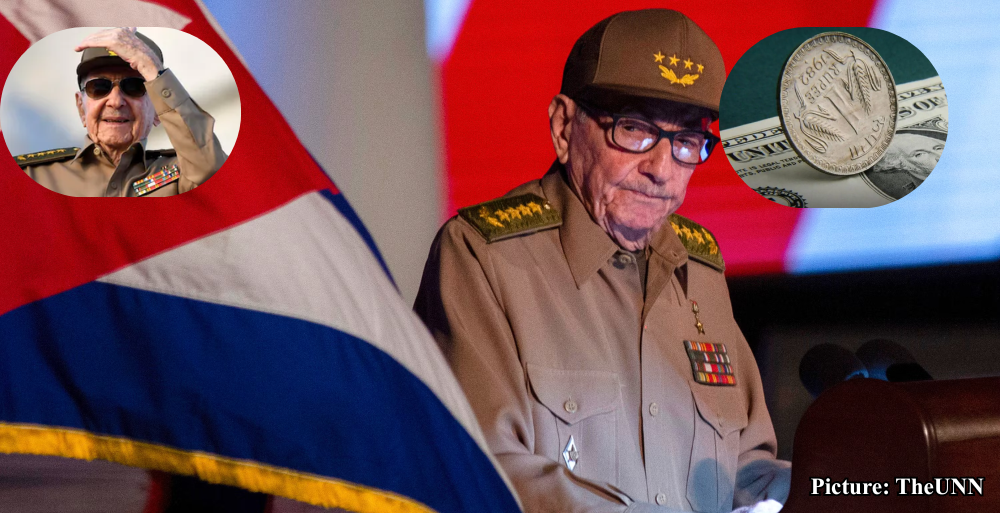
The U.S. Department of Justice has unsealed an indictment against former Cuban leader Raúl Castro and five co-defendants, charging them with conspiracy to kill U.S. nationals and murder linked to the 1996 downing of two unarmed planes operated by the humanitarian group Brothers to the Rescue.
MIAMI — In a significant legal development, the U.S. Department of Justice has unsealed a 27-page indictment against Raúl Castro, the former leader of Cuba, and five co-defendants, stemming from the downing of two Brothers to the Rescue planes in February 1996. The indictment, announced in a press conference, details charges of conspiracy to kill U.S. nationals, murder, and destruction of aircraft.
The indictment specifies that Castro and co-defendant Lorenzo Alberto Perez-Perez face four counts of murder, one for each of the U.S. nationals who died in the incident. The other co-defendants are charged with varying degrees of involvement in the alleged conspiracy. The indictment also includes photographic evidence of the incident and the aircraft involved, underscoring the gravity of the charges.
Historical Context and Significance
The downing of the Brothers to the Rescue planes on February 24, 1996, resulted in the deaths of four Cuban-American activists: Armando Alejandre Jr., Carlos Alberto Costa, Mario Manuel de la Peña, and Pablo Morales. The event has been a focal point of tension between the U.S. and Cuba for decades, symbolizing the broader conflicts stemming from Cuba’s communist regime and U.S. foreign policy.
This indictment marks a rare instance of the U.S. targeting a high-ranking foreign leader for actions taken decades earlier, a move that critics argue represents an escalation in U.S. interventionism. The charges come amidst an ongoing campaign by the U.S. to apply pressure on the Cuban government, which has included sanctions and a blockade aimed at forcing political reform.
Cuban Leadership Responds
In response to the indictment, current Cuban President Miguel Díaz-Canel labeled the charges a “political maneuver, devoid of any legal foundation.” He defended Castro by asserting that Cuba acted in legitimate self-defense against what he termed a “narco-terrorist group” operating within U.S. jurisdiction. Díaz-Canel’s comments highlight the Cuban government’s long-standing narrative that U.S. actions in the region are unjust and imperialistic.
The indictment has garnered mixed reactions within the Cuban-American community. Many in Miami expressed elation over the announcement, viewing it as a long-awaited step toward accountability for the Cuban regime. Isela Fiterre, an attendee at an event celebrating the indictment, stated, “It was time, 67 years of that murderous regime… Raúl Castro did not merely kill four individuals. Over the course of many years, he has killed countless people.” Another attendee, Mercedes Puid-Soto, echoed these sentiments, claiming, “Justice has been served.”
Political Implications for U.S. Leadership
The indictment also carries significant political implications for the Trump administration, particularly as the midterm elections approach. President Donald Trump has cultivated strong ties with the Cuban-American community, which has historically leaned Republican. In remarks following the indictment, Trump noted his support among Cuban-Americans, claiming 94%, although more accurate estimates suggest closer to 70% support in recent polls.
Political analysts suggest that the timing of the indictment may have been strategically planned to galvanize support among Cuban-American voters. The Trump administration’s hardline stance against the Cuban government aligns with the sentiments of conservative Cuban-Americans who have long sought retribution against the Castro regime.
Legal and Strategic Considerations
Legal experts are speculating about the potential implications of the indictment. The acting U.S. Attorney General Todd Blanche stated during the press conference that Castro’s indictment is not a “show indictment” and emphasized the U.S. commitment to pursuing justice against those who harm American citizens. Blanche highlighted that if convicted, Castro could face life in prison.
The indictment raises questions about the potential for U.S. intervention similar to the recent military operation to capture Venezuelan leader Nicolás Maduro. While Blanche did not confirm any intentions to capture Castro, he did state that they expect him to appear in the U.S. “by his own will or another way.”
Conclusion
The indictment against Raúl Castro represents a pivotal moment in U.S.-Cuba relations, reflecting a broader strategy of the Trump administration to exert maximum pressure on the Cuban government. As the situation unfolds, the implications of these charges may affect not only U.S. foreign policy but also the internal dynamics of the Cuban-American community and the political landscape leading up to the midterm elections.