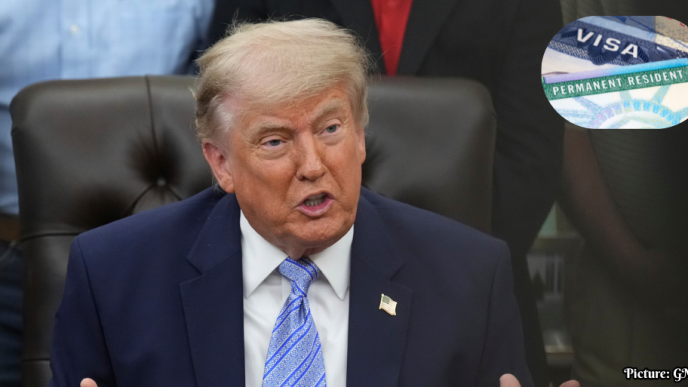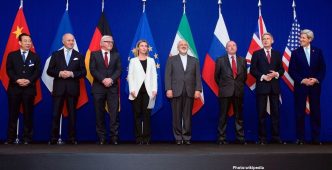

As President Trump grapples with the complexities of foreign policy and public opinion, the 2015 Iran nuclear agreement, once derided by him, is experiencing a reevaluation amidst the backdrop of his administration’s challenges in negotiating a new deal.
In recent weeks, President Donald Trump’s administration has faced increasing scrutiny regarding its approach to Iran, particularly following the president’s abrupt withdrawal from the 2015 Joint Comprehensive Plan of Action (JCPOA), commonly known as the Iran nuclear deal. This withdrawal, framed as a hallmark achievement by the Trump administration, has come under fresh criticism as the complexities of the Middle Eastern geopolitical landscape continue to evolve.
Trump’s initial decision to withdraw from the JCPOA in May 2018 was met with widespread condemnation from various sectors, including former officials and international allies. The deal, which had been negotiated under President Barack Obama, was intended to curb Iran’s nuclear ambitions by limiting its uranium enrichment and increasing oversight. As noted by experts, the agreement was designed to extend the timeline in which Iran could potentially develop a nuclear weapon, pushing it from a matter of months to approximately one year.
Historical Context of the JCPOA
The JCPOA was not merely a bilateral agreement between the U.S. and Iran; it involved multiple world powers, including China, Russia, the United Kingdom, France, Germany, and the European Union. The comprehensive nature of the deal was meant to ensure that Iran would adhere to strict limitations on its nuclear activities for a period of 15 years, during which time it would forfeit 97% of its enriched uranium and submit to rigorous monitoring by the International Atomic Energy Agency (IAEA).
However, in the wake of Trump’s decision to exit the agreement, Iran has progressively resumed its nuclear activities, leading to an escalation of tensions in the region. Critics argue that Trump’s actions have emboldened hard-liners within Iran and destabilized the broader Middle East, with many contending that the administration’s current diplomatic efforts are proving inadequate.
Current Diplomatic Efforts and Challenges
As tensions continue to rise, Trump has expressed a desire to negotiate a new deal, often referred to as “JCPOA Lite,” which many analysts believe may offer Iran more leniency than the original agreement. This prospective deal has raised eyebrows among both supporters and detractors of the original JCPOA, leading to renewed discussions among some Democratic lawmakers and nonpartisan experts regarding the merits of the 2015 agreement.
Amidst his administration’s ongoing negotiations, Trump has claimed in public statements that he is on the verge of reaching a deal with Iran that would be “far better” than the JCPOA. Yet, these assertions have been met with skepticism, as Iran’s current leadership has been resistant to concessions that would limit its nuclear program.
Recent statements from Trump indicate a perceived urgency to secure a deal, particularly in light of his decreasing job approval ratings, especially among young and Latino voters, demographics that were crucial to his electoral success in 2016. This urgency has led to speculation that the administration may be willing to accept terms that could be less favorable than those negotiated by Obama.
Reactions and Implications
The implications of a potential new deal under Trump are significant, not only for U.S.-Iran relations but also for broader international relations and security in the Middle East. Critics of the administration argue that the current trajectory could lead to a situation that is more perilous than the one posed by the JCPOA, particularly if Iran is allowed to expand its nuclear capabilities without adequate oversight.
In a recent interview, Obama highlighted the successes of the JCPOA, stating, “We pulled it off without firing a missile. We got 97% of the enriched uranium out.” He further emphasized that both U.S. and Israeli intelligence agencies had confirmed Iran’s compliance with the deal during its implementation, countering Trump’s narrative that the agreement was fundamentally flawed.
The juxtaposition of the two administrations’ approaches to Iran reflects broader ideological divides within U.S. foreign policy, as well as the challenges posed by evolving geopolitical realities. As Trump’s attempts to negotiate a new agreement continue to falter, there is growing recognition among some lawmakers that a return to a modified form of the JCPOA may be necessary to stabilize the region and prevent further escalation of hostilities.
In conclusion, as the Trump administration grapples with its foreign policy legacy and seeks to navigate its ongoing challenges with Iran, the 2015 nuclear agreement is emerging as a pivotal point of discussion. The shifting perspectives on the JCPOA underscore the complexities inherent in international diplomacy, particularly in an era marked by competing national interests and security concerns.