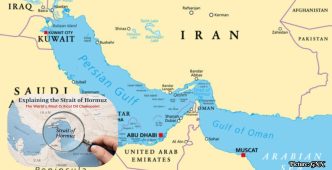

Iranian Foreign Minister Abbas Araghchi announced a collaborative management effort with Oman for the Strait of Hormuz, emphasizing adherence to international law while rejecting U.S. claims regarding navigation rights.
TEHRAN, Iran — Iranian Foreign Minister Abbas Araghchi announced on Monday that Iran and Oman will cooperate in the management of the strategically important Strait of Hormuz, a vital maritime passage that connects the Persian Gulf to international shipping routes. This decision comes amid ongoing geopolitical tensions, particularly between Iran and the United States, and aims to assert the two nations’ rights over the waterway as dictated by international law.
Araghchi articulated that both Iran and Oman possess a ‘natural right’ to manage the Strait of Hormuz due to their geographical positioning. In his remarks, he firmly rejected U.S. assertions that the strait should be classified as international waters, thus allowing all vessels free passage. This disagreement highlights a significant ideological rift regarding maritime sovereignty and the interpretation of international maritime law, particularly as it pertains to strategic chokepoints.
Significance of the Strait of Hormuz
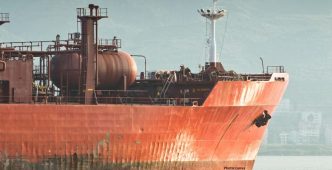
The Strait of Hormuz is among the most crucial maritime corridors globally, with approximately 20% of the world’s oil supply passing through its waters. This narrow strait, measuring just 21 miles at its narrowest point, is bordered by Iran to the north and Oman to the south, making it a focal point for geopolitical maneuvering and military presence, particularly from Western nations.
The historical significance of the Strait of Hormuz cannot be overstated. It has long been a flashpoint for regional conflict, especially during periods of heightened U.S.-Iran tensions. The U.S. maintains a substantial naval presence in the Persian Gulf, aimed at ensuring the free flow of commerce and security in the region. Iran’s recent assertion of joint control with Oman may further complicate existing tensions, potentially leading to confrontations with U.S. naval forces and other regional actors.
Management and Fees for Navigation
In outlining the management framework, Araghchi indicated that while Iran and Oman would spearhead discussions on the strait’s governance, neighboring Gulf states would also be invited to participate. This move is seen as an effort to foster regional cooperation, although Araghchi underscored that the final decisions regarding navigation and security would rest solely with Iran and Oman.
Araghchi provided further details regarding the financial implications for shipping through the Strait of Hormuz. He clarified that Iran does not intend to impose a transit fee on vessels navigating the strait. Instead, he proposed a service fee system to cover navigation and pilotage services, as well as search and rescue operations. This approach aims to ensure the safety of maritime traffic and may help alleviate apprehensions from international shipping firms regarding Iran’s control over this critical passage.
Domestic Political Dynamics
During a recent interview, Araghchi also addressed the internal political landscape in Iran, revealing that he maintains ongoing communication with Supreme Leader Mojtaba Khamenei. He stated that directives from Khamenei are received in a timely manner and are being implemented, indicating a united front in Iran’s foreign policy and regional security strategy.
This joint management initiative with Oman can be viewed as part of Iran’s broader geopolitical strategy to strengthen alliances with neighboring countries while countering U.S. influence in the region. As Iran continues to navigate its relationships with other Gulf states, the outcomes of these discussions could significantly impact regional stability and the dynamics of international shipping operations.
International Reactions and Future Implications
The announcement has been met with varying reactions from global powers and regional stakeholders. Analysts suggest that the implications of Iran and Oman managing the Strait of Hormuz extend beyond regional politics, potentially affecting global oil prices and international diplomatic relations. Given the strait’s critical role in the global energy supply chain, any disruptions or changes in management could reverberate through international markets.
As Iran and Oman embark on this cooperative management endeavor, their actions will be closely monitored by nations with vested interests in the region. The Strait of Hormuz remains a vital artery for global trade, and developments in its governance will likely resonate far beyond the immediate geographical area, influencing not only oil prices but also the broader geopolitical landscape.
Conclusion
The initiative to jointly manage the Strait of Hormuz signifies a critical moment in the relationship between Iran and Oman, as well as a broader assertion of regional sovereignty. The outcomes of this collaboration could reshape the maritime dynamics of the Persian Gulf and influence international maritime policies regarding chokepoints. As the situation unfolds, the international community will be watching closely, considering the potential implications for global trade and security.