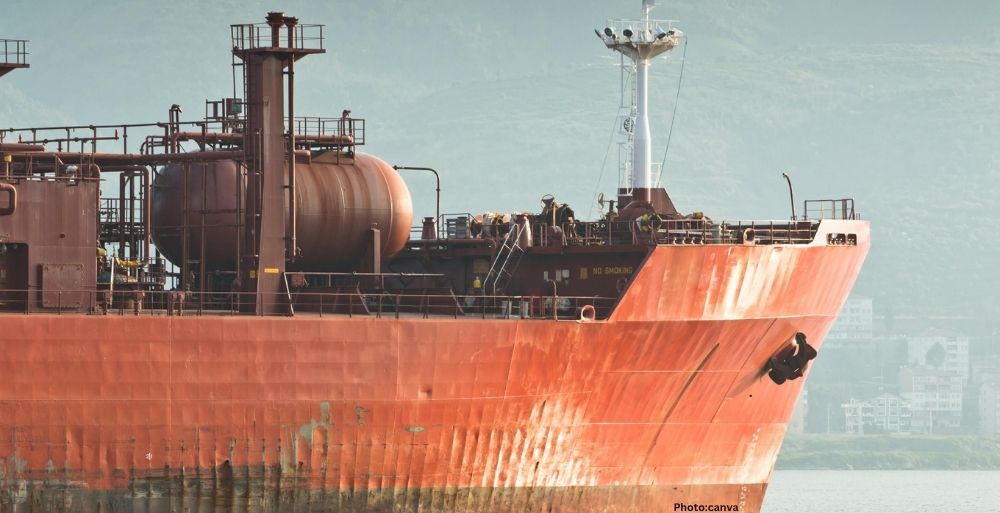
A high-stakes military intervention unfolded in the Gulf of Oman on Monday, June 8, 2026, when a United States military aircraft targeted and disabled an unladen oil tanker operated by an all-Indian crew. The vessel, MT Marivex, which flies the flag of Palau, had been blacklisted by the U.S. Treasury Department’s Office of Foreign Assets Control due to its illicit commercial links to Iran. U.S. Central Command confirmed that an F/A-18 Super Hornet launched a precision strike on the ship’s engineering compartment following repeated violations of a maritime blockade. While initial distress calls from the ship painted a scene of critical danger and a lack of immediate physical assistance, a coordinated international response spearheaded by Omani maritime authorities successfully evacuated all 24 Indian nationals on board via helicopter. The incident highlights escalating tensions in West Asian shipping corridors and poses complex diplomatic challenges for New Delhi, which has refrained from directly condemning the U.S. military action.
MUSCAT, Oman — A Palau-flagged oil tanker targeted and disabled by a United States military strike in the Gulf of Oman on Monday has triggered a complex international rescue and illuminated the intense enforcement of Western blockades in West Asian waters.
The vessel, identified as the MT Marivex, was carrying 24 Indian seafarers when a precision munition struck its engine room at approximately 1:30 p.m. local time, causing a severe fire and knocking out steering capabilities. Despite early panic and structural damage that threatened to sink the vessel, all 24 crew members were safely evacuated by the Oman Air Force and maritime rescue teams.
The strategic strike underscores the volatile security environment surrounding the Strait of Hormuz, which has seen heightened militarization and blockades following months of cyclical hostilities involving regional powers, Israel, and the United States.
Missile Strike and Panic at Sea
The first indications of the military engagement emerged through desperate audio and video messages transmitted by the crew to maritime labor representatives in India. At approximately 2:00 p.m. IST on Monday, Manoj Yadav, the general secretary of the Forward Seamen’s Union of India (FSUI), received a series of frantic transmissions from the vessel’s crew.
“This is Motor Tanker Marivex. Fire on board. Vessel is sinking. U.S. Navy attacked with missile our engine room. We have a hole at the bottom,” an unidentifiable crew member stated in an audio recording, his voice strained against the background noise of ship alarms and manual damage control efforts.
Additional video clips forwarded to the union showed the 24 seafarers crowding toward the forward deck of the tanker to escape a thick plume of black smoke billowing from the aft engineering spaces. In the footage, a crew member pointed out toward the horizon where a naval warship was visible, expressing frustration that immediate assistance had not been rendered and that portside lifeboats had been destroyed by the blast while starboard lifeboats remained inaccessible due to the fire.
U.S. Central Command (CENTCOM) later released an official statement confirming that its forces had intentionally disabled the unladen tanker. According to CENTCOM, the MT Marivex was transiting international waters toward an Iranian port in direct violation of the active U.S.-led blockade against Iran.
“An F/A-18 Super Hornet from USS Abraham Lincoln (CVN 72) fired a precision munition into the ship’s engineering and steering spaces after the crew failed to comply with directions from U.S. forces,” the CENTCOM statement read. “Marivex is no longer sailing to Iran.”
Coordinated International Rescue
The maritime emergency triggered immediate communication between Indian relative networks, coastal tracking centers, and Middle Eastern search and rescue operations. The Indian Coast Guard reported that its Maritime Rescue Coordination Centre (MRCC) in Mumbai was alerted at 2:20 p.m. on Monday by the relative of an onboard sailor.
MRCC Mumbai quickly transferred the operational leadership to the Oman Maritime Search and Rescue Centre (OMSC), requesting that Muscat assume the role of Search Mission Coordinator due to the ship’s physical position off Masirah Island, Oman.
The Oman Air Force deployed helicopters to the scene. Because the fire had consumed the rear section of the ship, the crew had congregated entirely on the bow, making aerial extraction necessary. The seafarers were airlifted to Masirah Island.
“All of them are in a state of shock and most of them have lost their mobile phones,” Yadav said on Tuesday morning, updating the press on the crew’s condition. “They are safe, receiving assistance, and are expected to reach India within two days.”
The Sanctions Background and Blockade Evasion
Government and maritime tracking data reveal that the MT Marivex has been operating under heavy scrutiny for months. The vessel was blacklisted last December by the U.S. Department of the Treasury’s Office of Foreign Assets Control (OFAC), which targets entities transporting Iranian or Russian oil in violation of international trade restrictions.
According to the maritime database Equasis and tracker website marinetraffic.com, the tanker has repeatedly operated inside what insurance markets designate as a high-risk “conflict zone.” In April, when a brief regional ceasefire was declared, the MT Marivex was among several vessels that exited the Persian Gulf through the Strait of Hormuz, transporting a shipment of petroleum from Bandar Abbas, Iran, to Mangalore, India.
Intelligence sources, speaking on the condition of anonymity, stated that Monday’s strike followed multiple attempts by the vessel to bypass Western naval patrols. Over the preceding week, the tanker reportedly made four distinct attempts to evade the U.S. blockade. On three prior occasions, the vessel altered its course after receiving direct verbal warnings from U.S. Navy warships.
On June 8, however, the vessel attempted to pass through Omani territorial waters while turning off its Automatic Identification System (AIS) transponders to avoid digital detection.
“This pattern makes it clear that its intention was not above board,” an Indian administrative source commented. “The ship was in an unladen, or ballast, state when it was physically disabled.”
The United Kingdom Maritime Trade Operations (UKMTO) center officially flagged the incident on its tracking boards as “suspicious activity” before the formal U.S. military admission.
New Delhi’s Diplomatic Tightrope
At a media briefing in New Delhi on Monday afternoon, the Ministry of Ports, Shipping and Waterways adopted a highly cautious posture. Opesh Kumar Sharma, a director within the shipping division, confirmed the fire aboard the vessel at 1:30 p.m. but repeatedly declined to attribute the cause to American military ordinance.
“The vessel has 24 Indian seafarers on board, all of whom are reported to be safe,” Sharma said, neutralizing questions about a projectile strike. “The vessel was well out of the Strait of Hormuz and well clear to the south. We are in touch with the owners, and we are trying to ascertain the absolute facts.”
Sharma emphasized that the Directorate General of Shipping control room has been operating under heightened strain due to regional instability, handling 12,020 calls and over 26,832 emails since its emergency activation. Over the last 96 hours alone, the ministry has handled 390 calls from worried families and has facilitated the repatriation of 3,506 Indian seafarers caught in regional crossfire.
The Indian government’s silence regarding direct U.S. responsibility mirrors its diplomatic handling of previous military operations in the region. In March, New Delhi issued no public condemnation after a U.S. torpedo strike targeted and sank the Iranian frigate IRIS Dena near Sri Lanka, an engagement that resulted in 104 Iranian casualties.
The geopolitical calculus remains precarious for India. The country relies heavily on West Asian shipping lanes for its energy security, yet it maintains strong strategic and defense ties with Washington. Concurrently, Indian labor constitutes a significant percentage of the global merchant marine workforce, leaving thousands of its citizens vulnerable to asymmetric warfare and enforcement actions in international waters.
The Ministry of External Affairs released a generalized statement expressing “utmost concern” over the broader regional escalation between Israel and Iran, calling for immediate de-escalation, but stopped short of naming the United States or addressing the specific targeting of a ship manned entirely by its citizens.