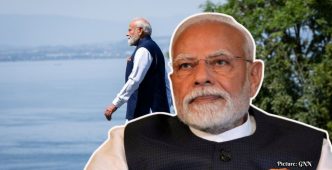
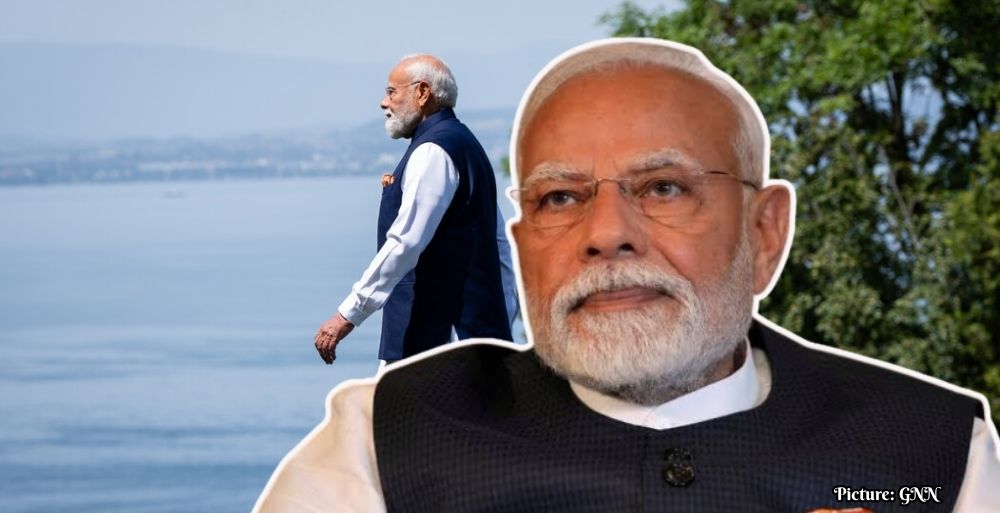
Prime Minister Narendra Modi’s active foreign policy over the past year marks a strategic pivot toward multi-alignment, securing concrete trade, defense, and technology agreements with major global economies to build resilience against unpredictable international leadership, according to an analysis by The New York Times.
NEW DELHI — In an era defined by geopolitical volatility and shifting diplomatic alliances in Washington, Indian Prime Minister Narendra Modi has spent the past year executing a calculated, outcome-oriented foreign policy strategy designed to insulate the world’s most populous nation from international trade shocks and unpredictable partner behavior.
According to a detailed analysis by The New York Times, India’s diplomatic machinery has moved beyond traditional non-alignment toward targeted economic and strategic hedging. Since August 2025, Prime Minister Modi has conducted official visits to at least 20 countries, while host delegations from 13 nations have converged in New Delhi. The resulting pacts span major free trade agreements, submarine manufacturing technologies, artificial intelligence integration, and high-value foreign direct investment frameworks across Europe, the Indo-Pacific, and East Asia.
The shift reflects a deliberate effort to diversify India’s supply chains, technology transfers, and security arrangements, ensuring that South Asia’s dominant economic power maintains strategic autonomy regardless of domestic political shifts in the United States or the potential return of transactional trade policies under former U.S. President Donald Trump.
Pragmatic Multilateralism: The Economic Dividends
The centerpiece of New Delhi’s diplomatic push lies in landmark commercial treaties signed after years of stalled negotiations. Prime Minister Modi’s diplomatic corps has systematically prioritized economic deliverables over symbolic statements, resulting in concrete access to high-value developed markets.
- The United Kingdom Free Trade Agreement: Formally entering into force on July 15, 2026, the Comprehensive Economic and Trade Agreement (CETA) marked a historic shift in post-Brexit international commerce. Under the terms of the treaty, the United Kingdom eliminated tariffs on 99 percent of Indian goods, covering critical export sectors such as textiles, footwear, marine products, and pharmaceuticals. Conversely, India agreed to reduce its historically protectionist tariffs on British imports. Tariffs on imported Scotch whisky, previously pegged at 150 percent, dropped immediately to 75 percent, with a structured glide path lowering duties to 40 percent over a ten-year horizon. Long-term economic projections provided by the British Ministry of Commerce estimate that the accord will expand bilateral trade by £25.5 billion annually while adding £5.1 billion to India’s Gross Domestic Product.
- The European Union Breakthrough: Following nearly two decades of periodic and contentious discussions, negotiators from India and the European Commission concluded a historic Free Trade Agreement on January 27, 2026. The European Union remains India’s third-largest trading partner, with bilateral goods trade recorded at €118 billion in 2025. The pact secures structural market access across 27 European economies while providing European manufacturers a stabilized regulatory doorway into India’s expanding middle-class consumer market.
- The EFTA Investment Commitment: In parallel with the broader EU agreement, the European Free Trade Association (EFTA)—which includes Norway, Switzerland, Iceland, and Liechtenstein—reaffirmed a landmark economic partnership. Under this framework, EFTA member states pledged to facilitate $100 billion in direct foreign investment into Indian industrial and infrastructure projects over the next 15 years, targeting the creation of one million skilled jobs within India.
“Foreign policy is ultimately about what you bring back home,” noted a senior Indian diplomatic official present during the signing ceremonies in New Delhi, who spoke on the condition of anonymity due to protocol restrictions. “We are building operational economic structures, not just maintaining bilateral polite conversations.”
Defense, Shipbuilding, and Technology Networks
Beyond commercial goods trade, Prime Minister Modi’s multi-pronged diplomacy has targeted deep technological integration with key allies, particularly in defense manufacturing and critical technology platforms.
Strategic Deepening Across Western Europe and Asia
| Partner Country / Block | Key Focus Areas | Strategic Objective & Outcomes |
| France | AI & Strategic Technology | Co-chaired 2025 Paris AI Action Summit; elevated status to “Special Global Strategic Partnership” in Feb 2026. |
| Germany | Defense & Submarines | Collaboration on advanced non-nuclear submarine technology and joint naval defense manufacturing. |
| South Korea | Shipbuilding & Industrial Infrastructure | Transfer of advanced maritime manufacturing expertise to assist India’s goal of entering the top 5 global shipbuilders by 2047. |
| New Zealand | Maritime Security & Trade | Enhanced Indo-Pacific naval coordination, joint security frameworks, and expanded agricultural protocols. |
In the high-tech sector, India and France formally elevated their bilateral tie to a “Special Global Strategic Partnership” in February 2026, building upon their joint leadership at the 2025 AI Action Summit in Paris, which generated roughly 100 direct initiatives spanning open-source intelligence, research exchanges, and technological governance.
Simultaneously, defense technology transfers have advanced rapidly. Prime Minister Modi’s engagement with Berlin secured vital German commitments regarding advanced air-independent propulsion (AIP) submarine technology, providing the Indian Navy with quiet, endurance-capable underwater platforms essential for maintaining deterrence in the Indian Ocean.
In East Asia, South Korea’s industrial giants signed maritime agreements to modernize Indian shipyards. The initiative directly supports New Delhi’s maritime roadmap, which targets elevating India into the world’s top five shipbuilding nations by 2047 through joint ventures and industrial scale.
Personal Diplomacy and Strategic Autonomy
While the technical framework of India’s trade push is governed by complex tariff schedules and defense protocols, Prime Minister Modi has continually leveraged personal rapport to cement ties. During a high-level summit with Italian Prime Minister Giorgia Meloni, Modi presented her with a package of “Melody” toffees—a lighthearted nod to an internet meme that was highlighted by international observers as emblematic of New Delhi’s accessible, non-confrontational diplomatic style.
However, beneath the soft power lies a clear economic calculus. Indian strategists recognize that relying excessively on any single power center—whether Washington, Beijing, or Moscow—presents long-term vulnerabilities to India’s national interest.
“India is not putting all its eggs in one basket,” the NYT report observed, summarizing the core strategy driving New Delhi’s global outreach. “It is about ensuring that India remains strategically autonomous and economically resilient regardless of who occupies the White House.”
By establishing bilateral trade mechanisms, securing energy pipelines, entering defense technology sharing agreements, and capturing capital commitments from Norway to South Korea, India is constructing a broad foundation of global stakeholders. Rather than passively navigating the shifting preferences of Western powers, New Delhi’s active diplomatic campaign ensures it retains the freedom, leverage, and economic foundation to chart its own course on the world stage.