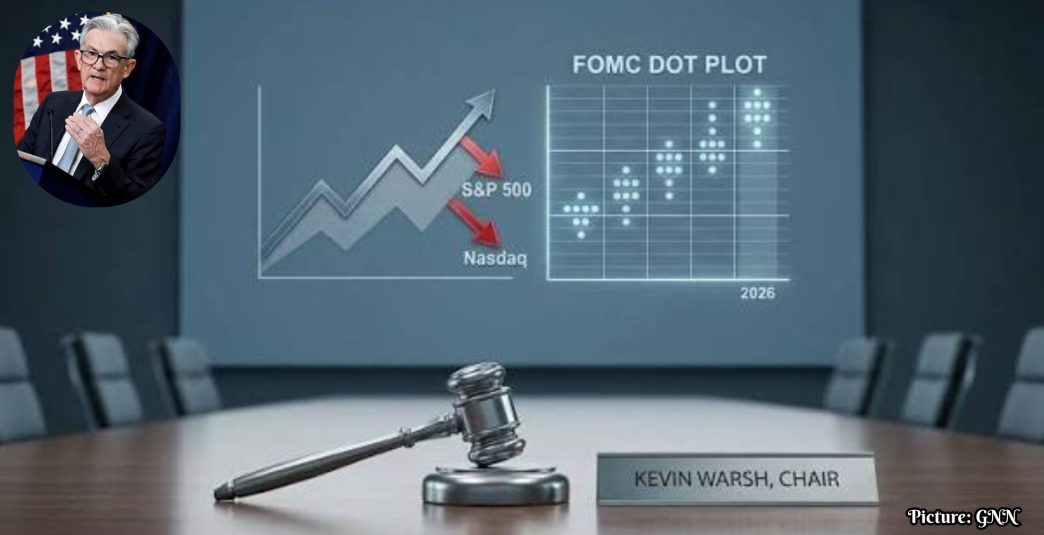
As the Federal Reserve approaches its upcoming meeting, speculation mounts regarding a potential interest rate hike, marking a possible shift towards a less predictable monetary policy under Chairman Kevin Warsh.
The Federal Reserve is set to conclude a two-day meeting this week, where analysts are closely watching for signs that Chairman Kevin Warsh may be steering the central bank toward a new era of monetary policy. Traditionally, the Federal Reserve has been known for its ability to telegraph interest rate changes in advance. However, recent market dynamics and geopolitical events have led to increased speculation regarding a possible interest rate hike, which could signify a departure from this predictability.
Current Market Sentiment
Market participants are now assigning a significant probability to the Fed implementing an interest rate increase at the conclusion of its meeting. Current estimates from the CME’s FedWatch tool indicate that the odds of a rate hike have risen to approximately 34%, a notable increase from just 16% a week prior. This shift occurs in the context of recent escalations in hostilities in the Persian Gulf, which have driven oil prices and long-term bond yields upward.
Prior to entering a blackout period where FOMC members refrain from public commentary, the Fed’s communications suggested a likelihood of maintaining current rates during this meeting. However, the persistent inflationary pressures and evolving economic conditions have left open the possibility of future increases if inflation rates do not begin to decline.
Warsh’s Approach to Monetary Policy
Warsh has emphasized the importance of approaching policy meetings without preconceived notions, advocating for an open-minded assessment of the economic landscape. He has described the decision-making process as a “family fight” where diverse viewpoints could lead to a broader range of potential policy outcomes than those seen under his immediate predecessors. This approach reflects a willingness to adapt to changing circumstances, potentially allowing for more frequent adjustments to interest rates.
However, the dual challenge of increased flexibility also introduces the risk of the Fed appearing reactive to short-term economic fluctuations. Analysts question whether a rapid increase in crude oil prices should significantly alter policy intentions that were more stable just days ago.
Potential Market Reactions
In light of the heightened speculation regarding a rate hike, some economists are cautioning against the potential market volatility that could ensue regardless of the Fed’s decision. Bill English, a former Federal Reserve economist, noted that the current market pricing reflects a one-third chance of a rate action, suggesting that any outcome could lead to unexpected market reactions. English, now a professor at the Yale School of Management, stated, “They should do the right thing, given the information they have. I see a problem with not explaining the reasoning behind a move (or lack of move) because that could lead markets to react unexpectedly.”
Comparative Central Bank Actions
The European Central Bank (ECB) recently opted to leave interest rates unchanged, with President Christine Lagarde urging caution against overreacting to volatile oil prices amidst ongoing geopolitical tensions. Lagarde stated, “We have seen so abrupt changes, occurring in a matter of days, not just in terms of the level of the conflict but also the consequences in terms of energy prices.” This caution highlights a broader trend among central banks to balance responsiveness with the need for stability.
A Historical Perspective on Fed Rate Moves
Historically, the Federal Reserve has occasionally surprised markets with significant rate changes, typically in response to extraordinary economic conditions. During the 2008 financial crisis and the onset of the COVID-19 pandemic in 2020, the Fed conducted emergency meetings resulting in substantial rate cuts aimed at instilling confidence in the economy. Conversely, aggressive rate hikes beginning in June 2022 were intended to signal the Fed’s commitment to controlling inflation.
These notable actions were not merely routine adjustments; they were designed to address urgent economic challenges. Even in these instances, market speculation often foreshadowed the Fed’s decisions, suggesting that complete surprises are rare.
Looking Ahead
The upcoming Federal Open Market Committee meeting presents an opportunity to gauge the extent of Warsh’s departure from the established norms of his predecessor, Jerome Powell. The historical context of past Fed decisions underscores the delicate balance between proactive monetary policy and the need for clear communication with the markets.
As the meeting approaches, all eyes will be on Warsh and the FOMC’s decision-making process, as the implications of their actions could reverberate throughout the financial landscape.