
A recent Emerson College poll highlights a notable 10-point lead for Democrats over Republicans among likely voters, revealing significant trends in voter preferences across various demographic groups as the 2024 congressional elections approach.
The Emerson College Polling survey, released on Thursday, indicates that Democrats have garnered 50.3 percent of support from likely voters, compared to 39.5 percent for Republicans. Conducted from June 7 to 8, the survey included responses from 1,200 likely voters and carries a margin of error of plus or minus 2.8 percent. This poll’s findings reflect a persistent advantage for Democrats, paralleling trends identified in an earlier poll from April.
Demographic Insights Revealed
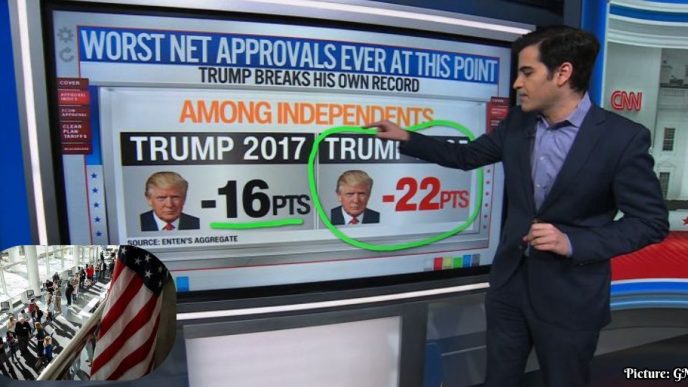
Spencer Kimball, executive director of Emerson College Polling, underscored significant shifts among key demographic groups, particularly independent and Hispanic voters. The poll reveals that independent voters favor Democratic candidates by a notable 15-point margin, with 45 percent expressing support for Democrats compared to 30 percent for Republicans. This trend is critical, as independents are often seen as pivotal in determining election outcomes.
Furthermore, Hispanic voters show an overwhelming preference for Democrats, exhibiting a 34-point lead. The poll indicates that 65 percent of Hispanic likely voters disapprove of former President Donald Trump’s actions during his second term, reflecting broader dissatisfaction within this demographic. This discontent is echoed among Black voters, with 76.3 percent expressing disapproval, while 49 percent of white voters share similar sentiments. These figures suggest potential challenges for Republican candidates as they strive to maintain diverse voter support.
Republican Strategies Amid Redistricting Efforts
As Republicans work to solidify their majorities in both the House of Representatives and the Senate, they have engaged in various redistricting initiatives aimed at enhancing their electoral viability. In response, Democrats have also undertaken redistricting efforts in states such as California, Virginia, and New York, seeking to manipulate congressional maps to their advantage.
In California, a measure authorizing redistricting has been passed, while in Virginia, newly drawn congressional maps faced judicial challenges and were overturned, illustrating the complex legal landscape surrounding district boundaries. Meanwhile, in New York, a proposed redistricting plan is set to be presented to voters in November, though any resulting changes would not take effect until 2028, potentially diminishing their immediate impact on upcoming elections.
Public Sentiment on Redistricting Practices
The Emerson poll also explored public attitudes toward mid-decade redistricting, revealing that a plurality of respondents—45.7 percent—consider these practices a “bad thing.” In contrast, 38.4 percent view redistricting positively, while 15.9 percent declined to express an opinion. This division in public sentiment highlights the contentious nature of the redistricting process and its implications for electoral integrity and fairness.
Historical Context and Implications
Redistricting has historically played a crucial role in shaping political landscapes in the United States. Following the 2020 Census, both parties have engaged in strategic map drawings to maximize their electoral advantages, often leading to disputes and legal challenges. The national trend towards increased polarization has further intensified the stakes associated with redistricting, as parties seek to consolidate their political power.
This latest Emerson poll reflects broader patterns observed in recent electoral cycles, suggesting that incumbents and established parties may face increasing scrutiny and potential backlash from disenchanted voter bases. As demographic shifts continue to influence electoral preferences, the strategies employed by both parties will be critical in navigating the changing political terrain.
Looking Ahead to 2024 Elections
With 10.2 percent of respondents in the Emerson poll remaining undecided about their party preference, both major parties will need to intensify their outreach efforts to attract this key group of voters. The evolving preferences among independent and minority voters signal that candidates must adapt their platforms and messaging to effectively resonate with an increasingly diverse electorate.
As the 2024 elections loom, the implications of this polling data could be substantial. The findings suggest that Republicans may need to reassess their strategies to address concerns among minority groups and independents, particularly in light of the ongoing challenges posed by redistricting and shifting voter sentiments.
Overall, the Emerson College Polling survey offers a snapshot of the current political climate as both parties gear up for the upcoming elections. The data underscores the challenges that Republicans face in maintaining their influence amid shifting demographics and public discontent, particularly as the legal battles over redistricting play out in various states. As the electoral landscape continues to evolve, the strategies and responses of both parties will be closely monitored in the lead-up to November 2024.