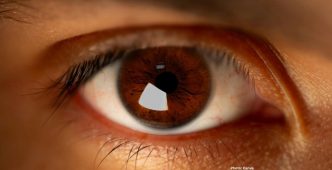
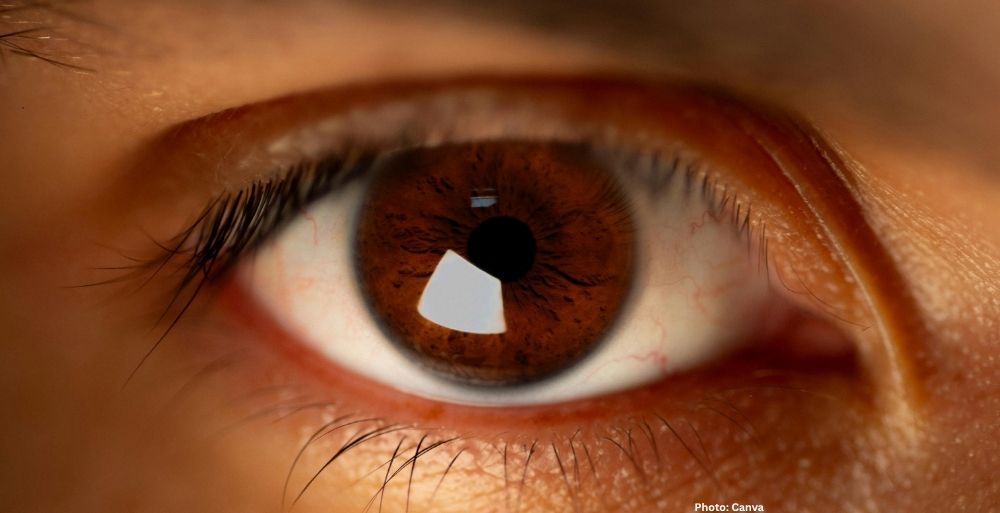
A recent study by researchers from Lund University and the University of Sussex suggests that human eyes evolved from a tiny, one-eyed ancestor that lived roughly 600 million years ago, providing new insights into vertebrate eye development.
A pioneering study conducted by scientists at Lund University in Sweden and the University of Sussex in the United Kingdom has illuminated the evolutionary origins of human eyes, tracing their development back to a small, one-eyed ancestor that existed nearly 600 million years ago. This groundbreaking research offers valuable insights into the complex evolutionary processes that led to the emergence of the sophisticated visual systems present in modern vertebrates, including humans.
Understanding the Ancient Ancestor
The researchers posit that one of the earliest vertebrate ancestors, a diminutive, worm-like creature inhabiting marine environments, possessed a single central eye. This ancient organism likely had two primitive light-sensitive structures that functioned as rudimentary eyes. However, as this species adapted to a more sedentary lifestyle, the necessity for these paired eyes diminished, eventually leading to their evolutionary disappearance.
The retention of a cluster of light-sensitive cells in the center of the organism’s head eventually gave rise to a simple median eye. This adaptation facilitated basic light detection, enabling the creature to discern between day and night and to establish its spatial orientation within the aquatic environment. Such capabilities were crucial for survival in a world where predation and environmental changes posed constant threats.
The Evolutionary Resurgence of Vision
As descendants of this ancient organism transitioned back to a more active swimming lifestyle, the need for enhanced vision became increasingly apparent. Improved visual acuity was essential for locating food, avoiding predators, and navigating through complex underwater landscapes. The research indicates that the remnants of the original median eye were adapted through evolutionary processes, ultimately leading to the development of a new pair of complex image-forming eyes.
This transition highlights the dynamic nature of evolutionary adaptation, where species can repurpose existing structures to meet new environmental demands. The findings suggest that the evolutionary journey of eye development is a testament to the interplay between environmental pressures and biological innovation.
Differentiating Vertebrate Eyes from Other Species
An intriguing aspect of the study is its exploration of the differences between vertebrate eyes and those of other animal groups, such as insects and cephalopods, including squids. In vertebrates, the retina, which is the light-sensitive layer at the back of the eye, evolved from brain tissue. This stands in stark contrast to the eye development in insects and squids, which arises from tissue on the surface of the head. These divergent evolutionary pathways underscore the complexity of eye evolution across different species.
Methodology and Research Findings
The conclusions drawn in this study are based on a thorough comparative analysis of light-detecting cells across various animal taxa. The researchers meticulously examined the anatomical locations, functionalities, and neural connections of these cells, providing a robust framework for understanding how vertebrate eyes evolved over millions of years.
The analysis suggests a unique sequence of evolutionary transformations: first, the loss of paired eyes, followed by the retention of a median eye, and finally, the emergence of complex visual systems that characterize modern vertebrates. This evolutionary trajectory not only enhances our understanding of the historical development of vertebrate vision but also contributes to broader discussions in evolutionary biology regarding how organisms adapt to their environments.
Broader Implications for Evolutionary Biology
This research enriches the existing body of knowledge regarding the evolutionary mechanisms underlying sensory organ development. By tracing the lineage of eye evolution from primitive structures to the intricate systems seen in vertebrates today, the study provides a clearer picture of the milestones that have shaped vertebrate sensory systems throughout history.
Furthermore, the findings have significant implications for understanding the functional adaptations of sensory organs in response to ecological pressures. As researchers delve deeper into the evolutionary history of visual systems, it is likely that additional insights will emerge, revealing the intricate relationships between ancient organisms and their modern descendants.
Conclusion
In summary, the study conducted by researchers from Lund University and the University of Sussex represents a significant advancement in our understanding of the evolutionary history of human eyes. By tracing the lineage back to a tiny, one-eyed ancestor, the research elucidates the complex processes that have led to the development of sophisticated visual systems in vertebrates. As the scientific community continues to explore these evolutionary pathways, further discoveries may uncover even more profound connections between ancient life forms and contemporary species.