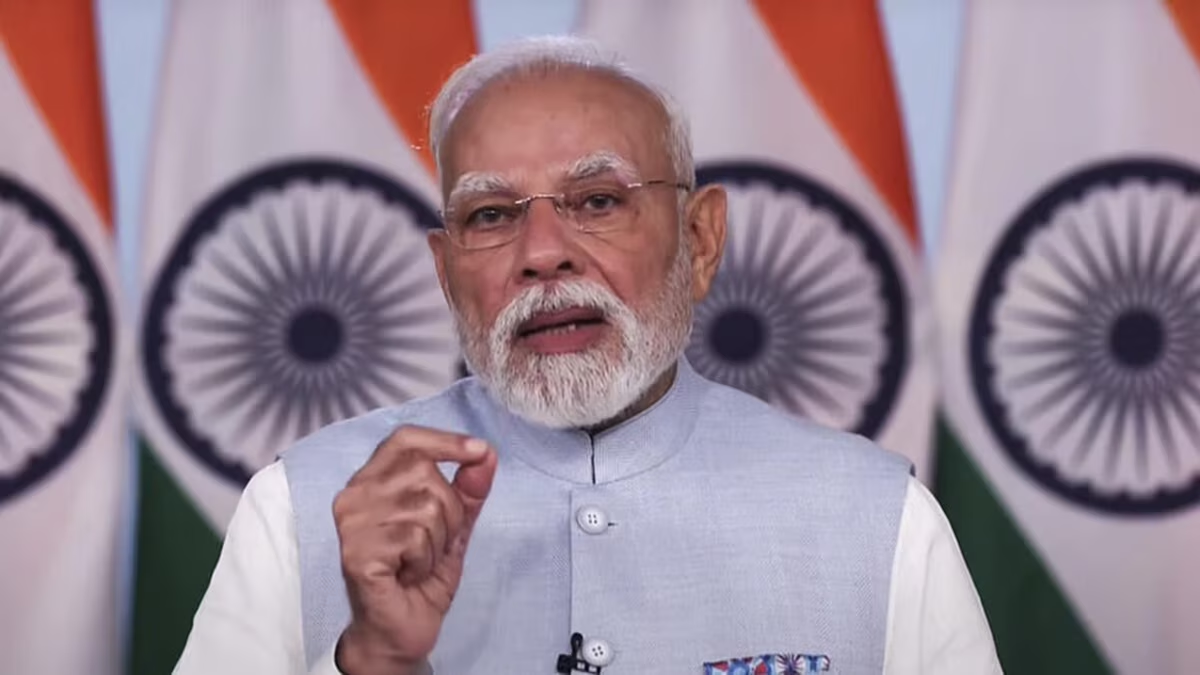
In a calculated structural shift in New Delhi’s geopolitical doctrine, Prime Minister Narendra Modi has directed the Ministry of External Affairs (MEA) to intensively re-center its diplomatic capital on immediate neighboring nations. The directive is built upon the institutional assessment that India cannot securely project global power status without first cementing absolute stability and strong diplomatic alignments across the subcontinent. This strategic re-calibration arrives amidst heightened regional competition, characterized by a renewed China-Pakistan axis, evolving Western security footprints, and rapid political shifts in surrounding states. By intensifying direct engagement with nations like Nepal, Bhutan, Sri Lanka, the Maldives, and Myanmar, the administration seeks to create a buffer of economic integration and security cooperation to neutralize external security challenges and safeguard its sovereign borders.
NEW DELHI, INDIA — Prime Minister Narendra Modi has issued an administrative directive to the Ministry of External Affairs (MEA) mandating a structural pivot toward India’s immediate neighborhood, emphasizing that the nation’s ambitions to become a recognized global power are fundamentally contingent upon establishing robust, unshakeable ties across the subcontinent. The strategic recalibration comes at a highly fluid juncture for South Asian diplomacy. While New Delhi faces a complex multi-front landscape—characterized by an assertive China, historical friction with Pakistan, and a shifting Western intelligence and political footprint—the administration has signaled that it will look past traditional diplomatic protocols to build direct, economically integrated partnerships with peripheral states.
The policy shift is underscored by a flurry of high-level diplomatic engagements in the capital this week, including a formal visit by a delegation from Nepal’s ruling Rastriya Swatantra Party (RSP), led by its founding chairman Rabi Lamichhane, and the conclusion of an official state visit by Myanmar’s President, Senior General U Min Aung Hlaing. These visits reflect a deliberate operational decision by the Modi government to secure its immediate borders and maritime boundaries through aggressive, localized engagement, deliberately bypassing long-standing anti-India incitement networks active across the subcontinental corridor.
Cross-Border Infrastructure Realignment with Nepal
Writing in a prominent national daily during his diplomatic visit to New Delhi, Rabi Lamichhane advocated for an accelerated framework of cross-border connectivity, civil aviation expansions, and large-scale infrastructure integration. The political ascent of newer, reform-oriented groups like the RSP has altered the dynamics of bilateral discussions. Lamichhane’s public positions purposefully emphasized the economic advantages of India-Nepal cooperation, steering away from the highly combustible border and territorial disputes that have historically been leveraged by traditional, pro-China communist factions led by K.P. Sharma Oli and Pushpa Kamal Dahal (Prachanda) to stoke ultra-nationalist sentiments.
Since assuming office in 2014, Prime Minister Modi has consistently maintained that India is prepared to extend considerable economic concessions to ensure the landlocked Himalayan republic achieves parallel growth via comprehensive economic integration. By modernizing Integrated Check Posts (ICPs) and looking to accelerate the proposed 150-kilometer Raxaul-Kathmandu railway line, New Delhi aims to demonstrate that its developmental assistance carries none of the high-interest debt traps or strict quid-pro-quo terms frequently associated with large-scale external investments from Beijing.
Securing the Northeastern Flank via Myanmar
Simultaneously, India has sent unequivocal signals regarding its core national security priorities by actively re-engaging with Myanmar. The state visit of President U Min Aung Hlaing, which concluded with high-level bilateral talks at Hyderabad House, represents a clear-eyed application of realpolitik designed to protect India’s vulnerable northeastern theater.
The security situation along the borders of Manipur, Nagaland, and Arunachal Pradesh remains highly sensitive to cross-border insurgent movements. By rolling out a diplomatic red carpet for the Myanmar leadership, New Delhi has prioritized direct security coordination over Western-led isolation campaigns against Naypyidaw. During the bilateral sessions, both states reviewed maritime security, rare earth supply chains, and finalized the implementation of the Rupee-Kyat settlement mechanism to facilitate border trade. Crucially, the administration secured strict assurances that Myanmar’s sovereign territory would not be utilized by anti-India insurgent groups to orchestrate cross-border raids.
The Two-Front Geopolitical Containment Challenge
The strategic imperative to bind the immediate neighborhood closer to New Delhi is further intensified by the overt security alignment between Pakistan and China. Senior intelligence and foreign policy officials in New Delhi have noted with concern the joint statement issued on May 25, 2026, following Pakistani Prime Minister Shehbaz Sharif’s four-day official visit to Beijing. The document deliberately inserted references to the Union Territory of Jammu and Kashmir, framing the region as a “dispute left over from history” to be resolved via UN Security Council resolutions—a direct challenge to India’s internal sovereign status.
In response, MEA Spokesperson Randhir Jaiswal issued a categorical rejection, stating that the Union Territories of Jammu and Kashmir and Ladakh remain integral and inalienable parts of India, asserting that no external parties possess the locus standi to comment on internal Indian matters. Furthermore, New Delhi strongly reiterated its opposition to China-Pakistan Economic Corridor (CPEC) infrastructure projects traversing Pakistan-occupied Kashmir (PoK) and Gilgit-Baltistan, declaring them a violation of India’s territorial integrity.
With China continuously building up infrastructure across the 3,488-kilometer Line of Actual Control (LAC) and shielding Pakistan’s strategic positioning, India’s defense establishment remains acutely aware that bilateral normalized relations with Beijing are strictly proportional to peace and tranquility on the border. Consequently, preventing China from achieving deep political and infrastructure penetration into peripheral states like Bhutan, Sri Lanka, and the Maldives has become an urgent operational necessity.
Reevaluating the ‘Ivory Tower’ Diplomatic Model
Veteran trade and political analysts within the capital argue that the current global environment requires a total departure from traditional, heavily bureaucratic diplomatic protocols. Reflecting on the rapidly shifting political landscape—particularly following the sudden ouster of Prime Minister Sheikh Hasina from Bangladesh—experts note that the regional climate can destabilize with extreme speed when influenced by major external global actors looking to balance India’s emergence as a dominant regional power.
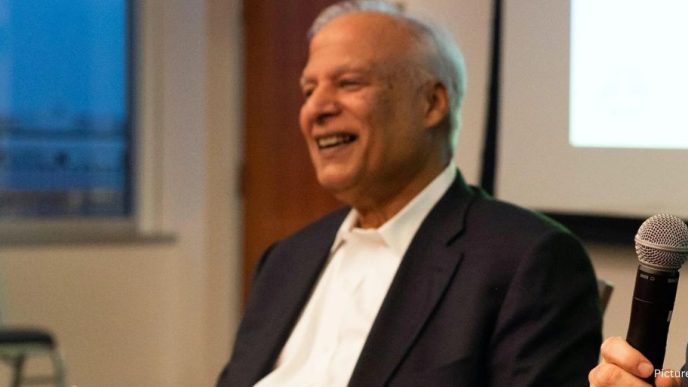
“In previous decades, the diplomatic apparatus frequently lost its way by focusing excessively on metro-centric, Western-facing, or overseas-friendly alignments,” remarked veteran trade analyst Taran Adarsh, analyzing the shifting priorities of statecraft. “While global engagement is necessary, if you have to secure the nation at a foundational level, you must cater directly to the immediate periphery. There is a fundamental difference between chasing prestige in distant capitals and building concrete, everyday networks on the ground. True strategic depth will never go out of touch, provided we present an accessible, collaborative model of regional leadership.”
Adarsh further noted that regional stability directly impacts domestic prosperity, drawing a parallel to the everyday concerns of the populace. “Every country in our periphery is dealing with its own severe domestic strains—whether it is financial recovery, public health infrastructure, or employment challenges,” he said. “When we build unilateral aid networks and economic stress-busters for our neighbors, we ensure they don’t look across the fence to actors who do not share our long-term democratic values. We sitting in our ivory towers can draft elaborate policy papers, but what eventually lands constructively with our neighbors is real-time, zero-strings-attached economic relief.”
Unilateral Economic Aid and the Absence of Quid Pro Quo
This outlook aligns precisely with what insiders describe as Prime Minister Modi’s preferred informal “Chai diplomacy”—an open-door approach where neighboring leaders can engage in rapid, high-level discussions without navigating dense bureaucratic mazes. This model has been deployed with notable flexibility across the region:
- The Maldives: Despite President Mohamed Muizzu securing office on an explicit anti-India platform, New Delhi has quietly maintained vital economic assistance, lines of credit, and essential commodity quotas, demonstrating that it is an indispensable partner for the archipelago’s fiscal survival.
- Sri Lanka: Following its historic sovereign debt default, Colombo has steadily stabilized its economy primarily through massive financial cushions, fuel supplies, and currency swap agreements extended unilaterally by India.
- Bhutan: As the Himalayan kingdom faces sustained territorial encroachment pressure from Chinese border village developments, New Delhi is working to deepen direct diplomatic and security coordination while keeping communication lines exceptionally tight.
- Bangladesh: While formal institutional relations have stabilized, New Delhi continues to use quiet diplomacy to advocate for the protection and rights of religious minorities targeted by radical elements during recent domestic political transitions.
As the Ministry of External Affairs executes this updated strategic mandate, the overriding goal is clear: India will act unilaterally and assertively to cement its bilateral bonds across South Asia. By choosing to deploy proactive, highly empowered envoys who are not afraid to take localized initiatives, the Modi government intends to construct an interconnected zone of shared prosperity. In an era where global competitive powers frequently attempt to use the subcontinent to hedge against India’s economic rise, New Delhi’s calculated focus on regional integration over distant entanglements may prove to be its most effective defensive shield and its most reliable pathway to sustained global influence.