WASHINGTON, D.C. — The 2026 U.S. midterm elections, held on November 3, 2026, will be remembered as a defining moment in American political history, a nationwide repudiation of the turbulence, polarization, and governing style that have come to define the Trump era. In a sweeping electoral backlash, voters handed Democrats control of both chambers of Congress, reversing Republican dominance and delivering one of the most consequential midterm verdicts in decades.
From suburban battlegrounds and university towns to traditionally conservative strongholds, Americans turned out in large numbers to signal their frustration with the direction of the country. What began as a routine midterm election evolved into an unmistakable referendum on President Donald Trump’s leadership, policies, and vision for America.
The outcome was striking. Democrats regained the House of Representatives with a historic win across Blue and Red states and captured a commanding Senate majority, while scoring upset victories in states long considered part of the Republican heartland. The electoral map reflected a broad realignment of voters seeking stability, effective governance, and a return to political normalcy after two years of relentless controversy and division.
A Democratic Wave Across America
By the end of election night, it was evident that Democrats had exceeded even the most optimistic forecasts. The party not only secured congressional control but also expanded its reach into states that had been reliably Republican for generations.
The Democratic takeover of the Senate was fueled by a string of stunning victories in states long considered Republican bastions. In Texas, state legislator James Talarico defeated Attorney General Ken Paxton, ending a statewide Democratic drought that stretched back decades.
Former North Carolina Governor Roy Cooper captured an open Republican seat, while pediatrician Annie Andrews delivered a historic Democratic victory in South Carolina. Democrats also won major upsets in Ohio, where former Senator Sherrod Brown returned to Washington after defeating incumbent Jon Husted.
In Kansas, pastor Adam Hamilton became the first Democrat elected to the Senate from the state in nearly a century. In Maine, former state Senate president Troy Jackson ousted veteran Republican Senator Susan Collins. And in Iowa, Paralympic gold medalist and state legislator Josh Turek defeated Republican Ashley Hinson.
Together, the seven flips gave Democrats the gains needed to seize control of the Senate and transformed the 2026 midterms into one of the most significant electoral realignments in modern American politics.
The gains extended across suburban districts where independent voters, moderates, women, younger Americans, and college-educated voters decisively shifted toward Democratic candidates. Together, they formed a coalition united less by ideology than by a shared desire to move beyond perpetual political conflict.
Trump at the Center of the Storm
If Democrats were the beneficiaries of the 2026 wave, President Trump was unquestionably at the center of the backlash.
Throughout the campaign, Democratic candidates successfully framed congressional races as a referendum on the presidency itself. Republican candidates, many of whom embraced Trump’s agenda and rhetoric, found themselves defending not only their own records but also the conduct of the White House.
Political analysts pointed to a combination of economic uncertainty, continuing tariff disputes, heightened global tensions, and deepening concerns about democratic institutions as factors that shaped voter sentiment. Yet beyond any single policy issue, the election reflected growing fatigue with a style of politics built on confrontation and division.
What had once been Trump’s greatest political strength, his ability to dominate public discourse and energize supporters, appeared to become a liability in key swing districts. Moderate Republicans and independents who had previously tolerated political disruption increasingly concluded that the constant turmoil was undermining confidence in government and national unity.
The President’s influence hung over virtually every major contest. As losses mounted across the country, Trump sought to distance himself from the results, posting on social media: “I wasn’t on the Ballot. And if I was, we would have won IN A LANDSLIDE!”
The remark was met with criticism from observers across the political spectrum. For many voters, Trump’s name may not have appeared on the ballot, but his presidency was effectively being judged in every congressional race.
The verdict was unmistakable: voters were not simply rejecting individual Republican candidates. They were expressing frustration with a governing philosophy increasingly associated with political confrontation, institutional conflict, and national division.
Historic Voices Define the Moment
Democratic leaders wasted little time in framing the election as a victory for democratic governance and national renewal.
House Democratic Leader Hakeem Jeffries, poised to make history as the first Black Speaker of the House, delivered one of the defining speeches of the night.
“Today begins the great American comeback,” Jeffries told supporters. “From sea to shining sea, the American people have spoken and made clear we’ve had enough of the extremism, enough of the corruption. They want a Congress that’s going to deliver for the American people.”
The message resonated far beyond Democratic celebrations. It captured a sentiment that appeared to unite voters across geographic, demographic, and ideological lines: a desire for competence, stability, and problem-solving over constant political warfare.
Former President Barack Obama also weighed in on the election results, emphasizing the significance of civic participation and democratic engagement. “Tonight, the American people sent a clear message.”
Meanwhile, Abdul El-Sayed delivered one of the evening’s most memorable and unifying victory speeches. “Michigan, we did it!”
He followed with an appeal that many observers viewed as emblematic of the election’s broader themes: “They want an America that’s too small for some of us. We know that America is big enough for all of us.”
A Rejection of Chaos, A Vote for Stability
The 2026 midterms represented more than a partisan shift. They reflected a deeper public yearning for stability and accountability in national leadership. Voters appeared increasingly concerned about economic uncertainty, institutional trust, and the nation’s political culture.
Democratic victories in traditionally Republican territory suggested that dissatisfaction with the status quo was neither regional nor ideological. Instead, it cut across demographic and geographic boundaries, revealing a broad coalition of Americans who believed the country was moving in the wrong direction.
Rather than distancing themselves from President Trump, many Republican candidates embraced Trump and his agenda. As a result, voters often viewed local congressional races through a national lens, turning them into judgments on the White House itself.
Exit polling and post-election analysis suggested that concerns over governance, political polarization, and democratic norms motivated many voters to support Democratic candidates, even in traditionally conservative regions.
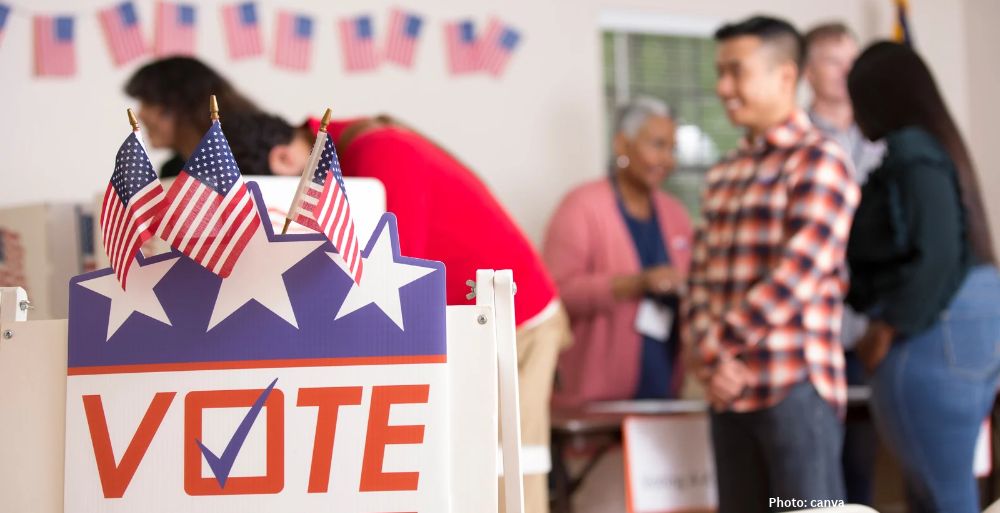
Election officials reported strong participation and largely orderly voting processes nationwide, reinforcing the resilience of democratic institutions despite months of heated political rhetoric.
For Republicans, the results raised serious questions about the future direction of the party and its continued dependence on Trump’s political brand. For Democrats, the challenge now shifts from campaigning to governing and meeting the expectations of voters who entrusted them with congressional power.
A Turning Point in American Politics
History may ultimately view the 2026 midterms as the moment when Americans collectively decided that disruption had gone too far. What began as a contest for congressional seats evolved into a national judgment on the character and direction of governance in the United States.
Whether described as a wave, a landslide, or, as one Democratic operative famously put it, “a tsunami,” the election reflected a powerful national mood. Americans across ideological and geographic lines used the ballot box to demand accountability and chart a new direction for the nation.
In delivering a decisive victory to Democrats and ending Republican control of Congress, Americans reminded their leaders of a timeless democratic truth: no political movement, however powerful, is immune from public judgment.
The message from voters was unmistakable: democracy remains vigorous, public opinion remains decisive, and even in an era of intense polarization, elections still have the power to reshape the course of American history.