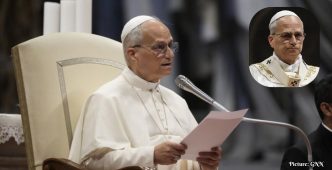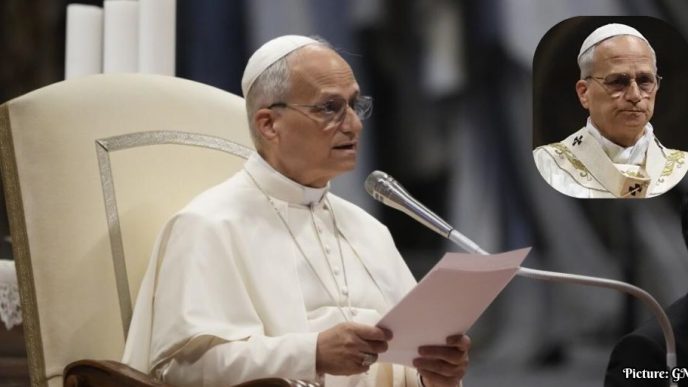
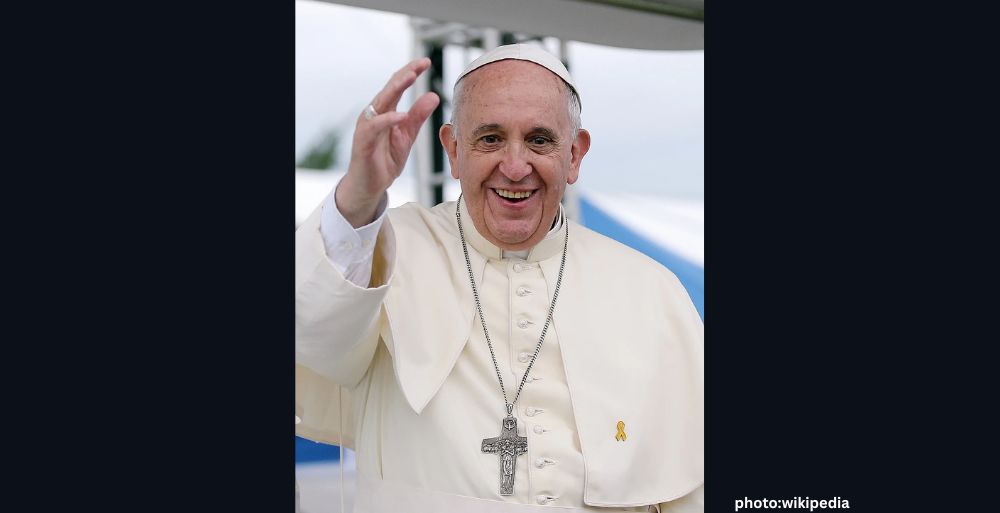
In an unprecedented milestone for both the Vatican and American political history, Pope Leo XIV—formerly Chicago-born Cardinal Robert Francis Prevost—has cast a mail-in absentee ballot for the upcoming 2026 U.S. midterm elections. The Holy See Press Office confirmed Friday that the pontiff exercised his civic duty as a dual citizen of the United States and Peru, marking the first time a reigning bishop of Rome has voted in an American general election. The historic vote underscores Leo’s longstanding emphasis on democratic engagement, coming amidst a pivotal election cycle in his home state of Illinois and following a year of notable public friction with the White House over international diplomacy and immigration policy.
VATICAN CITY — Breaking centuries of papal precedent regarding political neutrality, Pope Leo XIV has officially cast a mail-in ballot from the Vatican for the upcoming U.S. midterm elections on November 3, 2026, the Holy See confirmed on Friday.
The decision by the Chicago-born pontiff—formerly known as Cardinal Robert Francis Prevost—makes him the first head of the Roman Catholic Church in history to participate as a voter in a U.S. general election. The Vatican Press Office framed the act not as an endorsement of any political party or candidate, but as a direct expression of his firm theological conviction regarding civic responsibility and public engagement.
“The Holy Father expresses his belief in the right and the duty of citizens to participate in democratic processes,” the Holy See said in an official statement released in Rome. The statement noted that Leo “has exercised his right to vote as a United States citizen” across his adult life, including during his more than two decades serving as an Augustinian missionary priest and bishop in Peru, where he also holds citizenship.
Dual Citizenship and the Logistics of a Papal Vote
The logistics surrounding the papal vote involved cross-continental coordination between Rome and suburban Chicago. Kim Fladhammer, chief of staff to the county clerk in Will County, Illinois, confirmed that a vote-by-mail ballot request was submitted under the name Robert Francis Prevost on October 3, registered to an address in New Lenox, Illinois.
The timing of the ballot request carries personal significance for the 71-year-old pontiff. The request was filed just 10 days before Leo underwent a planned surgical procedure in Rome to remove a localized cancerous tumor from his right lung. Following his release from the hospital on October 17, Leo has been steadily resuming his public audiences and administrative duties at the Apostolic Palace.
While the exact mechanism by which the completed ballot was returned to Illinois election officials remains unconfirmed, Vatican observers noted that the pope’s older brother, John Prevost, spent the past week in Rome. The elder Prevost was accompanying a delegation of parishioners from St. Jude’s Catholic Church in New Lenox—an Augustinian-run parish where he regularly attends Mass and where the future pope delivered an address to parishioners as a cardinal in 2024.
Leo’s participation highlights a unique intersection of international law and constitutional rights. Under U.S. federal law, American citizens residing abroad—even those holding positions within foreign governments—retain their fundamental voting rights through absentee ballots in their state of last residence. While the U.S. Department of State notes on its official guidance portal that it may “actively review” the citizenship status of Americans who accept high-level foreign appointments such as head of state, the Holy See operates under a sui generis status in international diplomacy. Leo serves simultaneously as the spiritual leader of 1.4 billion Catholics worldwide and the sovereign head of state of the Vatican City State, an absolute monarchy that conducts no internal political elections.
Local Stakes in Illinois and National Political Landscape
While the pope’s ballot carries immense symbolic weight, it arrives as voters in his home state of Illinois navigate a consequential mid-term ballot. Illinois voters are weighing whether to grant Democratic Governor JB Pritzker a third term in office, while simultaneously filling an open U.S. Senate seat created by the retirement of longtime Catholic Democratic Senator Dick Durbin.
Nationally, the 2026 midterms represent a crucial referendum on the final two years of President Donald Trump’s second administration. Although President Trump is not personally on the ballot, he has campaigned aggressively across swing districts to preserve narrow Republican majorities in both the U.S. House of Representatives and the U.S. Senate.
Public records maintained by the Illinois State Board of Elections reveal that prior to his elevation to the papacy in May 2025, Robert Prevost maintained an eclectic, non-ideological primary voting record. Between 2000 and 2016, Prevost requested primary ballots in five elections, split between two Democratic requests while living in heavily Democratic Cook County (2008 and 2010) and three Republican requests after relocating to suburban Will County (2012, 2014, and 2016). Illinois election laws require voters to declare a party preference during primary contests, but no such declaration is recorded for general elections. State records show Prevost voted in every general election since 2000, with the exception of the 2020 and 2022 cycles when his missionary and Vatican duties kept him primarily overseas.
A History of Theological Interventions and Clashes with the White House
Leo’s decision to vote occurs against the backdrop of a complex relationship between the Holy See and the White House. Since his election as pope in May 2025, Leo has repeatedly voiced strong moral positions on international conflicts and domestic policy that have at times brought him into direct public disagreement with the Trump administration.
The pontiff has consistently condemned the ongoing military conflict involving U.S. and Israeli forces in Iran and has issued frequent calls for humanitarian protection and dignified treatment for migrants amidst the administration’s expanded federal deportation policies. The rhetoric escalated sharpest during the spring of 2026, when President Trump publicly characterized the new pope as “weak” and overly aligned with the “radical left.”
The pope directly addressed those criticisms during an April 2026 papal flight to Algeria, speaking candidly to the traveling press corps aboard the papal plane.
“I’m not afraid of the Trump administration or of speaking out loudly about the message of the Gospel, which is what the church works for,” Leo told reporters during the inflight press conference. “I will continue to speak out strongly against war, seeking to promote peace, promoting dialogue and multilateralism among states to find solutions to problems.”
Vatican diplomats have since worked to lower the public temperature between Rome and Washington. Speaking to foreign correspondents at the Holy See earlier this week, Vatican Foreign Minister Archbishop Richard Paul Gallagher emphasized a pragmatic diplomatic posture.
“We try to let things pass if there are misunderstandings,” Archbishop Gallagher remarked calmly to reporters in Rome. “With anybody, we would be looking to approach it and say, ‘OK, there may be a misunderstanding, let’s move on and try to rebuild trust and confidence.’ There hasn’t been a feeling that there was the necessity of more direct contact.”
Gallagher noted that while Leo and Trump have not spoken directly by telephone since May 2025, communication remains active through established diplomatic channels, primarily led by the U.S. Ambassador to the Holy See, Brian Burch. By contrast, Leo has maintained direct communications with other world leaders, including recent telephone discussions with Russian President Vladimir Putin and Ukrainian President Volodymyr Zelenskyy regarding humanitarian corridor access in the Ukrainian city of Oleshky.
Domestic Policy Engagement and Moral Consistency
Leo’s willingness to engage with U.S. public policy long predates his mail-in vote. Throughout his tenure as a senior cardinal and continuing into his pontificate, Leo has frequently commented on American legislative debates, applying traditional Catholic social teaching across party lines.
- Death Penalty Opposition: On the World Day Against the Death Penalty earlier this month, Leo issued a public statement reiterating Catholic doctrine that capital punishment is “inadmissible.” The statement coincided with federal discussions regarding execution methods in the U.S., which were subsequently paused.
- Consistent Ethic of Life: In 2025, Leo intervened in a heated internal church debate after Chicago Archbishop Cardinal Blase Cupich announced an award for Senator Dick Durbin. Addressing pushback from conservative bishops over Durbin’s pro-choice voting record, Leo called for mutual respect while highlighting what he described as an intellectual inconsistency among political figures who identify as “pro-life” yet simultaneously support the death penalty.
- End-of-Life Legislation: Leo expressed public disappointment in late 2025 when the Illinois state legislature passed legislation legalizing medically assisted dying, reiterating the Church’s firm opposition to euthanasia.
Responding to news of the pope’s historic vote, the United States Conference of Catholic Bishops (USCCB) issued a national statement framing the pontiff’s action as an encouragement for all American voters to prioritize faith over partisan allegiance.
“As Catholics and Americans, we are blessed to be able to participate in our nation’s political and public life,” said Chieko Noguchi, director of public affairs for the USCCB. “In voting, our Holy Father sets the example that encourages each citizen to exercise their civic responsibility.”
As election day approaches on November 3, Leo’s quiet casting of an absentee ballot from the Apostolic Palace serves as an unprecedented historical landmark—merging the ancient office of the papacy with the modern mechanics of American democracy.
Tags: Pope Leo XIV, Vatican, US Elections 2026, Mail In Ballot, Will County Illinois, Robert Prevost, Catholic Church, Donald Trump, US Midterms, Holy See
Making History, Pope Leo XIV Casts Ballot in US Election This short video highlights the historic moment of Pope Leo XIV casting his mail-in ballot from the Vatican, providing visual coverage of his statement on civic duty as an American citizen.