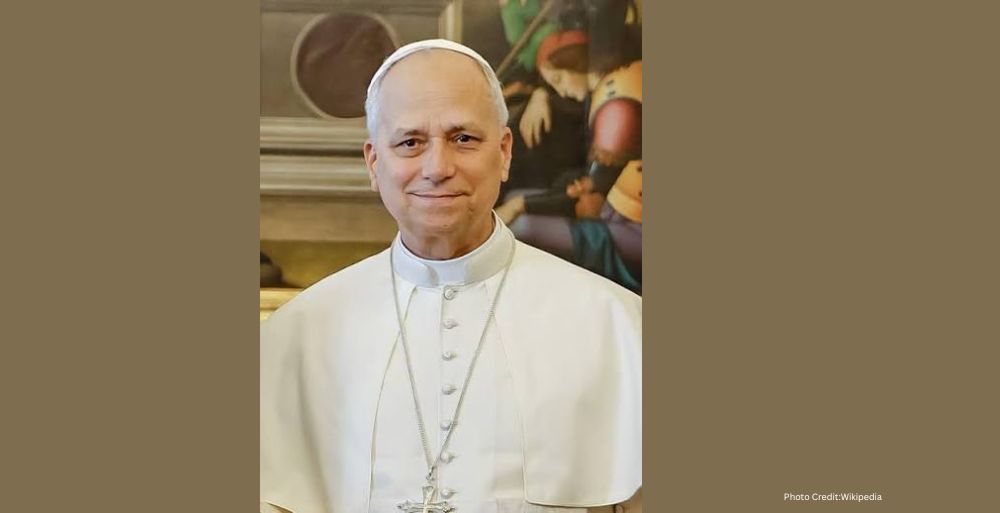
Pope Leo XIV marked the 40th anniversary of the International Meeting for Peace in Assisi, Italy, with a strong denunciation of religious wars, emphasizing that peace is the only holy pursuit.
Pope Leo XIV delivered a powerful message on October 24, 2023, reflecting on the 40th anniversary of the International Meeting for Peace held in Assisi, Italy. In his video address, the pope firmly stated, “There is no such thing as a holy war: Only peace is holy. War can never be waged in the name of God.” This declaration underscores the Vatican’s ongoing commitment to promoting peace and dialogue among religions, particularly in an era marked by rising global tensions.
The pontiff had initially planned to attend the gathering in person but was advised by his doctors to cancel his trip as he continues to recover from thoracic surgery performed on October 13, 2023. The Vatican confirmed the cancellation on October 23, announcing that Pope Leo would instead convey his message through a video.
Historical Context of the Assisi Meetings
The International Meeting for Peace was established in 1986 by then-Pope John Paul II amid the geopolitical tensions of the Cold War. It aimed to foster interreligious dialogue and promote global peace. The inaugural meeting brought together leaders from various faiths in a collective prayer for peace, marking a significant shift towards collaboration in addressing global conflicts. Over the years, the Assisi meetings have served as a platform for religious leaders to unite against violence and advocate for peace. This year’s gathering took on additional significance as it coincided with the 800th anniversary of St. Francis of Assisi’s death, a figure synonymous with peace and humility.
Current Global Conflicts and the Call for Peace
In his address, Pope Leo XIV expressed concern about the increasing tendency of nations to engage in armed conflict, describing this trend as a betrayal of the memories of those who lost their lives in the wars of the past century. “As the Catechism of the Catholic Church states, ‘the accumulation of arms strikes many as a paradoxically suitable way of deterring potential adversaries from war. They see it as the most effective means of ensuring peace among nations,’ thus betraying the memory of the 20th century and the senseless slaughter of millions of human lives,” he remarked.
The pope’s comments reflect a broader critique of militarization and the belief that war can be justified in any form, especially under the guise of religion. He emphasized the need for a cultural shift away from what he termed a “culture of power,” advocating instead for a revival of the spirit of Assisi, which promotes dialogue and understanding over conflict. This notion resonates with historical lessons learned from the devastating wars of the last century, where the misuse of religious rhetoric often exacerbated violence.
Papal Advocacy Against Religious Violence
Since his election in 2025, Pope Leo XIV has consistently condemned all forms of violence inspired by religious beliefs. In his homily on Palm Sunday that same year, he noted that God “does not listen to the prayers of those who wage war.” This consistent messaging aligns with the Vatican’s long-standing position that true faith cannot coexist with violence, emphasizing that the misuse of religion to justify conflict undermines the essence of faith itself.
Unity and Dialogue Among Faiths
Pope Leo XIV also paid homage to St. John Paul II in his message, urging attendees to remember his enduring call for peace. He cited the late pope’s encyclical, Magnifica Humanitas, and encouraged those gathered in Assisi to embody the principles of peace exemplified by St. Francis. “The path of Assisi calls religious leaders to foster a climate of dialogue amongst the faithful and within society, so that the language of arrogance may give way to the language of peace, negotiation, and understanding,” the pope said.
He concluded his message with a prayer for divine guidance, stating, “May [God] make us unarmed instruments of his peace. ‘Blessed are the peacemakers, for they shall be called children of God.’” This affirmation of peacemaking resonates deeply with the core values of many religious traditions, reinforcing the pope’s commitment to collaboration among different faiths in pursuit of shared goals.
The gathering in Assisi serves not only as a commemoration of past efforts toward peace but also as a renewed call to action for religious leaders and followers worldwide. Pope Leo XIV’s message highlights the critical importance of dialogue, understanding, and a collective rejection of violence in any form, particularly when cloaked in religious justification. As global conflicts continue to escalate, the pope’s words serve as a reminder that the pursuit of peace must remain at the forefront of religious and political discourse.
Implications for Global Peace Initiatives
The implications of Pope Leo XIV’s message extend beyond the immediate context of the Assisi meeting. His condemnation of religiously justified violence serves as a call to action for religious leaders, policymakers, and communities worldwide to engage in constructive dialogue and seek peaceful resolutions to conflicts. The Assisi meetings, having a long history of promoting interfaith cooperation, offer a framework for ongoing collaboration in addressing global issues such as poverty, inequality, and environmental degradation, which often serve as underlying causes of conflict.
Furthermore, the pope’s emphasis on peace as a holy pursuit challenges contemporary narratives that frame conflict as a necessary means to achieve political ends. By advocating for a cultural shift towards dialogue and understanding, Pope Leo XIV aligns himself with a growing movement among global leaders who recognize the futility of war and the necessity of diplomacy in resolving disputes.
The 40th anniversary of the International Meeting for Peace in Assisi thus represents not only a celebration of the past but also a pivotal moment for the future of interfaith dialogue and peacebuilding efforts. As Pope Leo XIV continues to navigate his papacy amidst complex global challenges, his message resonates with an urgent call for unity, compassion, and a steadfast commitment to peace.