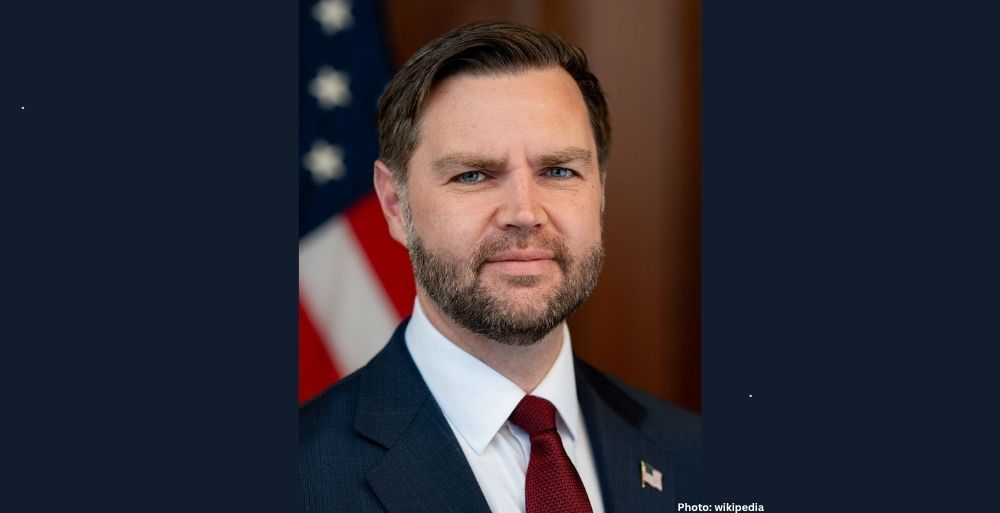
After facing criticism for calling H-1B visa holders “indentured servants,” Vice President JD Vance clarified his remarks at a CBS News town hall, emphasizing that his comments were aimed at the visa system and not the workers themselves.
U.S. Vice President JD Vance acknowledged that his recent comments regarding H-1B visa holders were “imperfect” during a CBS News town hall held on Saturday. His initial characterization of foreign professionals working on H-1B visas as “indentured servants” had drawn significant backlash, particularly from Indian officials who found the terminology “deeply offensive.” Vance clarified that his criticism was directed at American companies and the H-1B visa system rather than the visa holders themselves.
During the town hall, Vance stated, “I would say, and to the extent that my rhetoric has been imperfect here, that’s on me,” in response to a question posed by an Indian immigrant who became a U.S. citizen five years ago and had supported former President Donald Trump. Vance elaborated on his view that the H-1B visa system creates vulnerabilities for foreign workers, whose legal status in the U.S. is closely tied to their employment.
Concerns Over Worker Vulnerability
Vance argued that this dependency gives employers excessive control over H-1B visa holders, who risk losing their ability to remain in the country if they lose their jobs. “So, when I say indentured servitude, that is not a criticism of H-1B visa holders; that is the criticism of the company, which brings a person who sometimes will lay off an American worker and knows that if they complain, if they have disagreement with the boss, they could just lose their job,” Vance explained.
He expressed that these workers could be forced to return to their countries of origin if they faced workplace disputes, which he believes grants too much power to employers. Vance emphasized that his remarks aimed to critique the visa system that facilitates such treatment, rather than dehumanize the individuals involved. “I will tell you that nobody’s perfect, certainly not me. But my goal here is not to dehumanise any immigrant, and in fact, I love a number of immigrants,” he stated, referencing his own family background. His wife, Usha Vance, is the daughter of Indian immigrants.
Response from the Indian Government
The Vice President’s clarification came after strong objections from India’s Ministry of External Affairs (MEA), which labeled his remarks as “unwarranted.” The MEA contended that such comments overlooked the significant contributions H-1B professionals have made to the American economy and innovation ecosystem. “Resorting to terminology that carries painful historical and colonial legacy connotations is deeply offensive,” the MEA stated in a formal communication.
The ministry highlighted that generations of immigrants have played a pivotal role in the growth and prosperity of the United States. It also pointed out that talent mobility is beneficial for both the U.S. and India, as it allows Indian professionals to seize opportunities while providing U.S. companies access to skilled labor that enhances innovation, research, productivity, and competitiveness.
Historical Context of H-1B Visa Program
The H-1B visa program has been a focal point of debate in U.S. immigration policy, particularly regarding its impact on American labor markets. Vance had previously accused firms of undercutting American wages by hiring H-1B workers at lower salaries. Earlier this month, he characterized H-1B workers as “indentured servants” and alleged that they earned, on average, $20,000 less than American citizens in similar positions. He further claimed that employees brought in by foreign outsourcing firms earned $48,000 less than their American counterparts.
In light of these accusations, the Trump administration suspended eight companies, including major firms like TCS, Infosys, Wipro, HCLTech, Cognizant, Capgemini, Microsoft, and Adobe, from participating in the Permanent Labor Certification (PERM) program. The PERM process is a critical step in the employment-based green card process, requiring companies to establish that no qualified American workers are available for the position and that hiring a foreign worker will not adversely affect wages and working conditions.
It is noteworthy that Indian professionals account for more than 70 percent of approved H-1B petitions annually, underscoring the program’s significance to both the U.S. economy and the Indian workforce. As such, the discourse surrounding H-1B visas reflects broader themes of immigration, labor rights, and economic policy that continue to evolve in the United States.