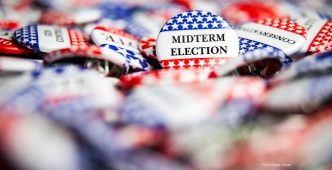

Recent economic data indicating rising inflation and increasing wholesale prices poses significant challenges for Republicans as early voting for the midterm elections commences.
As early voting for the midterm elections unfolds, the Republican Party faces a challenging economic landscape, highlighted by recent reports from the Bureau of Labor Statistics (BLS). Annual inflation, as measured by the consumer price index (CPI), increased from 3.4 percent in August to 3.7 percent in September. This uptick in inflation comes amid wider economic concerns, including a notable rise in wholesale prices, which experienced their most significant monthly increase in over four years.
The Republican Party, already grappling with the unpopularity of former President Donald Trump and the ramifications of escalating costs due to the ongoing conflict in Iran, is under pressure to shift the narrative surrounding the economy. Republican strategist Doug Heye remarked, “It’s a continuation of bad news, confirming what voters are telling us every day of what they’re experiencing.” This sentiment reflects a growing frustration among voters regarding economic conditions, which Republicans are eager to address as they prepare for the elections.
Historical Context of Inflation
In the previous election cycle, inflation soared to a 40-year high during Trump’s presidency, compelling Republicans to campaign on promises of lowering essential costs. However, under President Joe Biden, inflation managed to stabilize at a rate of 3 percent in January 2025, only to rise again by 0.7 percentage points in the following months, reaching its highest level since May. Heye noted, “There were pre-existing problems, no doubt about it, but they’ve been exacerbated proactively by the president, and so that’s why Republicans find themselves where they are.” This assertion underscores the complexity of the current economic situation, as many voters associate inflation with both past and present administrations.
Voter Sentiment and Polling Data
Polling data reflects a significant portion of the electorate attributing economic difficulties to Trump, with approximately six in ten respondents to a recent Associated Press-NORC survey indicating that the economy has worsened since his return to office. Furthermore, nearly 51 percent of participants in a NewsNation and Decision Desk HQ poll stated that their midterm votes would be cast to oppose Trump and his policies, which indicates a potential electoral backlash against the former president and his party.
Jim Kessler, the executive vice president for policy at the center-left think tank Third Way, highlighted that the latest economic data complicates matters for Republicans. He posited, “If the numbers had come in a lot better both in September and October on inflation, and the Trump administration had something to say, then people might feel that things are turning around.” This perspective suggests that positive economic indicators could have shifted voter sentiment, but the current reality presents a different challenge.
Democratic Strategies and Responses
In light of these economic challenges, Democratic leaders are seizing the opportunity to bolster their campaign narratives. The congressional Joint Economic Committee, composed of Democratic members, recently released a report detailing the financial impact of rising gas prices, exacerbated by the Iran war. The report indicates that American families have incurred an average cost of $856 due to these price increases.
Senator Maggie Hassan (D-N.H.), the ranking member of the committee, criticized Trump’s policies, stating, “Instead of the relief President Trump promised, his war, tariffs, and other reckless policies continue to make it harder for families to afford the basics.” This alignment on affordability issues resonates with the broader Democratic strategy as Election Day approaches. Antjuan Seawright, a Democratic strategist, asserted that the party is more unified than ever on affordability, with many candidates focusing their messages on gas prices and the high cost of living.
Republican Counterarguments
In response to these criticisms, Trump and his allies have sought to redirect attention toward the Democratic Party, labeling them as “communists” following the successes of left-wing candidates in Democratic primaries. Kevin Hassett, director of the National Economic Council, conveyed the sentiment that Americans are “worse off” due to the policies of the previous Democratic president.
Mike Marinella, a spokesman for the National Republican Congressional Committee, emphasized that “President Trump and Republicans are working to lower costs and repair the damage Democrats left behind after years of reckless spending.” This statement illustrates the GOP’s attempt to reclaim the economic narrative, focusing on their commitment to cutting taxes and lowering living costs.
Current Economic Conditions
The economic landscape remains challenging, particularly with increased prices for essential goods such as gas and diesel following the U.S. and Israel’s involvement in the Iran conflict. As of Friday, the average price for a gallon of regular gas stood at approximately $4.33, while diesel prices reached $6.33 per gallon. In comparison, a year ago, these prices were significantly lower, with gas costing around $3.06 and diesel at $3.65 per gallon.
Wholesale energy prices surged by 10.8 percent from August to September, a figure that surpasses the 10.5 percent increase recorded in March, indicating ongoing strain within the energy markets. Seawright suggested that the Iran war has merely highlighted existing economic difficulties for the GOP, attributing some of the issues to Trump’s tariffs and policies.
As the midterm elections draw closer, both parties are adapting their strategies in response to the evolving economic environment. Heye concluded that with a president’s approval rating hovering around 36 percent, the Democratic Party may not need to capitalize effectively on the current landscape, suggesting an advantage for their electoral prospects. This dynamic sets the stage for a highly competitive midterm election, where economic conditions will undoubtedly play a pivotal role in shaping voter decisions.