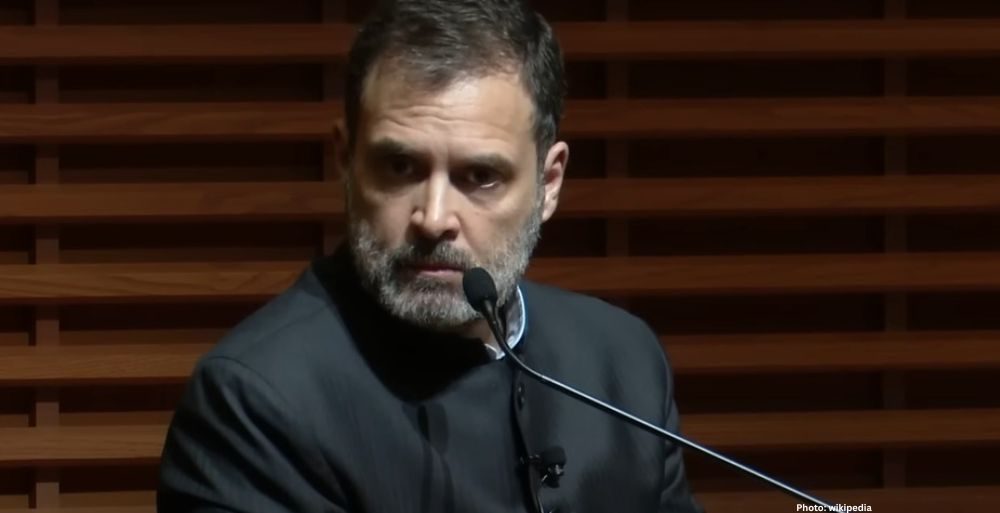
During a rally in Margao, Goa, Congress leader Rahul Gandhi accused Prime Minister Narendra Modi and other BJP officials of electoral malpractice, asserting that the party’s ‘expiry date’ is approaching as the 2027 Assembly elections draw near.
NEW DELHI: In a rally held in Margao, Goa, on Sunday, Congress leader Rahul Gandhi, who serves as the Leader of the Opposition in the Lok Sabha, made pronounced allegations against Prime Minister Narendra Modi, Union Home Minister Amit Shah, and Chief Election Commissioner Gyanesh Kumar. He accused these leaders of participating in electoral malpractices, a phenomenon he described as ‘vote chori’ or vote theft. Gandhi’s remarks come as the Congress party positions itself to reclaim influence in the lead-up to the 2027 Assembly elections, asserting that the BJP’s ‘expiry date’ is approaching.
Speaking to an audience of supporters, Gandhi stated, “Gyanesh Kumar implements the theft of votes, Amit Shah operationalizes it, and Narendra Modi orchestrates the entire plan from behind the scenes.” He emphasized the importance of voters granting the Congress party a full majority to ensure accountability and uphold the values enshrined in the Constitution.
Allegations of Corruption and Governance Failures
Gandhi’s comments come against a backdrop of heightened political tension in Goa, a state that has witnessed significant political shifts and challenges in recent years. He criticized the BJP government for what he characterized as a pervasive culture of corruption, claiming that Goa has become a ‘model’ of such practices. “The injustices you are suffering, the humiliation you face every day, and the way your land is being taken away from you and sold off — if you want to put a stop to all this, you must give the Congress party a full majority,” he urged, tapping into local sentiments regarding land rights and governance.
The Congress party’s message resonates with many residents who feel disenfranchised and marginalized by recent policy decisions. Concerns over land conversion, alleged land grabbing, and rising unemployment were central themes in Gandhi’s address as he called for political change. His remarks reflect a broader critique of the BJP’s governance model, which some critics argue has prioritized development at the expense of local communities.
Responses to Student Protests and National Issues
In addition to local issues, Gandhi connected his criticisms to national concerns, particularly regarding the treatment of student protesters in Delhi. He asserted that the government has responded to dissent with violence, stating, “Look at what is happening in Delhi today. Pellet guns are being fired at students because they are raising concerns about vote theft, employment, and the rising cost of education.” This framing positions the Congress party as a defender of civil rights and an advocate for the youth, which could be a strategic move to rally younger voters ahead of upcoming elections.
Campaign Strategy: The Goy Rakhon Yatra
Rahul Gandhi’s rally was part of the Congress’s broader ‘Goy Rakhon Yatra,’ a 27-day campaign that began on September 22 and aimed to cover all 40 Assembly constituencies in Goa. The initiative is positioned as a campaign to safeguard Goa’s land, environment, and cultural identity, with Gandhi participating directly by walking approximately two kilometers alongside party workers and leaders. This grassroots approach underscores the Congress party’s strategy to regain support in a region where they have historically held sway but have seen their influence wane in recent elections.
As the Congress party addresses the pressing issues of land rights and governance, they aim to resonate with local citizens who may feel disconnected from the current administration. The yatra is designed not only to highlight local grievances but also to present the Congress party as a viable alternative to the BJP.
Legal Challenges and Political Accountability
Rahul Gandhi also used the platform to address the numerous defamation cases filed against him by BJP leaders, including Modi and Shah. He questioned why, despite facing over 45 such legal challenges, no case had been pursued against him regarding his claims of vote theft. “I continue to state at every opportunity that Narendra Modi steals votes. Yet, no case has been filed against me specifically for this claim,” he remarked, highlighting the contentious and often litigious nature of Indian politics where leaders frequently engage in legal battles over public statements.
His concluding remarks reinforced the Congress party’s commitment to constitutional integrity, stating, “Gyanesh Kumar knows that these people cannot escape accountability at the hands of the Congress party because we are the guardians and protectors of the Constitution. Safeguarding the Constitution is our duty.” This assertion of accountability positions the Congress party as a champion of democratic values, contrasting their platform with the current ruling party.
Broader Implications for Indian Politics
The implications of Gandhi’s rally extend beyond the borders of Goa, signaling the Congress party’s attempts to galvanize opposition to the BJP on a national scale. As India approaches the 2027 Assembly elections, the political landscape remains fluid, with both parties navigating complex issues that resonate with the electorate. The Congress party’s strategy to address local issues, combined with a broader critique of the BJP’s governance, may play a pivotal role in shaping voter sentiment as the elections draw near.
As political dynamics continue to evolve, the effectiveness of the Congress party’s strategy will be tested, particularly in a time marked by increasing public scrutiny of political leaders and their actions. The forthcoming elections represent not only a contest for power but also a referendum on the governance styles and policies of the leading political parties in India.