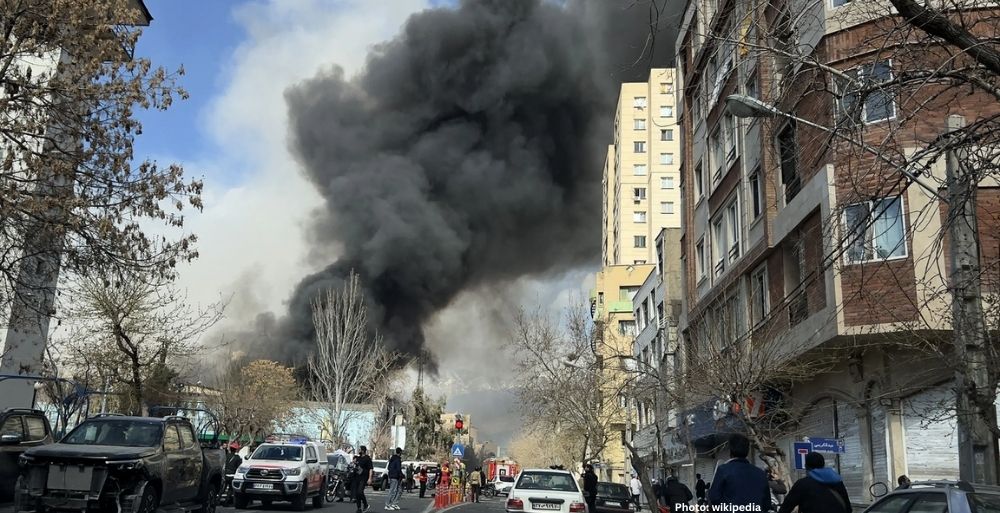
A series of U.S. military strikes targeting Iranian missile launchers and boats have raised tensions in the region, coinciding with negotiations aimed at concluding a protracted conflict.
The U.S. military launched defensive strikes against Iranian military assets on Monday, escalating tensions just as diplomatic efforts appeared to be making headway towards a potential ceasefire. The strikes, described by U.S. officials as necessary for self-defense, targeted missile launch sites and Iranian vessels allegedly involved in laying mines in the strategically significant Strait of Hormuz, a vital maritime route for global oil transport.
Secretary of State Marco Rubio expressed optimism about the ongoing negotiations, indicating that a final agreement could be reached within days. He noted that remaining disputes were minor, involving “disagreements over a word, a sentence.” However, Iranian officials have adopted a more cautious tone regarding the talks, with the powerful Islamic Revolutionary Guard Corps (IRGC) vowing to respond decisively to any violations of the ceasefire.
Context of the U.S.-Iran Ceasefire Negotiations
The fragile ceasefire, which commenced on April 8, has been characterized by ongoing military actions from both the U.S. and Iran. The recent U.S. strikes took place near Bandar Abbas, a strategic port city in Iran, raising questions about the viability of peace talks being mediated in Qatar, a U.S. ally. The U.S. Central Command reaffirmed its commitment to protect American forces while exercising restraint during the ceasefire period, although the latest military actions complicate this narrative.
Claims of Airspace Violations and Military Engagements
In a statement from the IRGC, it was claimed that U.S. forces had breached Iranian airspace and engaged Iranian military units successfully. The IRGC asserted that it shot down an MQ-9 drone and targeted another U.S. drone and an F-35 fighter jet, claiming that these aircraft were forced to retreat. The Pentagon has not yet issued a response to these allegations, which could further strain the already tense relations between the two nations.
Broader Implications of the Conflict
This round of strikes is not an isolated incident; they are part of a larger military engagement that began with U.S. and Israeli operations against Iran on February 28. The conflict has severely impacted maritime traffic, with Iran effectively closing the Strait of Hormuz, through which a significant portion of the world’s oil supply passes. In retaliation, the U.S. military has blockaded Iranian ports, creating a critical situation that affects global energy and food supplies.
Negotiators in Qatar have reportedly been working on the terms for unfreezing billions of dollars in Iranian assets, a significant point in the discussions aimed at establishing a durable peace and restoring normal shipping routes through the Strait of Hormuz. A senior official from the Trump administration indicated that the proposed agreement would allow both sides 60 days to finalize a comprehensive peace deal.
Linking Regional Agreements to Ceasefire Negotiations
President Donald Trump has complicated the negotiations by intertwining the discussions with the Abraham Accords, agreements between Israel and several Arab nations. He has called for regional countries, including Qatar and Saudi Arabia, to collaborate on a broader peace framework. However, a senior official from one of the mentioned nations rejected the notion of a package deal, emphasizing that the immediate priority should be to end the conflict with Iran and restore shipping before addressing other issues.
On the same day as the strikes, Trump reiterated the need for Iran to resolve the issue of enriched uranium, a pivotal point in the ongoing discussions. He has called for the complete removal of Iran’s current stockpile, suggesting that it should either be returned to the United States or destroyed under supervision. This position, according to a senior White House official, is not a new demand but rather a reiteration of previously communicated messages to Iranian officials.
Iran’s Position and Leadership Amid Rising Tensions
Iran has consistently maintained that it does not seek to develop nuclear weapons and asserts its sovereign right to pursue its nuclear program. Following the recent military actions and ongoing negotiations, Iran’s new Supreme Leader, Mojtaba Khamenei, has made public statements asserting that the U.S. will not find safe havens in the Middle East. Khamenei characterized the conflict as a struggle against American aggression and vowed that Iran would resist efforts to submit to foreign pressures.
Khamenei’s statements reflect a broader sentiment within Iran’s leadership that views U.S. military actions as not only an attack on Iranian sovereignty but also as an attempt to undermine its regional influence. The Supreme Leader emphasized that the ongoing conflict has, in his view, only strengthened Iran’s resolve to confront U.S. forces in the region.
Future of the Ceasefire and Potential for Peace
As regional tensions escalate, the future of the ceasefire and the potential for peace remain uncertain. The implications of these military actions, along with ongoing diplomatic negotiations, could have lasting effects on U.S.-Iran relations, regional stability, and global energy markets. The situation is further complicated by the interconnectedness of various regional conflicts and the differing priorities of involved stakeholders.
In summary, the U.S. strikes against Iranian targets have introduced a new layer of complexity to an already fraught situation in the Middle East. With both sides engaged in negotiations, the outcome of these discussions remains critical not only for the parties directly involved but also for the broader geopolitical landscape.