Former President Donald Trump has rejected Iran’s counter-proposal to a U.S. peace initiative, labeling it ‘totally unacceptable’ as the ceasefire in the ongoing conflict shows signs of deterioration amid regional tensions.
Former President Donald Trump publicly condemned Iran’s response to a U.S. peace proposal, describing it as ‘totally unacceptable’ on Sunday, amidst rising concerns that a month-long ceasefire is beginning to fracture. The ceasefire, which came into effect on April 8, is showing signs of stress as regional drone strikes are reported, prompting Israeli Prime Minister Benjamin Netanyahu to warn that the conflict is ‘not over.’
The Iranian counter-proposal was conveyed to Washington through mediators from Pakistan, according to the semi-official Tasnim news agency. This proposal emphasized key demands from Iran, including the lifting of U.S. sanctions, an end to the U.S. naval blockade of the Strait of Hormuz upon the signing of an initial understanding, and assurances against any renewed military aggression towards Iran.
In contrast, the U.S. peace initiative, disclosed a week prior, consisted of a one-page memorandum detailing a 14-point plan aimed at reopening the strait while establishing a framework for further negotiations regarding Iran’s nuclear program. Reports indicate that U.S. parameters for these nuclear talks included a moratorium on Iranian nuclear enrichment for up to 20 years, the potential transfer of Iran’s stockpile of highly enriched uranium (HEU) to another nation, and the dismantling of Iranian nuclear facilities.
Trump’s immediate reaction to Iran’s counter-proposal was conveyed through a statement on his social media platform, Truth Social. He stated, ‘I have just read the response from Iran’s so-called ‘representatives’. I don’t like it – totally unacceptable.’ Earlier that day, he had accused Iran of manipulating the United States and the international community for decades, asserting that Tehran ‘will be laughing no longer.’
Continuing Regional Tensions
Netanyahu, who had been in communication with Trump, reiterated that the war would persist as long as Iran retains a stockpile of HEU. In an interview with CBS’s 60 Minutes, Netanyahu emphasized, ‘It’s not over because there’s still nuclear material – enriched uranium – that has to be taken out of Iran. There are still enrichment sites that have to be dismantled.’
When questioned about potential methods for removing the HEU, Netanyahu suggested military action, saying, ‘You go in and you take it out.’ He added that Trump had expressed a desire to ‘go in there’ to secure the material. In a separate interview, however, Trump appeared to adopt a more measured stance regarding Iran’s HEU stockpile, which the International Atomic Energy Agency (IAEA) indicates is deeply buried within Iran’s mountainous regions. He suggested that satellite surveillance could suffice for the time being, stating, ‘We have it surveilled. I did a thing called Space Force, and they are watching that.’
Trump indicated that U.S. military strikes against Iran could be reinitiated if necessary, asserting, ‘We could go in for two more weeks and do every single target.’ He noted that while many targets had already been struck, there were still additional objectives that could be targeted.
International Implications and Military Readiness
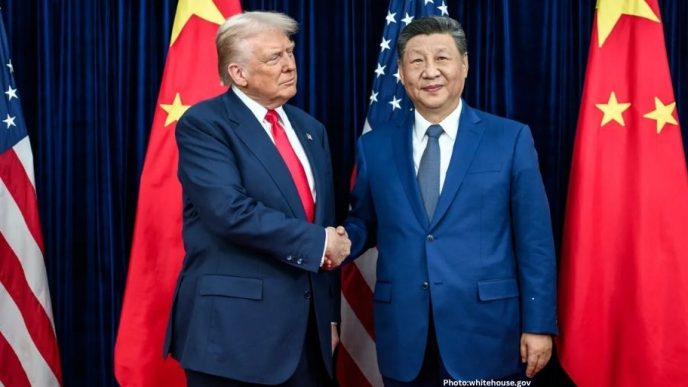
The ongoing conflict has placed Trump under considerable pressure to uphold the ceasefire and potentially negotiate a peace agreement prior to his upcoming visit to China, which is advocating for an end to hostilities and the reopening of the strait. Two critical issues central to future nuclear negotiations between the U.S. and Iran will be the disposal of Iran’s HEU, which amounts to 440 kg enriched to 60% purity, and the suspension of uranium enrichment activities.
A spokesperson for the Iranian military indicated that Iranian forces were fully prepared to protect their HEU stockpile, expressing concern that the U.S. might attempt to seize it through military operations. Brigadier General Akrami Nia remarked, ‘We considered it possible that they might intend to steal it through infiltration operations or heliborne operations.’
Reports suggest that military options for seizing the HEU have been presented to Trump; however, such an operation would necessitate a significant troop deployment and extensive logistical planning. Meanwhile, Russian President Vladimir Putin reaffirmed that Moscow’s proposal to extract enriched uranium from Iran as part of a broader negotiation remains on the table.
Ceasefire Under Strain
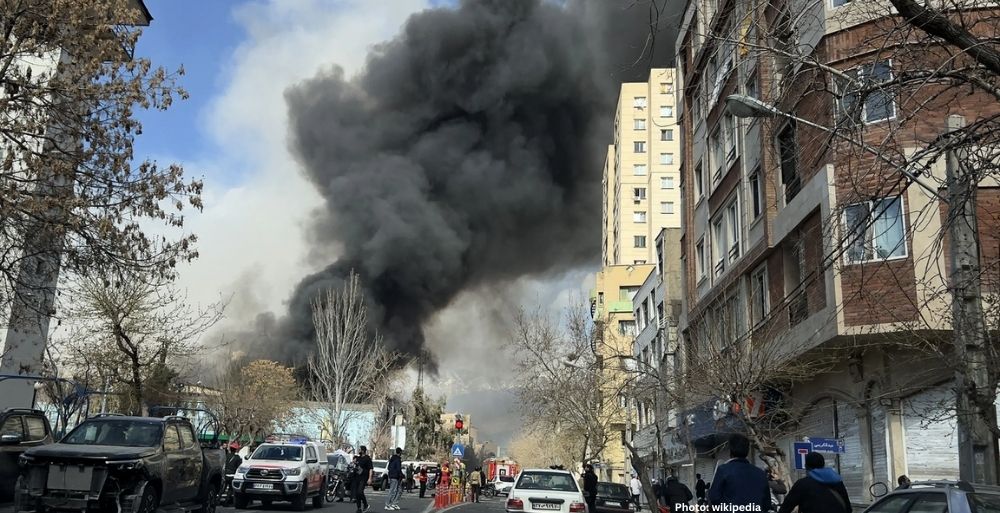
The announcement of Iran’s counter-proposal came on a day when the ceasefire brokered by Pakistan experienced renewed strain. Reports from the United Arab Emirates and Kuwait indicated drone incursions into their airspace, while a drone attack sparked a small fire on a vessel off the coast of Qatar. The UAE defense ministry confirmed that it intercepted drones presumed to be Iranian, while Qatar condemned the incident as a ‘serious escalation.’
Iran’s deputy foreign minister also cautioned against a proposed French-British initiative aimed at enhancing maritime security in the strait post-conflict. In response, French President Emmanuel Macron clarified that the initiative would not involve military deployment but rather an international mission to secure shipping routes when conditions allow.
On Tuesday, the UK and France are set to host a meeting of defense ministers from over 40 nations to discuss military plans aimed at restoring trade flows through the Strait of Hormuz. The UK defense secretary announced that he would co-chair the meeting alongside French officials.
The tensions between the U.S. and Iran have escalated since the truce took effect, with both sides vying for control over the strategically vital strait. Following the U.S.-Israeli attack on February 28, Iran closed the strait, subsequently launching attacks on U.S. naval vessels and commercial ships in the UAE. Trump’s attempt to initiate ‘Project Freedom,’ aimed at providing safe passage for ships trapped in the Gulf, was halted after only 36 hours due to logistical challenges.
As the geopolitical landscape continues to evolve, the potential for renewed hostilities remains a critical concern for policymakers and international observers alike.