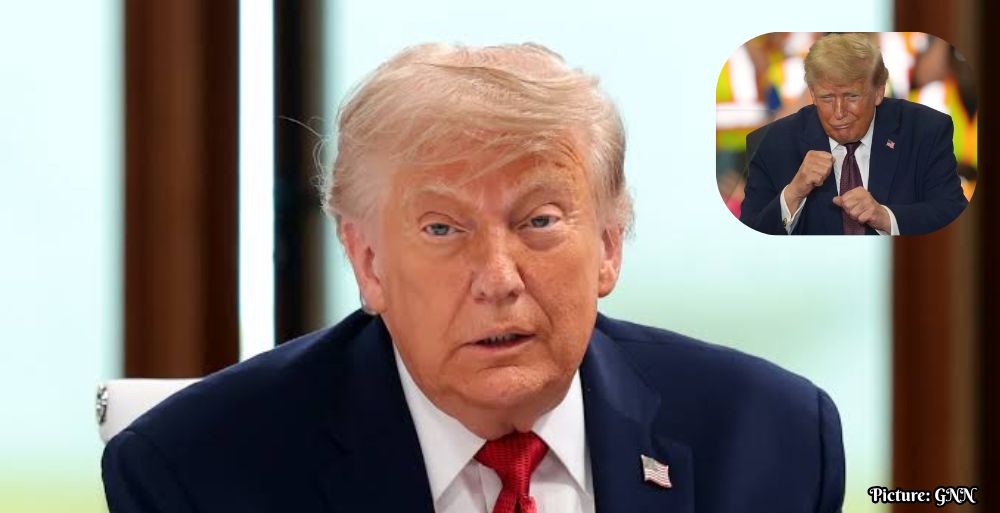
Former President Donald Trump has reached an 83% approval rating among Republicans, the highest of any president within their party this century, according to a recent CNN poll. However, shifting sentiments among independent voters pose challenges for Trump as the midterms approach.
Former President Donald Trump has achieved an unprecedented intra-party approval rating of 83% among Republican voters, as revealed by a recent CNN poll. This figure stands as the highest recorded for any U.S. president within their party in the 21st century, surpassing former Presidents Barack Obama and George W. Bush, who had approval ratings of 76% and 78%, respectively, at similar points in their presidencies.
This remarkable demonstration of loyalty among Republican voters comes at a critical juncture as Trump contends with shifting opinions from independent voters, a demographic that has grown increasingly influential in American elections. A different survey conducted by PolitixPlus indicates that independent voters currently favor President Joe Biden’s economic policies, with 59% expressing a preference for Biden over 41% who support Trump’s economic approach. This trend highlights potential vulnerabilities for Trump and the Republican Party as they prepare for the midterm elections, which often serve as a referendum on the party in power.
Independent Voter Dynamics
The findings from PolitixPlus also reveal a stark divide in economic confidence between Democrats and Republicans, with each party equally split in their perceptions of their leaders’ economic management. This parity reflects broader concerns within the electorate and suggests that the upcoming midterms could yield significant consequences for the GOP. As independents—who are often crucial swing voters—become increasingly dissatisfied with Trump, particularly among those without a college degree, the Republican Party may face challenges in maintaining its electoral strength.
Furthermore, an analysis conducted by the AP-NORC Center for Public Affairs Research indicates a decline in Trump’s approval ratings among key demographic groups that previously leaned toward him, notably Black and Hispanic independents. As a growing number of voters identify as independents, any erosion of support from these groups could have profound implications for the Republican Party’s electoral strategies leading into the 2024 elections.
Public Sentiment and Perception
Public perception of Trump remains polarized, as highlighted by a separate YouGov survey which asked respondents to describe him in a single word. The results illustrated a significant level of negative sentiment: 52% of respondents selected the term “dangerous,” while 49% described him as “corrupt.” Additionally, 45% labeled him as a “racist.” These findings underscore the challenges Trump faces in expanding his appeal beyond his core Republican base. On the other hand, among Republican respondents, 45% characterized Trump as “honest,” 40% as “inspiring,” and 38% as “intelligent,” indicating that his support among party loyalists remains robust.
Despite these mixed perceptions, Trump’s overall approval ratings have dipped, with his net approval currently standing at negative 24%. This decline is particularly notable when compared to his standing at the same point in his first term and is also lower than President Biden’s net approval rating during a comparable timeframe.
Policy Challenges and Controversies
Trump’s second term has been marred by various controversies and policy challenges. Critics have raised concerns regarding his administration’s handling of the release of Epstein files, contentious immigration policies, and an ongoing military engagement with Iran, which has been associated with increasing living costs in the United States. According to the latest polling data, 54% of Americans disapprove of Trump’s approach to immigration, while only 39% approve. Similarly, on the issue of race relations, 54% expressed disapproval of Trump’s handling, with only 32% approving.
On crime, however, there appears to be a relatively positive perception of Trump’s policies, with 41% of respondents approving of his approach compared to 49% who disapprove. Trump has frequently highlighted statistics indicating a decline in crime rates, specifically citing a drop in homicides in major U.S. cities by over 20% in 2025—the largest single-year decrease on record. This statistic has been leveraged by Trump to support his narrative regarding the effectiveness of his administration’s policies.
As the political landscape continues to evolve, both challenges and opportunities lie ahead for Trump. The shifting sentiments among independent voters and key demographic groups have the potential to significantly influence the Republican Party’s electoral strategies as it heads into the 2024 elections. With midterms often acting as a bellwether for national sentiment, the ability of Trump and the GOP to maintain their core base while appealing to independents will be crucial for securing electoral success.